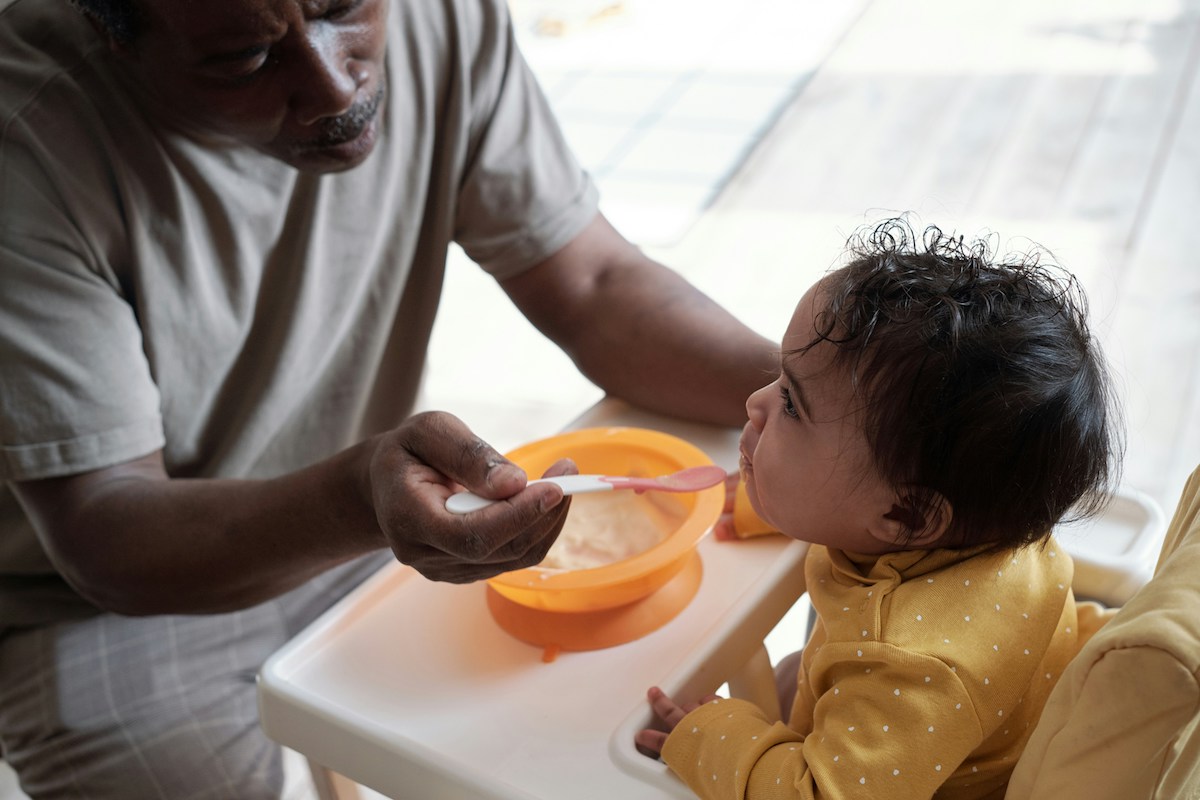





Starting solids is a fun milestone to reach with your baby (what is cuter than a tiny bottle of pureed prunes?)
However, many parents understandably panicked when, in early 2021, a congressional subcommittee released a report finding dangerous levels of heavy metals — arsenic, lead, cadmium, and mercury — in many popular baby foods, with rice-based products like puffs among the most concerning. The report made a lot of headlines.
Since then, progress has been slow but real. The FDA launched an initiative to reduce heavy metal levels in baby food over time. Several states have passed laws requiring manufacturers to test their products and make the results publicly available. That said, this issue hasn’t gone away, and the regulatory landscape is still catching up.
Here’s what you should know, and whether to worry.
What to know (before you freak out)
First thing to say: no matter what you do, you are exposed to these heavy metals through various sources. There is inorganic arsenic in food and water, largely due to its presence in the soil. Lead is also in your water, or at least might be, depending on the age of your pipes. So while it might be an “ideal”, you really cannot avoid some exposure to these substances, either for you or your children.
Second: metals like this build up over time, and it’s the concentrations as they build up that cause us to worry. Yes, you can be poisoned by a single dose of arsenic, but this would be orders of magnitude different from what we see in any food products. The worry is that small amounts over time add up and might cause problems, largely neurological (lower IQ, more behavioral problems), in kids.
Third: if you look carefully at the test results they produced here, far and away the big concern is arsenic in things like puffs and rice cakes. They cite evidence of high rates of other metals in ingredients used in baby foods, but because these are diluted in the final products, it’s not clear how this translates. In their final product testing, the rice stands out.
There are a couple of items with higher lead concentrations, but the fact is that lead in water is a much bigger concern. We screen kids for lead exposure frequently and implement mitigation if we see higher-than-expected levels.
Really, I think we can dial the question here down to: Should I panic about arsenic in rice cereal, rice puffs, and rice cakes? To figure out whether this is a level-10 freak-out situation, we need to answer two questions: How significant are the links between arsenic and bad outcomes, and how much does baby food matter for these impacts?
Do heavy metals impact IQ levels?
Arsenic, in high doses at least, is associated with lower intellectual functioning. For example, data from Bangladesh, where much of the drinking water is very high in arsenic, shows that children with higher urinary arsenic concentrations have lower IQ scores. Similar data directly links arsenic in water with various cognitive measures, although this link is weaker.
The concentrations of arsenic in water in Bangladesh are high. In that second study, the average well water concentration was 120 micrograms per liter. This means that if a child had 1 liter of drinking water per day, a typical daily exposure would be 120 micrograms. The maximum levels in these studies are in the range of 800 micrograms per liter.
At lower levels, there are suggestions of a link between arsenic concentrations and IQ, but the data are less clear. The congressional report cites one study on well water in Maine, which suggests that children who got their water from wells with high levels of arsenic had lower IQ scores. The levels here are much lower than in Bangladesh — their higher groups are only at 20 micrograms per liter — and although the effects are large, they aren’t as statistically compelling. Children exposed to between 5 and 10 micrograms per liter do worse than either the lower or higher groups. It’s not clear why this would be the case, and it may suggest bias in the results, perhaps due to the strong correlation between socioeconomic status and arsenic exposure.
Having said this, the evidence from Bangladesh and basic principles make it clear that inorganic arsenic can be damaging. The same is true for these other metals — lead, cadmium, mercury. Cadmium is also common in Bangladesh, and we also see IQ effects there.
In principle, there is good reason for concern. But I want to talk about amounts.
How much is your child exposed to heavy metals?
Based on the Bangladesh data above, children there who were (say) tested at the age of 7 would have been exposed to high arsenic for basically their entire childhood. If they had a liter of water a day (perhaps an underestimate) for six years, that’s 262,800 micrograms of arsenic exposure. This is on top of the exposure they have to food grown in high arsenic soil and other sources.
Even for a child drinking well water in Maine at 10 micrograms per liter, a liter a day would translate to 21,900 micrograms over that period.
All of the highest-arsenic foods in the congressional data are rice-based, since rice itself often has high inorganic arsenic. The worst-performing foods were a type of puff, which in one case had concentrations of 180 ppb (a microgram per liter equivalent). A serving size of this type (Happy Baby Apple and Broccoli Puffs) is 7 grams, or about a half a cup. Doing the math, this converts to an expected exposure of 1.2 micrograms per serving of inorganic arsenic.
Kids do not eat puffs forever. Let’s imagine your child has two servings of puffs a day for two years. That’s 1,752 micrograms of arsenic, an order of magnitude less than the people in the study of well water in Maine and two orders of magnitude less than Bangladesh. And this is a lot of puffs, probably for longer than people usually feed them, and it’s the worst-performing food they tested.
Ultimately, the numbers here suggest that the exposure a child has through these foods is unlikely to be very large relative to the exposures that have been demonstrated to have effects. The people who email to ask me if they have poisoned their child, please stop beating yourself up. You didn’t.
This is really my main point here. Yes, there is some evidence that children who drink water with extremely high arsenic levels for their whole childhood have cognitive impacts. And, yes, puffs seem to have some arsenic in them, likely due to the arsenic in rice. But the scale of the exposure is totally different.
So, what should you do?
Some of the headlines on this will make you think that all baby foods are basically just a jar of toxic metals with a small amount of carrots. I think a more accurate read would be that there are some brands of rice-based puffs and rice cakes that raise some (mild) concern.
From an individual parent’s standpoint, should you change what you do? From where I sit, I would say at most — at absolute most, and I want to be clear, I don’t see a lot of reason to do this — I might cut down on rice-based puffs and cakes. Maybe skip rice cereal? You don’t have to make your own baby food. And it’s not clear this would help! The problem is largely with ingredients, not processing.
Honestly, please do not think about this too much.
The bottom line
- Heavy metals in baby food are real, and rice-based products have the most concerning levels of arsenic. But the exposure from even frequent puff consumption is orders of magnitude lower than the levels shown to cause harm in research.
- The bigger concern for lead is your water, not your baby food. If you haven’t checked your pipes, that’s worth doing.
- If you want to do something, you could cut back on rice-based puffs and rice cakes. But you don’t need to make your own baby food, avoid all processed foods, or stress about what your kid has already eaten.