




What exactly happens during an egg retrieval?
—Anonymous
To start with the big picture, IVF was initially developed to bypass blocked fallopian tubes. So, it works by growing multiple eggs, removing those eggs, and then using those eggs to create embryos in the laboratory and (eventually) putting the embryo back inside of the uterus. The egg retrieval is the way that we can get the eggs outside of the body.
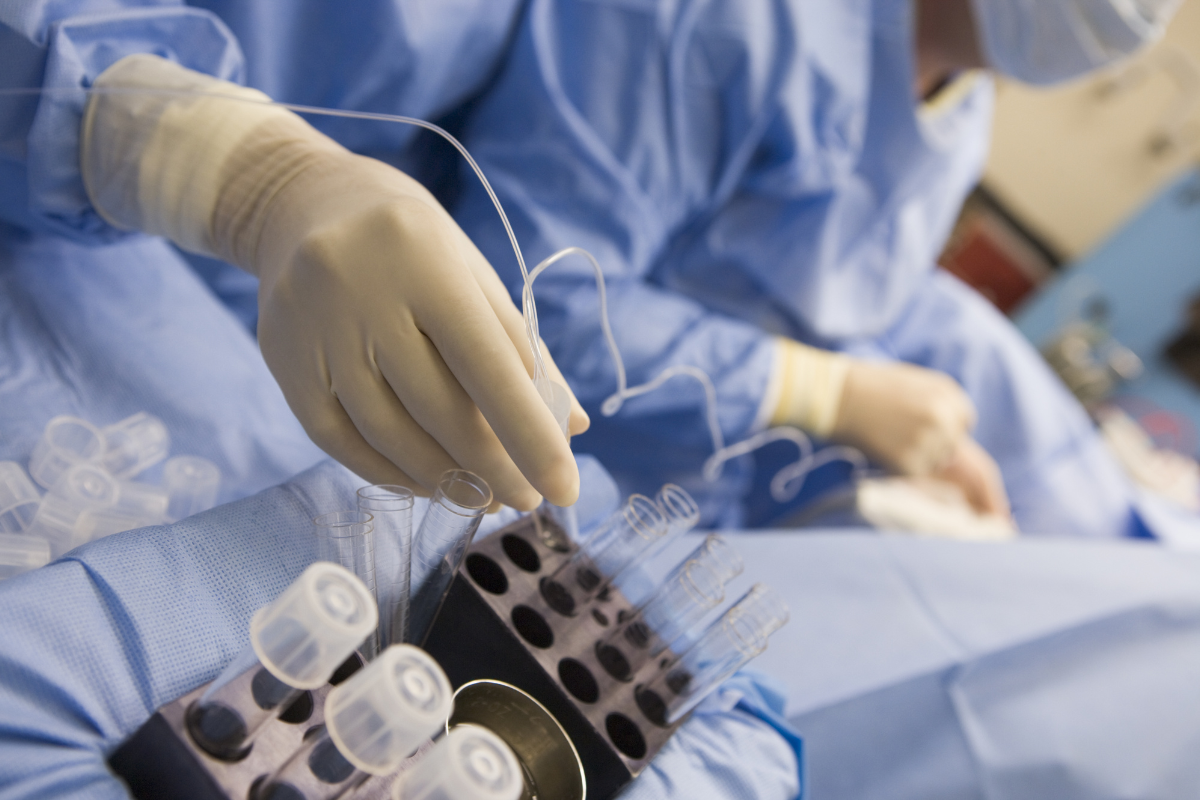
Technically, egg retrieval is a minor surgery. A vaginal ultrasound is used to locate your follicles (little cysts where eggs grow), and a small needle connected to a vacuum goes through the wall of the vagina (you will be under anesthesia, so you should not feel this) and is used to drain the fluid from each follicle. This fluid is immediately passed to an embryologist who is waiting to find the eggs within that fluid. How long this takes depends on your specific fertility clinic, how many follicles you have, and how hard it is to reach your ovaries (for example, if your ovaries are farther away from the top of the vagina than typical or if you have something like large fibroids in front of your ovaries), but it typically ranges anywhere from 15 to 45 minutes.

The needle is where the potential risks come in and is why the procedure is typically done either under sedation or light anesthesia. You will have some vaginal spotting because, by necessity, the needle will go through part of the wall of the vagina and through the ovary, but there is always the very small risk (~1%) that a major blood vessel is injured or that you will have more bleeding than we expect, though this happens rarely. Similarly, there is the risk that the needle will injure a structure or organ nearby, which typically would be the bowel or bladder, though, again, this is very rare. The procedure is also usually done as an “outpatient,” meaning it is typically not taking place in a hospital and you go home the same day, after a short time of monitored recovery at the clinic.
Keep in mind that what I’ve just explained is assuming that the ovaries are easy to reach through the vagina, which, as we mentioned, is the case most of the time but not always. Depending on your situation, you may not be a candidate for an outpatient procedure, and you may need to have your retrieval performed at a hospital. Before starting IVF, be sure to ask specifically how egg retrievals typically go for your fertility clinic and if your doctor anticipates any challenges in your case.
Community Guidelines







Log in