






When my son was about 2.5 years old, he had just recently started using the toilet alone. I was nearby, listening intently for every step. I heard the flush, but I never heard the faucet. When he stepped out, I asked him, “Did you wash your hands?” He paused, looked at me with his big brown eyes, then nodded. But I knew he hadn’t.
He was not intentionally trying to deceive me. He was overwhelmed by the long list of steps — each new to him — and my pop quiz at the end of his newly mastered task was confusing. I had asked a leading question, and he was searching for the right answer. I could have “called” him on it, insisting he show me his (dry) hands. But I knew that would only lead to a power struggle. Instead, I quickly course-corrected: “Oh, you forgot to wash your hands. Let’s go back!” We washed his hands together. Crisis averted.
Was my son lying to me? And does that even count as a lie? As parents, we’re confronted with moments of dishonesty, big and small, from our children. It’s normal to wonder where the line is and what to do when you feel it’s crossed.
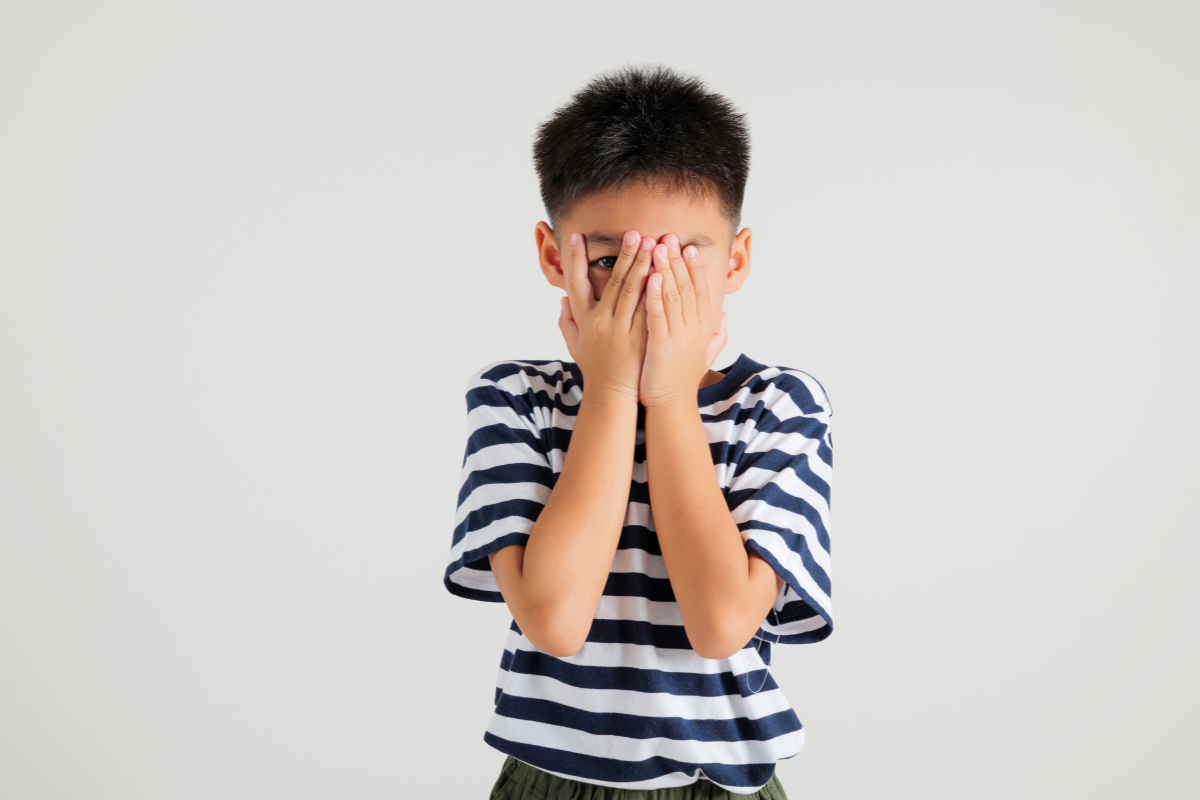
Why do children lie?
Real lying requires some sophisticated perspective-taking — the ability to think about someone else’s mind and what could influence their thoughts.
In the early years, toddlers are consumed with their own world (this is “egocentrism”). They don’t readily consider others’ points of view. So when my toddler told me he washed his hands when he actually didn’t, it wasn’t intentionally deceitful.
Around ages 4 and 5, children realize that people can have different beliefs, which could be influenced. But their first attempts at lying have easily detectable flaws. A 4-year-old might sneak out a Pop-Tart, thinking she can get away with it, but she might not think to clean up the crumbs and throw away the wrapper. She’s easily caught. With time, lies get more plausible.
To some extent, lying reveals intellectual development. A meta-analysis compiled findings from 66 academic papers on cognitive maturity and lying behavior among children. Researchers concluded that there is a small correlation between lying and perspective-taking abilities in early childhood. But just because lying emerges with age does not mean that smarter children lie more. Importantly, lying in a controlled experiment is different than lying in real life.
When is a child lying?
Researchers are pretty good at getting children to lie in a lab setting. They craft just the right stimulus to test lying. In one common protocol experiment (used in a lot of studies in the meta-analysis above), children are asked to guess what object is making a noise behind them. If children guess all the objects, they win a prize. When there is a very difficult one (and the adult “unexpectedly” has to step out of the room), most children peek and then lie about it. Under just the right conditions — fast-paced, high-reward situations — most children lie impulsively.
One study with 116 children ages 3–6 in Singapore followed that protocol. The goal of the study wasn’t to see who would lie; researchers were investigating who would confess. The researchers observed parents and children playing a game together and rated how warm (affectionate and supportive) or controlling (giving orders, reprimanding) the parents were. As expected, most children lied in the experiment. But the children with the most controlling parents did not usually confess; those with supportive parents did.
All children experiment with lying, but some children double down on the lie, while others confess and apologize — depending on what they’ve learned to expect from their family.
Unfortunately for parents, most lies are not easily detectable. Parents are usually pretty bad at determining when their children are lying. In lie-detection studies, parents are high in confidence but low in accuracy. When put to the test, most people perform no better than chance at identifying lies — especially from their own children.
Personally, I’m heavily motivated to believe my children are good kids who tell me the truth. I want to give them the benefit of the doubt to build trust. Motivated reasoning undermines lie detection. Parents might not know if they are being regularly manipulated unless they habitually hold their little liars accountable.
How to react when your child lies
The goal for parents is to show they are not easily fooled nor quick-tempered when children experiment with their new lying abilities.
When parents try to maximize affection by removing accountability, parenting becomes permissive and indulgent. On the other hand, if parents are quick-tempered and consequences are disproportionately large (shaming, hitting), they unintentionally reinforce a pattern of hiding and deceit. It is possible to unconditionally love children without lowering developmentally appropriate expectations.
Don’t turn to threats
When children experiment with dishonesty and it benefits them, lying becomes habitual. If it is easy to detect, parents can call the lie out quickly and firmly, without big threats that would make a child dig deeper into the lie. Turning a blind eye to the little lies emboldens the bigger ones.
Large threats and big consequences sometimes reinforce lying in young children because they feel trapped and overwhelmed. A 5-year-old who impulsively lies to self-protect might become a 7-year-old who intentionally trips his brother and then swears it was an accident.
Focus on the value of honesty, not the punishment for lying
In one study, researchers read a book to the children — a different book for each study condition: one that emphasized the negative consequences of lying, another that emphasized the positive consequences of honesty, and a third that discussed perseverance (the control condition).
Children primed to think about honesty were less likely to lie than those primed to avoid lying. In practice, giving children a reason to tell the truth may be more effective than giving them a reason not to lie.
Follow up later
If a situation is ripe for lying (a split-second decision with a lot to gain or lose), parents can follow up later in the day or the week. Let the child get some distance from the event (diminishing the reward for lying), and then bring it up calmly (lowering the cost of confession).
In my family, that means talking one-on-one at bedtime. What my children may quickly say in front of other people is sometimes different from what they say in the quiet moments at their lamp-lit bedside. Direct questions give children a chance to apologize and practice honesty.
Model honesty at home
Children are much more likely to develop the virtue of honesty if they witness it daily — when they see parents apologize or clarify an omitted fact. But the opposite is also true. When parents get in the habit of issuing empty threats to control behavior, children pick up on their tactical dishonesty. It is the classic “we won’t go on vacation if you keep acting like this.” It is what some researchers call parenting by lying. Children learn that their parents are bluffing and that lying is part of goal achievement.
Most parents do this sometimes, just as most children lie, at least occasionally. Thankfully, for both children and parents, family habits of apologizing and honesty matter in the long run.
The bottom line
- Lying is a normal part of child development. Early “lies” aren’t really deception, and more sophisticated lying is actually a sign of growing cognitive ability.
- Parents are worse at detecting their kids’ lies than they think. The goal isn’t to catch every lie but to build an environment where honesty and apologies are valued.
- Focusing on honesty works better than threatening consequences for lying. Following up calmly and keeping accountability without big reactions are what actually move the needle.






Log in