







When it comes to aging, one of the big concerns for men is hair loss. Apparently, a thick head of hair for men is the equivalent of a wrinkle-free face for women (not necessary for health, but important to some!).
For many years, there were limited good options for treating hair loss. However, more recently, there’s been a rapid rise in the number of men taking finasteride — a medication for hair growth. The only problem: people hear about the potential side effects on sperm count, sexual function, and mental health. There are also concerns about how it impacts pregnancy and men trying to conceive.
These are questions for data. Can you have your hair and good sperm too? Let’s investigate.
A quick note: We are going to focus on men here, although in some cases, women do take finasteride off-label for hair growth. Given concerns during pregnancy, this is generally not recommended and certainly not if you are trying to conceive.
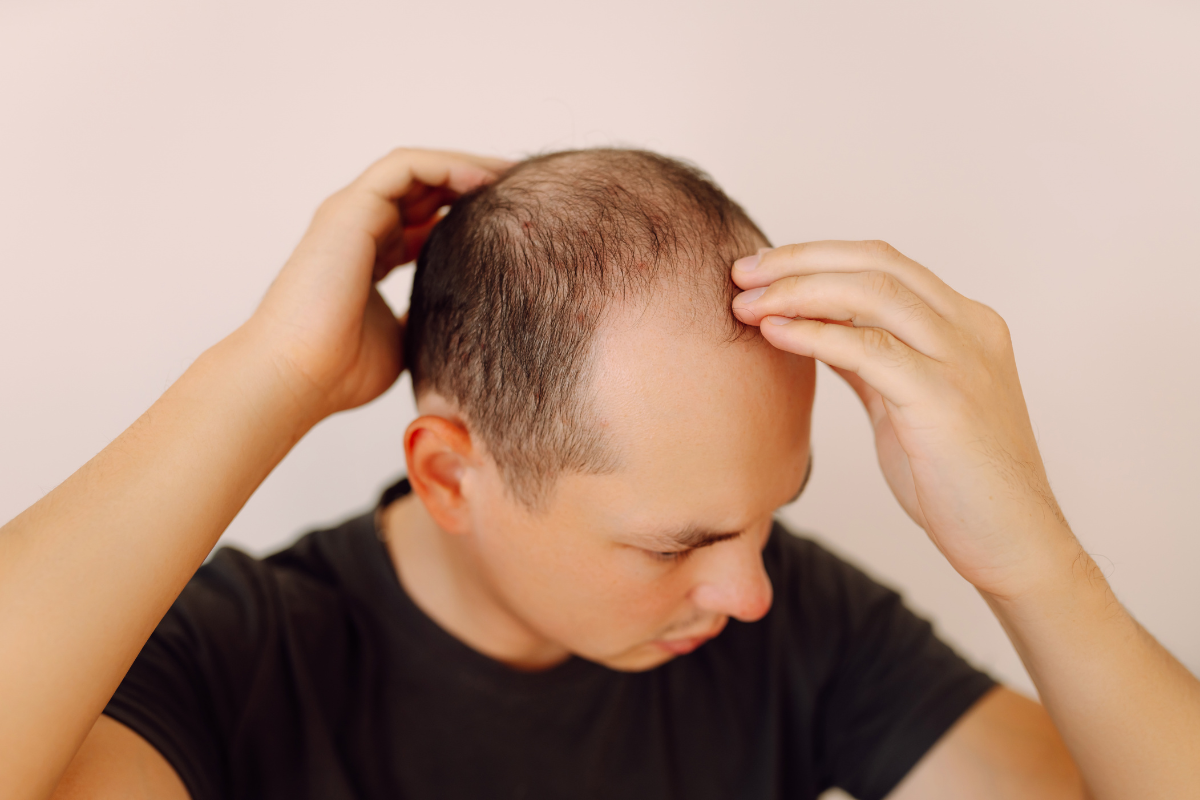
Does finasteride help with hair growth?
As background, finasteride was initially used for the treatment of benign prostate hyperplasia, a condition where the prostate grows larger (but not because of cancer). This is common in older men and interferes with their ability to urinate.
In 1998, randomized data was published to look at the use of this compound for male hair loss. In men ages 18 to 45, treatment with 1 mg of finasteride (a lower dose than the 5-mg treatment for prostate issues) was associated with improved hair. In particular, after one year, they saw an increase of 107 hairs — relative to the placebo group — in a 1-inch area of the scalp. In two years, this was 138 hairs. The baseline was 876 hairs in a 1-inch area for the average man, so this was a sizable increase.
Review data suggests similar positive impacts, and oral and cream formulations seem to be fairly equal in efficacy.
To be clear, this is not a magic pill. It’s not Hair Toffee from Charlie and the Chocolate Factory. But the high-quality data is clear: treatment with finasteride does increase hair growth a meaningful amount on average.
What are the side effects?
As finasteride has gotten more popular, there are growing concerns about its side effects. The evidence on these is complex, especially as we get into sexual function and mental health. Here’s the problem: if someone tells you that a medication may put you at risk for a particular side effect, you will see some of that side effect simply due to the placebo effect.
We see this issue directly in the data. In one study, researchers gave two groups of men the same dosage of finasteride, but told one group that it caused sexual side effects and didn’t mention that to the other group. In their results, 43% of the men in the group that was warned about side effects reported them, versus only 15% in the group that was not warned, despite both groups getting the same dosage. This doesn’t mean these side effects are not there at all, but it frames the caution that will be necessary in studying this.
Now let’s look at some of the more common side effects in turn.
Sperm count
For men who are trying to conceive, reduced sperm count is an important potential side effect, as it can impact fertilization. Randomized, double-blind evidence suggests that finasteride lowers sperm counts when given at the higher dose used for prostate issues. This ends up being about a 34% decline after 26 weeks, although there was a recovery by one year, even with continued use. This is a sizable decrease, but whether it’s relevant for conception chances depends on where you start.
However, when we look at the lower dose for hair loss, the evidence is more mixed. On the reassuring side, randomized trials do not show reductions in sperm counts. On the less reassuring side, in a small sample of 30 men on finasteride who presented with low sperm counts while taking the drug, discontinuation of the medication resulted in dramatic sperm count increases, on average. It appears to be a short-term effect, but one to be aware of.
It seems possible that, for some men, sperm are affected, although you may not know if this is you. As I’ve discussed before, testing sperm before trying to conceive is often useful to get ahead of possible problems.
Sexual side effects
As mentioned above, sexual side effects such as erectile dysfunction and low libido are pretty hard to evaluate in this case. The studies are constrained by placebo effects, small sample sizes, the question of who is selected into what group — it’s a mess. Here’s my best take at what it all means.
When we look at large-scale trials of finasteride, we see very minimal effects on sexual function. The Prostate Cancer Prevention Trial, a randomized trial of over 17,000 men, evaluated sexual function in those taking finasteride versus the placebo. Even at the higher dose given for prostate issues, researchers saw only extremely small impacts on sexual function. The impacts were significant in a statistical sense, but arguably not meaningful in a practical sense, and again, this was a larger dose.
When we look at data focused on the hair-loss dose in randomized trials, we see maybe a hint of an increase in some sexual side effects. In this meta-analysis, researchers found that there was a significant increase in erectile dysfunction. However, the statistical analysis here is fairly weak. They are looking at a lot of outcomes, and this is the only one that is significant, which raises concerns about what we call “ p-hacking.” Notably, the treatment group was no more likely (actually slightly less likely) to drop out due to sexual side effects, which suggests whatever was going on wasn’t necessarily disruptive to their lives.
On the flip side of this, some studies raise more significant concerns. An example is a 2011 study that recruited men who reported sexual dysfunction after use of finasteride and surveyed them. Given how they were recruited, there is no way to measure their excess risk; what struck people is that some of these men reported long-term impacts. The reality is that this method is hard to learn from — without a control group, it’s difficult to know whether it is the finasteride that is driving these impacts. The studies that raise these larger and longer-lasting concerns generally do not rely on the large placebo-controlled trials.
Pulling all this together, my read of the data is that a small share of men may have sexual side effects from this medication, and it is possible that a very small share have serious side effects. To show the latter, though, we’d need larger trials with a true control population. Given what we see now, this seems like it shouldn’t be a significant concern.
Mental health
There are also reports of finasteride being linked to suicidal thoughts in users. This literature is even more challenging to interpret than the sexual side-effect data.
Most of our evidence on this question comes from adverse event reporting. There are a number of systems that the U.S. and Europe use to track adverse events associated with medications. Generally, the way these work is that people on a medication who think they have an adverse event associated with it can report it — such systems are a good way to track possible risks as a drug is widely used, but alone they have a very difficult time establishing causality. The fact that an adverse event occurred while someone was on a medication doesn’t necessarily mean the medication caused it.
Based on these types of reports, use of finasteride is associated with an increased risk of suicidality. However, it seems like a large share of this — perhaps all — may be due to reporting and awareness. One clue is that we see this evidence only in treatment for hair loss, not for prostate issues, despite the latter being a much larger dose.
On top of that, a large cohort study in the U.K., which notably did not rely on these adverse event reporting systems, did not show impacts on depression.
The FDA does include depression as a risk of finasteride, based on the earlier studies, and this remains a contentious area. Certainly, it is always a good idea to be aware of the signs of depression, regardless of medications. My read is that the data does not support a strong causal link.
Is it safe during pregnancy and TTC?
Finasteride is a pregnancy category X drug — meaning it has been linked to birth defects both in animals and in case reports in humans. The birth defects relate to genitalia development in male fetuses.
Women should absolutely not take this medication during pregnancy, and there is a caution about even handling pills, given the possible exposure through the skin. To be clear, we do not have established evidence of risk from this type of exposure, so this is perhaps overly cautious, but also avoidable.
The more practical question is whether being exposed to semen during sexual activity increases these birth defect risks. Here, the data is — again — not completely clear. On the one hand, evidence from testing semen directly suggests that exposure levels in semen are very low — far lower than we would expect to cause birth defects. On the other hand, in a study of the adverse event reporting system, the rate of birth defects in the partners of men who are using finasteride is much higher (these defects are very rare, but elevated in this group relative to the base rate).
One interpretation of this is that if the only exposure is through semen, it’s no problem, but in some cases, there is other accidental exposure in a household. Since these birth defects are so rare, we likely need much larger studies — probably based on whole population cohorts — to be more confident in the answer here.
Given the sperm impacts and the birth defect concerns, I think a reasonable, conservative approach if you’re trying to conceive would be to stop taking finasteride in advance (probably two to three months before) to give sperm counts time to recover. I can also see, however, people deciding this isn’t necessary, given the very small risk and reassuring impact on sperm overall.
If you do decide to continue taking finasteride, two suggestions.
First, get a sperm test before trying to conceive (this is a good idea anyway!). If your sperm count is low, this is one lifestyle change to consider. Second, pregnant people should be especially careful about exposure to these medications. Exposure through sex is only very limited, but other household exposures should be avoided.
The bottom line
- Finasteride works. The evidence for hair regrowth is solid, and the effect is meaningful.
- The side-effect picture is messier and likely overstated due to placebo effects. Sperm count may be affected in some men, though randomized trials are reassuring.
- If you’re trying to conceive, the conservative approach is to stop taking it two to three months before. Pregnant partners should avoid handling the pills. And a baseline sperm test before trying is a good idea regardless.








Log in