

 Get access to over 1,300 articles and reader Q&As



Toddler tooth hygiene is, let’s face it, an enormous pain. Toddlers generally cannot brush their own teeth, or at least not very effectively. But they also definitely do not want you to do it. It’s easy to feel like you’re traumatizing your child by holding them down to brush their teeth. How does that compare to the risk of cavities? Aren’t they going to lose these teeth anyway?
Official dentist advice seems extreme to many parents, as well as impossible. It’s not realistic for most people to be brushing their 15-month-old’s teeth twice a day for two minutes, plus flossing, visiting the dentist, etc. We have to prioritize, which means looking to the data for what’s really important.
What do we know about childhood tooth hygiene?
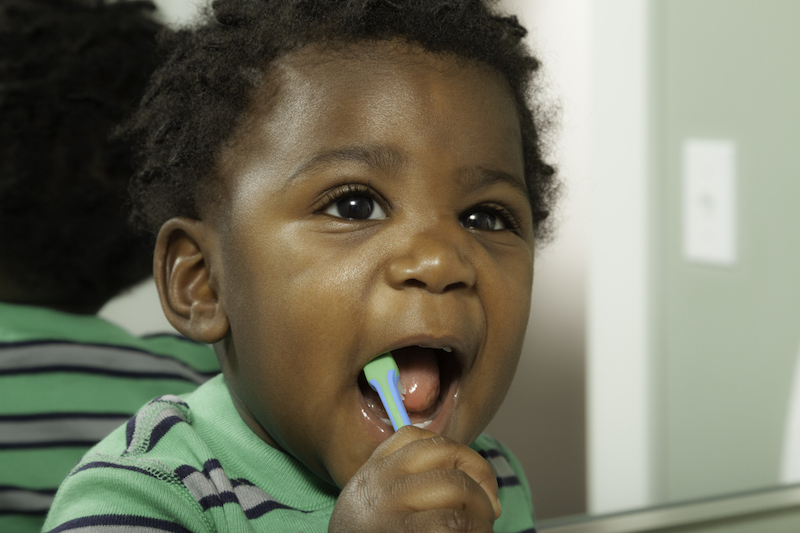
Teeth can start coming in as early as 3 months or as late as about 14, although most kids get their first tooth between 7 and 8 months, and then the rest of them fill in over several years. These baby teeth do fall out, but they get several years of use and can get cavities, so there is a good argument for some dental hygiene.
We can start with the basic question of tooth decay and what causes it. This review article has some quite helpful notes, including pointing out that tooth decay should actually be thought of as an infectious disease, as much is caused by streptococcus bacteria, which feed on sugars in the mouth. These bacteria feed on sugars — notably sucrose — which means more sugar eating tends to lead to more cavities (these are technically referred to as dental caries in the literature).
These bacteria colonize the mouth basically as soon as the teeth erupt, so cavities can begin to form as early as the first teeth. Breastmilk and formula both contain sugars, so both can be substrates for the evil bacteria. Brushing teeth can help prevent cavities by removing sugars and plaque that feed the bacteria.
Fluoride (in our water and in some toothpaste) also protects teeth. The addition of fluoride to water has dramatically lowered childhood cavities over the past few decades. If your water does not have fluoride, then the fluoride in toothpaste and rinses (at the dentist) can also be effective.
The distribution of cavities is skewed across kids. A huge share of cavities (about 80% according to that review paper) occur in 25% of kids and disproportionately among children who live in poverty. This may be due to differences in access to dental care, diet, or water fluoridation.
When should you start brushing your child’s teeth?
The American Academy of Pediatrics (AAP) recommends tooth hygiene starting by six months; if there are no teeth at that point, the gums can be wiped with a clean cloth. Once teeth have arrived, you should brush with a small amount of fluoride toothpaste. As kids age past toddlerhood, they can start brushing on their own. The AAP also recommends fluoride varnish (at the doctor), every six months starting around 6 months of age. Flossing comes later, once teeth start to touch.
These recommendations are based on some combination of logic (we know how tooth decay works) and data (we know fluoride prevents tooth decay). But the more detailed specifics are hard to evaluate directly. There are certainly correlations between dental care in general and tooth outcomes (here is one example study), but there are other factors, like differences in diet, that may drive some of the impacts.
There are a couple of small randomized controlled trials on dental hygiene information in general. These include one in Iran and another on South Asian children. These do generally suggest reductions in cavities or pre-cavities, although the effects are small.
These studies are very general. If you are looking for the defense of the specific advice about timing, the data is insufficient for that.
The best we can say on timing, based on the data, is that it makes sense to start a regular tooth routine at some point in early childhood. This routine should involve fluoride, either in varnish at the doctor’s or dentist’s office, in toothpaste, or both. Having said this, there isn’t strong evidence to point to 6 months as a crucial starting date.
When should you start bringing your child to the dentist?
It is recommended that a child have their first dental visit around 12 months. The main reason for this recommendation is so you can establish a dental relationship, get advice about toothbrushing, and the dentist can look for any early warning signs. At this early visit, they may also use a fluoride varnish.
As with the timing of starting a toothbrushing routine, there is no strong evidence-based reason to favor 12 months versus 15 or even 9. At some point in early childhood, it is a good idea to establish a relationship with a dentist.
What if your child nurses or has a bottle before bed?
Nursing or giving a bottle before bed and not brushing teeth after does seem to increase the risk of cavities. A 2015 meta-analysis looks at the relationship between length of breastfeeding and cavities. The researchers find a limited relationship between breastfeeding for less than 12 months and cavities, but they do see an increased risk for breastfeeding beyond 12 months, especially when breastfeeding is continued at night. The estimates suggest a risk about seven times as high for children older than 12 months who are nursing at night.
These studies are not randomized trials, but the results make sense from a biological perspective. When babies consume milk before bed – either nursing or in a bottle – the milk residue stays on their teeth and can provide food for tooth decay bacteria.
There are extenuating factors here: if nursing to sleep is the only thing that gets your child to go to bed, it may be worth some increased cavity risk. But this data says that, all else equal, it would be preferable to brush before sleep.
What about those mouthguard toothbrushes?
Tired parents whose children hate toothbrushing are catnip for advertisers of what I call the “mouthguard toothbrush.” For the uninitiated, this product is basically a mouth-shaped brushing apparatus attached to an adorable animal handle. You shoot some foam-based toothpaste on it, stick it in your kid’s mouth, and either move it around (manual option, $39) or it does it for you (electric toothbrush option, ranging from $59 to $79).
These seem easy, but unfortunately, they do not work very well. A study of 22 Italian students compared this toothbrush with other electric toothbrushes, manual toothbrushes, and no brushing. Each participant came to the study four times and had their plaque measured when they arrived and after brushing (they were randomized into different brushing types at each visit).
The results showed that the U-shaped brush was significantly worse than either the electric or the manual toothbrush, and also not significantly different than not brushing at all. Literally no better than doing nothing! This result is corroborated by a second study that evaluated this toothbrush type relative to others, using a set of fake teeth that were dirtied up. It didn’t work. A randomized trial with dental students also showed that the U-shaped toothbrushes were a failure.
Sorry, but this is not your magic solution.
Closing thoughts
When people ask about toddler teeth, they are often looking for direct, concrete advice. Like: The data says you must start brushing at age XX, and that’s better than age YY. The data really isn’t sufficient for that. There are some logical guidelines we can infer: toothbrushing removes plaque and prevents cavities; at some point, your child should see a dentist. But this doesn’t tell you exactly what to do.
But this doesn’t mean you cannot make your own concrete plan so that you stop thinking about it! You should decide on the timing and structure of a toothbrushing routine, decide on the timing of the first dental visit, and then implement and move on, and try not to think about it anymore. That is, other than for the four minutes a day you are wrestling a toddler to the ground and sticking a toothbrush in their mouth.
The bottom line
- Brushing teeth and using fluoride can prevent tooth decay by removing sugars that would feed cavity-causing bacteria.
- You should start a regular tooth routine at some point in early childhood. This routine should involve fluoride (either in varnish at the dentist, in toothpaste, or both).
- It is recommended that a child have their first dental visit around 12 months.
- Nursing or giving a bottle before bed and not brushing teeth after increases the risk of cavities.
- Mouthguard-shaped toothbrushes, marketed to parents of children who hate brushing their teeth, are not the magic fix you think they are.