



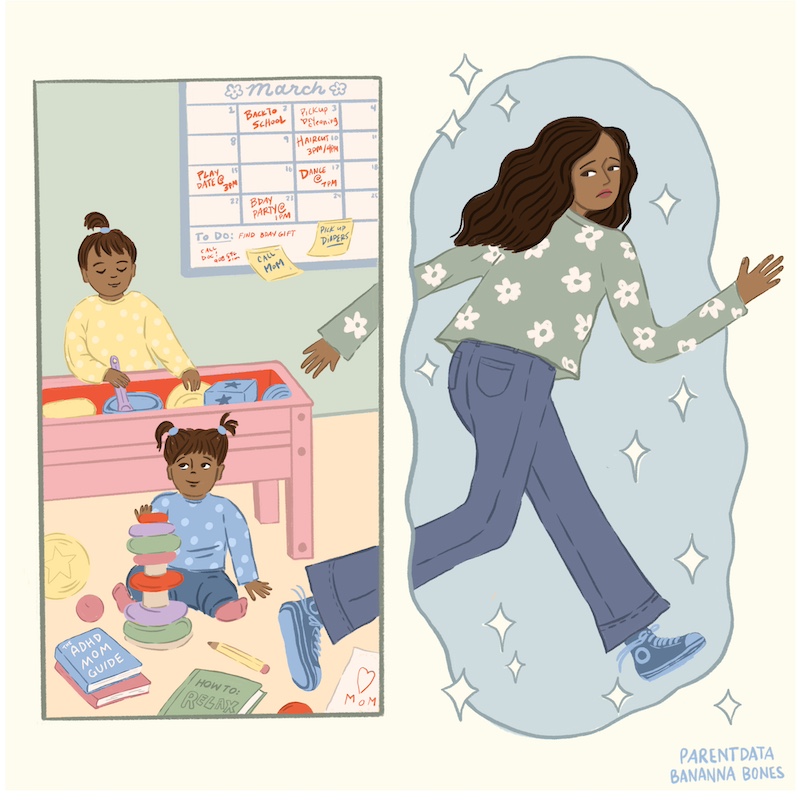
How do you manage as a neurodivergent parent?

- Featured
- Most/Least Popular
- Newest/Oldest
- Babies
- Medical Care
 Back to Topics

 65
65
 share
share


-
Lord. I’m not a mom, and my ND flavor is different, but it is so hard. I have gone through countless periods of feeling inadequate- not just as a parent, but as a spouse. So many of the things I did to manage myself fell apart after kids.
I’ve had to make a number of changes, and a lot of changes to my expectations.
First, I think it’s important to be honest with your kids about your boundaries and needs. Sometimes we have to push through to do what has to be done for our kids, but sometimes it’s best to make sure your kids understand you love them and need a break. If you have a partner, leverage them and take it. We have The Look and announce that parent is going to take a break.
Read “How to Keep House While Drowning,” listen to Dr. Becky’s Good Inside podcast, follow her account or read her book.
Go in with the knowledge that parenting expectations are largely self-contradictory, perfectionist crap and love your kids. They may need therapy and that’s fine. They may need an ND role model. And role modeling means showing them how to be imperfect and still enjoy their life.
If you’re the kind of person it sounds like you are, just be brutally honest with yourself, do your imperfect best to let go of the utterly insane amount of mom guilt, and know that parenting feels hard because it IS hard (credit to Dr. Becky there).
And there are NDs out there struggling too. You aren’t at all alone.
0 comments -
As a person married to a partner with ADHD, I want to give you the biggest hug! I see how hard it can be and I’m glad you know you’re already a great mom. I’m sorry I don’t have any direct or personal advice, but would like to offer what worked for me and my partner to have a stronger relationship. He / we realized that all the great skills he had built to navigate life on his own were not always translating to success in our relationship. We sought out a couples counselor that specialized in ADHD and it was a game changer! She really understood where he was at and was able to suggest / help him find new tools that better served him and us in our relationship. I share all this to say, maybe there is a therapist that specializes in ADHD and parenting?? It could be a helpful path.
0 comments -
My son loves loud, messy, physical, sensory seeking things and I do not, at least not as much, or only in short doses. When he was little I signed him up for baby gym, and music, and swim lessons, which I made my husband go in the pool for. For preschool we choose and outdoor preschool with lots of messy sensory play. My only regret is he doesn’t want to play outside as much when he’s at home anymore and I need to get out myself. Also, muddy laundry. Now he’s in dance/tumbling and swimming. I’m Not really enjoying sitting in the warm, humid, loud pool area, but at least I don’t have to go in anymore! Maybe I’ll buy myself some fancy earplugs.
On sensory bins- they are messy at first but if you make them in a closable bin and take them away when mess making starts, eventually the stuff mostly stays in the box. I don’t think you need to do sensory bins to be a good parent, though.
Tldr: Try to get your child’s sensory needs met with less involvement from you.
3 comments-
I second this! In my head, since my husband and I are quiet introverts, our child would be, too. We ended up with rambunctious twin boys who at 2 want to spend their day running and flopping and digging and running toy vacuums. One of them does not stop talking and yelling from the time he wakes up to when he goes to sleep. We just switched daycares to one that has a rock playground with a sand box and water table. It also has an indoor gym for bad weather days (which is at least half the year where I live). They now come home tired and dirty and hungry instead of wound up and irritable.
0 comments -
-
I also have ADHD, although it manifests differently in my situation. I have needed to throw out the rulebook because so many things are not realistic based on my personality and my child’s.
For example…all these parents act like routines are the holy grail and I just can’t get on a routine. We are far more of a go with the flow family and, so far, that seems to work for my son.
I really try to lean into my strengths. Like…I have the creativity to get lost in my son’s imaginative world, and it’s so fun. Since I can’t do routines, I am a freelancer and, when my child is at preschool or hanging out with dad, I can hyperfocus.
Also, my unpopular opinion is that sensory bins are overrated 🙂
3 comments-
I echo this. Just recently diagnosed with adhd and now it makes sense why I can’t get on a routine. I provide my little one a safe space, lot’s of love and guidance in how to cope with overwhelm and all sorts of feelings. I’m convinced that is what she needs most. All us moms thinking about parenting and how we are doing are great moms, we care!
0 comments
-
First, I see and feel you – mama! I’ll share some of what our week to week looks like, and I hope the “comparison trap” you’re feeling will lessen. Because we are amazing at mothering, too, but of course in our own very unique way.
I only socialize on playdates 1, absolute max 2 times a week. I find the multi-tasking incredibly draining, as you say (it’s even hard to take the dog to the park at the same time as minding my little one!).
I also break down all of my tasks into pieces. On Fridays, we go grocery shopping. Then, on Monday mornings, I choose meals for the week from cookbooks (I like the visual aspect) based on ingredients in the fridge (& I make it a fun activity as my daughter and I do it together). Of note, I always choosing at least two 15 min meals in the rota. I cook the 15 min meals on the days I have very little energy, and save anything more complicated for days I feel “good”. Any recipes with additional items I pick up on Wednesday and I schedule to cook those later in the week. I have all of this in my Google calendar so I don’t need to “remember” anything, instead my phone just reminds me.
Activity wise, I use similar systems. Sensory challenging activities (for me, high noise environments) I have completely stopped doing. Nobody wins! I’ve replaced soft play places with at-home, creative / messy play that we both love. Yes, it requires a bit more planning but ultimately keeps me much more regulated. I have no guilt here, just pride that I am doing what’s best for me — and in turn my daughter.
The biggest learning I’ve had is that having the right expectations for myself & others keeps me in a positive mood / well regulated. I used to think of this as “lowering” my expectations, when in fact it’s just setting expectations that are correct for my neurodiverse self. For example I now have the expectation that I do very little socially on the weekend (I need downtime!) and to expect that at least one naptime / bedtime goes sideways each week.
When something feels hard, I have a list of 15-20 strategies that I refer to and choose one to implement next time that something comes about that I believe can make it feel easier. Like, adding additional buffer time in. Or, positioning it as a challenge rather than a task (I have demand avoidance).
As you said, systems are our friend. The way I operate as a mother can feel “crazy” and “intense” and “over the top” — and probably does to many of you reading this! — but being very methodical in how I work with the business that is motherhood now allows me to be present & truly joyful (something I did not have access to for the first year of mothering). Again, I have no shame. Just love for the fact that I’ve been brave enough to live in a way that truly works for me.
This clarity has come thanks to a lot of self reflection & some therapy — but more importantly an unwavering belief in myself. Cultivate that and you will flourish! Because above all, I guarantee that your *resilience* is what your children will take away from being raised by you. We all will have our own kind of “hard” (neurodiverse or not) to contend with. Learning how to harness it as our power is how we maintain our wellbeing. Your children will be getting a front row seat as to how you do this day in, day out.
All the love to you! and I hope this helps xoxo
0 comments -
I’m not neurodivergent and I feel all these things!!! The key for all parents is to figure out what we need to manage ourselves, and sometimes that means kids won’t get to do things a certain way. My husband has mild ADHD, and his tolerance for noise is much lower than mine. I often wish that he would fuss less at the kids for “being loud” (I think they are talking in normal voices), rather than tell us what he needs, and anticipate when he needs a break. I get stressed seeing him get stressed, and there’s not much I can do. You seem to know yourself really well, and I say lean into that- communicate it to your family, anticipate what is likely to be too much, and be okay passing on activities/playdates that will put you over the edge. Modeling appropriate boundary-setting is an amazing thing for your kids to see!
1 comments-
Your comment made me think of my husband. He doesn’t have any diagnosis but I suspect he is some form of neurospicy and he also has a hard time with too much noise and we can’t really make a 2 year old be quiet. I bought him a pair of loops earplugs and encourage him to wear them when the noise is too much. Perhaps your husband could find something within his control to change so the noise isn’t overwhelming, rather than making your kids be quieter.
0 comments
-
-
This is so hard and you are an amazing mom for all you do and seeking out other ideas! I have loved https://tiltparenting.com/ as a resource during this time. I listen to her podcast and the book really helped me also just to give myself more grace and trust that I knew my kid (or was figuring him out). Outside time helps us so much and I’m also extremely rigid in keeping with schedules which causes conflict with others but helps my kids with knowing what is coming. Sending so much kindness and compassion your way!
0 comments -
Hi there! I wanted to share that as a neurotypical but introverted mom, I share many of your same feelings. I love my kids dearly but have felt intense overwhelm, didn’t have the energy to make sensory bins and similar despite being fairly creative in general, and dread play date small talk. Some things we’ve done that help; we have dedicated play spaces that can get messy without my micromanaging the messes, skipping activities that don’t resonate with you AND your children (there is so much out there for learning and connection outside of specific activities! Nature for example will give them everything they need in my experience- took me so long to figure that out.), and my husband is generally the one to take our kids to play dates or birthday parties. These simple steps have helped me immensely and I just wanted to share. Your feelings are valid and you’re not alone, and I’m positive you’re a good mom. All kids really need is safety and love in my view.
1 comments-
Just want to say triple ditto. Dedicated art/mess space, outside time, my husband manages any group kid social activity which means we miss some that don’t work with his schedule. The ever present guilt that somehow I’m not every type of person all at once is still insidious but I try to name it and then move on 🙂
0 comments
-
-
You’re not alone! I’m a new mom and neurodivergent. Here is what my partner and I have been doing to prioritize wellbeing at home.
My partner does nights and I do days. He is back at work and continues to do nights. Days are MUCH busier than nights, and so I need to be fully rested and not start the day already overstimulated.
My bedroom is set up to be a quiet haven. Blackout curtains, no electronics (other than my phone, which is only in the room while baby is small), super soft sheets, the list goes on.
We are fortunate to have people in our lives who can help during the day. Grandparents come over 1-2 days a week to dote on the baby while I get my own fix of hyperactivity/hyperfixation either inside or outside of the home.
I have never ever liked extremely high audio sensory toys. Someone gave me a loud and annoying toy as a baby shower gift and I immediately thrifted it lol. Instead I focus on gathering small, modular, and low audio sensory toys that can be combined into one big loud activity if baby needs it. Instead of a baby toy that plays its own music, I play or sing whatever music I want to listen to, or look for the “baby version” of a favorite song.
I tell my baby about my emotions and feelings. There is a chance he will inherit some of my neurospice. I want to normalize it as much as possible so that if he ever feels disconnected from society and his peers, he knows it’s okay to ask for help. I’m not a psychologist and so I don’t know when is a good time to explain neuroscience to them, but I do know there are kids books that introduce and explain these concepts in an accessible way for kids. I bought a few to read to my baby. I’m sure you would be able to find kids books about your neurodivergence and read them to your kids as a way to help them understand you better.
Also, on the topic of playdates, it’s totally fair to limit the amount per week. One halfday peer activity per day is the absolute max I think I could ever handle.
You’re a great mom because you recognize and acknowledge your (entirely valid) limits and are willing to ask for help. You’re a great mom because you want to connect with your kids at their level. You’re a great mom because you actually got diagnosed with a disability rather than bury it and never address it.
Our society has a tendency to shame moms for not doing anything and everything for their kids all by themselves, with little care for their own health. It’s stupid. Drown out the “noise” of societal pressures and carve out a path that works best for your family, with the clear understanding that your worth and value is important, too.
1 comments-
I came to say the same thing about the next generation of neurodivergence. Normalize talking about your needs and limits, both for yourself and to model it for your kids. They may be neurodiverse themselves but they will definitely meet others who are. Either way, the world will be a more accepting place when kids learn young about all different kinds of brains. I didn’t realize that I had ADHD until my son was diagnosed and wish I had created an environment that was more conducive to my own needs and his earlier.
1 comments-
As an ADHD mom of 6yo and 4yo, I second to a lot of what’s said in all the comments! Adding my two cents here to address specifically your question of what to say to your kids. Tell them the age-appropriate truth. Ex: “Everyone’s brain is different. Mine is great at solving problems but not so great at remembering stuff and, sometimes, I get overwhelmed.”
Also, it’s not only okay but great to voice your needs and feelings–this is what we are telling our kids to do all the time, right? Just like our little ones, if our needs aren’t met for too long, we break down–and that’s normal! But grown-up breakdowns can be scary for kids. That is, even if your yardstick is “what’s best for my kids?” (aside: you might be happier if it isn’t; see other comments on societal pressures), you’ll be a better parent if your needs get met too.
Ex: “I need a break.” “This is too loud for me. Can you please use an inside voice? Or I will wait for you in the other room.” (I use that one a lot during bath time in the tiled and enclosed bathroom!) “I know you love that book. It doesn’t work for me to read it again right now. Can you pick another one?” “It’s hard for me when you play with the magic sand. You can do that when Daddy’s in charge.”
I also do the same kinds of calm-down or self-soothing activities I learned from parenting books/advice for helping kids: butterfly hugs; mindful noticing, sometimes out loud (e.g., five things I see, four things I hear, three things I feel, two things I smell, and one thing I taste); closing my eyes and counting; etc. Two benefits here–(1) they work; (2) it’s great modeling! Same goes for the checklists, routines, etc that help kids build executive function.
None of this is to say it’s easy, and I certainly don’t do it perfectly, but this is what I aim for.
Mostly, you are not alone. It’s going to be okay. You do you. Showing your kids that you love and care for yourself in all your uniqueness is giving them a gift; your kid might well be ND, too.
0 comments
-
-
-
This is so hard!! As a neurodivergent mom I feel so so much of this. I keep earplugs on hand at all times and I’ve enlisted my spouse to help look for the signs of overstimulation (this often happens during dinner with cooking sounds and baby sounds and conversations all at once) and he will hand me earplugs or gloves or a napkin (to manage textures) without me needing to ask. Additionally, I’ve worked really hard to protect sleep and exercise because I have so much more bandwidth in days I’ve slept well and gone for a jog. Also, having grown up in a family with ND parents, I really benefitted from watching them model being themselves and had many experiences where I was surprised to learn that behaviors I considered normal were coping strategies, like taking 20 minutes after work or school to sit in a low stimulation environment. I am grateful for my ND parents because they often explicitly explained social rules and walked a beautiful line between masking and unmasking. Your children may end up in therapy but don’t forget the possibility that your ND could be seen as a strength, a haven, and a boon.
0 comments -
We are a neurospicy household. I have ADHD, my husband probably on the Autism spectrum. My kids both have sensory issues, aren’t very flexible without lots of preparation, and have rejection sensitivity. I get touched out every day. It’s a lot. I’m also the emotional sink (that person who helps process emotions) in my house. So I feel you.
I realized early on that I was should-ing all over the place in terms of my mom expectations. I should be this, I should be that. I am not that kind of mom. And that’s ok. I hate pretend play, so I don’t. It makes me a better parent to teach my kid boundaries rather than do things I hate and be miserable.
My kids and husband THRIVE on routines. I HATE them with a passion. But with lots of professional help have figured out how to have a framework that I can work within, without things being as rigid when I’m in charge.
We also started the conversation about how our brains worked early. We talk about the worry clouds and even talk about mom’s worry cloud. We talk about consent and asking. My youngest is a love muffin. He wants hugs all the time, but we are working on him asking me for a hug, so that if I just cannnot, I can say no and he can respect that. A lot of it is being calm and not reactive, about explaining that sometimes mom needs a little space or alone time to recharge.
That’s what mostly works for us. There are a lot of big feels in my house and I’m not gonna lie, it’s a lot, but I feel I’m managing ok. It has come with working on accepting myself, not comparing myself to other moms, and making sure I have professional support.
1 comments -
I get anxious about certain kids activities too. The one that comes to mind is arts and crafts, due to the mess. Sensory bins also sound unappealing to me.
My current approach, when my kids tell me they want to do an arts and crafts project (“Dad, can I paint my butterfly house now?”) is to be honest and tell them that I don’t like that kind of activity and they’ll have to wait until mom is available. They actually do seem to understand.
So, are you able to offload some of the problem activities to a partner? (Or daycare or babysitter or relative?)
Full disclosure: I don’t have any official neuro/psych diagnosis. I guess that means I have less justification for saying ‘no’ to these activities…but I don’t really feel bad about it anymore. Just being a parent is hard enough–gotta take care of yourself too!
0 comments -
Autistim mom of an almost 1 year old here. Earplugs were something I bought early on, that has saved my sanity quite a bit. I try to step away when I can to calm down, and many days I count the hours until my husband comes home from work. Yesterday I was lying on the couch for two hours and just let the baby play with me like that, I was so exhausted. I even went to bed hours earlier than normal, usually I stay up very late just to get peace and quiet and alone time to relax with my interests.
I don’t go out at all, I just tried putting baby into carriers to go get the mail, but multiple attemps, no success. Honestly can’t wait for her to start kindergarten in August, so I get a break and she gets to socialize, learn and eat great food, cause I don’t have the energy to provide good quality of all that.
Maybe after that I can start considering having another, cause right now I couldn’t handle it! But I know I’m a good mom, I’m just not perfect – nobody is. We’re all doing as best as we can, that’s all we can do.0 comments -
I’m a ND stay at home mom of two small boys, and sometimes I think to myself, why am I doing this when it can be so hard? The answer is, because everything can be hard, but my work as a mom is also very rewarding for me. The main things I do to make it through the day: stick to a schedule, do what works for us and give myself and my kids a break when we have hard moments. For example, the touch thing, kids need physical play and touch..when their little hands are grabbing me etc. it can be a trigger, but letting them cuddle on/next to me while we watch TV or read a book is wonderful. And in regards to explaining why mommy is a certain way, they are still very young so I don’t go into detail but I have said things like “mommy is having a hard time. Mommies get overwhelmed just like you do.” In these moments, I try to distract them with something that will take their attention for 5-10 minutes while I collect myself. Yes sometimes that thing is a screen. There are some great ig accounts to follow that have specific tips. Don’t feel alone, you’re taking steps to figure it out, you’re doing great.
0 comments -
You’re definitely not alone! Autistic mom here and Loop earplugs (and sometimes over the ear headphones) keep me sane, as does having a schedule, even when I know it’s going to flex and change. And honestly, lining up as much child care and house cleaning as I can afford. I love my kids, and I’m a better parent when I get regular breaks from them.
0 comments -
I’ll start by saying that I am not neurodivergent. But I suspect your concerns are universal to all parents of little children. I know I find that I have similar thoughts at least several times a week. Wishing for a solo vacation where I can sit in a quiet room all alone for a few days woth nobodies needs to answer to but my own. Alas, its a nice fantasy but its never been possible in my three years of parenting, and it probably wont be for a long time. We all come to the parenting table with our own brand of strengths and weaknesses and grow and learn as we go. Id be willing to bet that your neurodivergence gives you some advantage if you try and find it. Just know you are certainly not alone. And far from being a bad parent. Parenting is a long game. (Also no one will be negatively impacted from skipping sensory bins. Theyre a pain in the butt anyway. Feel no guilt there haha)
0 comments -
This comment is aimed at the “practical systems” question. I have ADHD, so no one system works for long – I am constantly creating new systems and then getting bored of them/falling off-track. For me, the guiding principles for system creation are 1: DON’T LOOK AT WHAT ANYONE ELSE IS DOING, 2: SIMPLIFY, 3: OFFLOAD/OUTSOURCE, and 4: FORGIVE YOURSELF/KEEP EXPERIMENTING. Everyone is different, and what works for me may not work for you, but I hope this is helpful in some way!
1: Don’t look at what anyone else is doing. (Instagram is the theft of joy!) My house is clean but it is not tidy. We don’t fold laundry or make beds. We don’t decorate for holidays except Christmas. I play with my kids, but we are not making fun seasonal crafts. Their boxed lunches are the same every day: PBJ + fruit + veggie + protein + carb. Is it cute? No. Does it work? Yes.
2: Simplify. Most of my systems that “stick” are really, really basic: Google Calendar tasks to remind myself to do things in the future, an accordion file on the kitchen counter for mail/paperwork that needs to not get lost that I go through on Sundays, daily timed phone reminders for personal care and family routine tasks (“pack lunches”, “take out trash”, “drink water!”), and “safe spots” where I can dump/not lose things that need to be taken care of, but not immediately.
Simplifying (for me) also means periodically assessing what’s in the house and whether it serves our needs. About 2x/year I make an effort to declutter and store/donate things we are not using. (Often this is precipitated by Christmas – noisy toys go straight to Goodwill! – or by my child outgrowing clothes.) I don’t do the whole house, instead I try to focus on one area or category that is causing the most inconvenience/mental load. I usually think the process will take me a Saturday, and it ends up taking a week or two.
3: Offload/outsource. We can’t afford everything, but we’ve made room in the budget for Instacart for groceries, and a roomba + cleaning service 2x/month. Periodic honest conversations with my spouse about the household load, who’s doing what + whether that’s working has also gone a LONG way towards our collective sanity.
4: Forgive yourself/keep experimenting. If something doesn’t work, I remind myself that the thing is the failure – not me! I often find it helps to talk to someone (spouse, friend, mom) about the failed system. Another person will always help me troubleshoot, and also remind me that I’m doing a good job.
Maybe a good example of how all this works together is how we figured out how to manage holidays for our family. We live near my husband’s family and the first few years of being married (and especially after our first child was born) I was really overwhelmed by their way of doing holidays: so joyful, SO INTENSE. I had trouble drawing boundaries around gift-giving and other expectations. I was very stressed about (and often resented) the arrival of holidays, and then I felt guilty for feeling that way.
I had a really honest conversation with my spouse after a particularly bad Thanksgiving. We talked about what mattered to us, and worked out a new approach to the holidays. Now, in general, we don’t decorate for any holidays except Christmas, and my husband is in charge of that. We have 3-4 boxes of decorations, and we don’t use them all every year. We put them up late, and we take them down piecemeal, leaving some out until late January. We don’t do the elf on the shelf. We just do a couple of simple gifts per immediate family member, and with extended family we have also worked to simplify the gift-giving tradition (e.g. gift exchanges, or chipping in for a group experience instead of individually shopping gifts for everyone).
We don’t commit to more than one holiday party per weekend in December. If we host anything ourselves (party or holiday meal) it’s a joint effort between me and my spouse – I make the grocery list, he shops and cooks, I clean. Before big extended family events we strategize about how long we’re staying and come up with an exit strategy.
Figuring out what works for your brain and your family is a process. It takes time, and it will never be completely finished. My life is constantly changing as my children change, and that’s OK! It’s not going to be perfect. Being gentle with myself as I continually troubleshoot and adjust is perhaps the hardest part.
Hugs to you, friend. You are a good mom, and you are doing a great job. I hope this is helpful as you figure things out. <3
1 comments -
I can relate to all of this. My spouse has OCD and I have ADHD and we try to lean into our strengths. He is great at routines and I am great at spontaneous adventures. I enjoy socializing and play dates more than he does. Neither of us have any interest in sensory bins!
In your post, you say you don’t feel like it’s possible to get a break and my biggest suggestion would be – find a way! Do you have a partner/relative who can hold down the fort while you get out of the house for a couple of hours once a week? Or a neighborhood kid that can come over as a parent helper for a few hours so you can get a break. (Maybe THEY could bring the sensory bin?!?). Or maybe a kid swap with a neighbor? Just some thoughts as I know frequent babysitters are not always in the budget.
And lastly, you are not alone and you are doing great!!!
0 comments -
I have a nearly-three year old, I’m a single mom, and I have autism. I wanted to share some strategies that work for me, although I think so much of parenting is the shared humanity of hearing other people say ‘I get you’.
Our house is a low sensory zone. The lights generally stay dim, fabrics are soft, toys get put away when we’re done playing. I pay a house cleaner. I open the windows and doors as often as I can, to air out cooking smells. After I went back to work full time, I can’t remember us ever doing play dates.
Sounds boring when I write it out! But here’s the thing – during my work days, my daughter goes to a wonderful daycare and has childcare with three different grandparents. She often, but not always, sleeps at her dads for two work nights a week. She gets access to a lot of other people, and we keep a pretty regular routine.
When we’re home together, we do a lot of ND-friendly activities that suit us both: lay in my bed and read, short walks in our neighbourhood, stretching and kid yoga, little games she invents. She’s empathetic and compassionate, and if either of us starts having a sensory meltdown, we take it way down with quiet time together. She’s a bit neurotic about having clean hands, and putting her toys in the perfect place… which seems like not such a terrible consequence, to me.
You can only be who you are. Once I started to accept that I don’t have to be a singsong, easygoing, messy, carefree, bubbly mom, I felt far less burned out. And I think this environment is both of our safe space. Home is where the two of us recharge together. It wouldn’t have been like that if I continued trying to be something I’m not.
1 comments-
Remembering that you’re not your kid’s only source of emotional input is so important. I feel awful on the days (or weeks) that I haven’t been able to give her all the input she wants, but my partner reminds me that she spends 6 hours a day at school learning and playing and has a village of friends and family who care about her. It’s not all on me.
0 comments
-
-
Overwhelmed ND mom here to a very intense, extroverted child! I think what’s been most important for me is to adjust my expectations and reframe. Your kids do not need every positive experience under the sun to have a good childhood. If you hate sensory bins, don’t do them. Every household is different: some are really sporty, some have lots of pets, some go on vacation a lot, some have lots of extended family, some are really artistic, etc. Get comfortable with what household you have. As for feeling touched out or overstimulated, I excuse myself into a dark, silent room with the door closed. When I can’t do that I wear Loop ear plugs, put on long sleeves so no one can touch my actual human skin, lower the TV/ipad volume, or even turn them off. I might ask for people to not talk to me unless it’s necessary. I had a frankly terrible childhood, which puts things into perspective. My mom never played with me, never read to me, and never did arts and crafts with me—but those AREN’T the worst parts of my childhood. I knew even back then that that’s just how she was, and I found other people to meet those needs. You don’t need to do as much as people seem to do on social media. Just do what you can handle and give yourself some grace.
1 comments -
Oh there are so many good tips in this thread! Sending you lots of love. I was diagnosed with ADHD in October at the age of 38, after having a full burnout that led to taking a year off work (which I had the huge privilege of being able to do). I agree with everything said already, but wanted to also say that while it’s true that everyone finds parenting exhausting and hard at times, there are reasons why neurodiversity makes things *particularly* hard, and one of my biggest feelings of inadequacy and guilt has come from thinking “but it’s hard for everyone, so why can’t I cope???” Being diagnosed was such an incredible relief – suddenly I knew there was no amount of trying that would ‘fix’ my personality – all that would happen would be working myself into exhaustion. So I just wanted to note that you’re finding it harder than other parents because it really IS harder for you.
I have a six year old and we have decided not to have any more children as I am right at the limit of my emotional capacity; this is something that the NT people in my life have found very difficult to understand. I mention that just to illustrate how big an impact neurodiversity can have on our lives. As others have said, comparison is very much not your friend.
On a practical note, here are the things I have figured out work for us:
* I try to actively reframe thoughts of ‘this is the parent I ought to be’ into ‘this is the parent I CAN be, right now’. I am never ever going to be able to do imaginary play or open-ended crafting, so I don’t do it. My kid has friends to do that with! But I am *fantastic* at building Lego kits, and reading stories, and playing Mario Kart, and dancing to Taylor Swift: so we do a lot of that.
* Partner and I have regular check-ins about the week and month ahead to make sure that we haven’t taken on more than we can cope with. I’ve got very comfortable with saying to people ‘I think we might have taken on too much this week, is it ok if we postpone?’ People only ever respond with relief!
* Like you, playdates and parties are a nightmare for me. We limit the number we say yes to, and my partner does all the weekend ones. If I have to go then we plan time around it for me to reset.
* I wear Loop earplugs most of the time.
* I’ve found a couple of parents at my kid’s school who also have ADHD, and we combine forces to make playdates that we feel ok with. (This week my friend and I took the kids to the playground and sat in perfect silence for half an hour.)
* Getting a diagnosis meant I suddenly felt it was legitimate to ask for help. So we pay for help with laundry and get all our groceries and meal kits delivered. (Fully understanding that that’s a luxury not everyone is able to take up.)
I can find it kinda annoying when people try to reframe neurodiversity as being an amazing gift when it doesn’t feel that way – most of the time I’m not ‘creative fun exciting!’ ADHD, I’m ‘utterly exhausted and cranky’ ADHD. But there really are great things about it that your kids will value. My biggest positive right now is that I understand deeply when my daughter is having a meltdown, when SHE feels touched out or overwhelmed. I feel the most emotionally connected to her in those moments, whereas my partner finds that the hardest part of parenting.
Also know this doesn’t help right now but it WILL get better as your kids get older. Mine is at a drop-off party right now! A big change recently is that I’ve started explaining to her how I feel when things are too much, and that’s helped her to describe her own feelings.
Finally, if the tips people have shared don’t work for you, then that is not your failing. I’m a big believe in “great for you, not for me”. Sending you solidarity and sorry this post has been so long!
0 comments -
I just finished Katherine May’s book, “The Electricity of Every Living Thing.” I found it so relatable and cried so many times – the way she describes her sensory overload and need for solitude and quiet. I highly recommend!
1 comments -
Learning more about my ADHD (my quirks, triggers, non-negotiables, etc) has really helped me be more realistic with expectations I have of myself and has helped me find solutions to help.
A quirk/trigger: I noticed I become overstimulated with excessive background noise at home and at work, which increases my anxiety levels, heightens my stress levels, and shortens my fuse. Loop Earbuds (especially the ones specifically intended for parenting!) have been a game changer in turning down the volume of that din and my stress from it.
A non-negotiable: I am fully capable of cleaning, but doing a deep cleaning of my house (bathrooms, kitchen, etc) will take all day, thanks to my distractability. I don’t enjoy it and it is incredibly draining. Finding a place in our limited budget for a monthly housekeeper for a few hours has been worth its weight in gold. I feel less guilt/shame because my home isn’t filthy, I enjoy being in my home more, and I’m able to devote my time to more important, fulfilling things – like being with my family! This has also decreased the inequality I’ve previously felt regarding the division of household tasks with my partner.1 comments-
Perhaps a controversial opinion: therapy isn’t a bad thing and we should work to remove the stigma against it.
Since my diagnosis, therapy has truly been an incredible gift in my life and I’m grateful I sought it out – so much so that I believe EVERYONE should go to therapy. There isn’t anything wrong with thinking critically about our thoughts, feelings, and actions, being held accountable, and continually working to improve ourselves.
I acknowledge that people go to therapy for myriad reasons and not all therapists are perfect, but I hope to view it as a positive if my children need/want therapy. It is so healthy and putting in the work to improve oneself can be so rewarding. It’s been life changing for me, my marriage, and my family/friends.
0 comments
-
-
There’s a support community called “Autistic parents UK” with a Discord chat and Facebook group, maybe you’ll feel supported there. Alternatively also look at Sunshine Support or buy in some help. Charity HomeStart can also support you at home for free x
0 comments -
Neurospicy mama here (apologize in advance – idk how to not belong winded)
A couple things I’ve had to change that might help you:
– in a world where Social Media is king I have unfollowed every account on IG that makes me wonder if I’m doing enough/makes me feel guilty. They don’t serve me or my kids. I am doing the best I can and that’s enough.
– I actively follow accounts of neurospicy mamas who are vocal about their struggles because it makes me feel less alone
– I limit “mom ideas” type accounts and parenting coaches in my feed. I still follow them so I can find information when I *want* it but I don’t want them to come up and possibly decimate my groove if I see something that makes me feel like I could do “better” when I’m not seeking advice. There are so many resources out there, but I control when I utilize them
– we follow a general routine every day and if we’re invited to do something that doesn’t fit (unless it’s really something we want to try), we just polity decline.
– my older kiddo has stopped napping but we have continued “quiet time” where he plays for an hour in his room while the younger one naps. This gives me an hour to decompress and have no one touching me.
– as a SAHM I have had a hard time with feeling completely overwhelmed. I realized when I think I’m Overstimulated from all the kid *stuff* that sometimes I’m actually Understimulated from the same thing every day. There are two playlists on Spotify that I use that help (“listen when you’re overstimulated” “listen when you’re Understimulated” both by Steady parents)
– part of our daily routine is getting outside. All three of us benefit from the sensory experience of fresh air and hopefully some sunshine. I can push my younger one on the swing while my big climbs and jumps and slides to his hearts content. I find going to busier parks makes us all a little more keyed up so I try to go to less busy parks/playgrounds when I don’t have the bandwidth for much social interaction/navigating other people’s boundaries with my bigger kid. When I have no room for other people we just play in the grass in our yard. Bubbles still work wonders for keeping my kids entertained and bonus, it requires us to practice controlling our breath which is great for regulationFor explaining your feelings to your kids, I use characters and stories from shows my son loves to explain how I’m feeling in a way he might understand. All Engines Go (Thomas the train show on Netflix) has an episode where Kana needs alone time and none of her friends understand. She sings a song called “feel the hush” and I use that all the time. It’s on YouTube music. Highly recommend.
But mostly, I think it’s really healthy to (in an age appropriate way) explain how you feel. Notice when your kids might feel that feeling too. All feelings are ok, what matters is what we do with them.
You’re doing a wonderful job. Even if you don’t feel “great” at it, you’re working so hard. Even if you only have 30% to give on a day, if you give that 30%, you’re still giving 100% of what you have to give. I hope that helps0 comments -
You are not alone in this! I started a community for neurodivergent women (many of whom are late-diagnosed) and last month alone, I spoke with 60 women who feel the way you do (including myself). There are tools and treatments that can help, but self-compassion goes a really long way. The best parent for your kid is you at your best – not “a sensory bin mom.” Find activities that you like, and find a way to bring your children into them. You’re doing great, and you’ve got this!!
1 comments -
I feel my toddler’s tantrums like nails on a chalkboard in my lower back and through my toes. It takes everything I possibly have to stay present with him through the tantrum and not run to a quiet place. Dr. Becky’s book “Good Inside” and loop earplugs are helping me make progress.
0 comments -
Hi mama! Solidarity! I am also ADHD. It’s a lot on my spouse sometimes… Especially when I’m not mentally healthy. We’re in a good place though the challenges never really go away. But that’s okay. Just think of what you can bring to the table. If it isn’t a sensory bin, that’s totally okay. Do you need to take a day to yourself every now and again? These things are okay. Truly! I focus on bringing my kids into the things I enjoy and that helps me to do better with some of the stuff they like.
0 comments -
You’re not alone! Steady parent on instagram has been so helpful, not sure if anyone has mentioned that yet. Learning more about sensory things you can do is really really helpful. And telling your kids you need a timeout (if that’s a safe option/another parent is home) has been helpful for me. We can’t always be perfect and sometimes we need a dang time out. That’s just reality kids can roll with it. You got this!
0 comments -
Are you on Instagram? Laura Petix runs a fabulous account called @theotbutterfly that has great resources for exactly this!
https://www.instagram.com/theotbutterfly?utm_source=ig_web_button_share_sheet&igsh=ZDNlZDc0MzIxNw==
0 comments -
Oh gosh, this is something my spouse and I both grapple with. Every time I lie down on the floor next to my baby I think “this is the most magical thing of my life” but am simultaneously immediately bored. And then having a toddler the frustrations around interruptions are especially hard for my spouse – that you can’t focus where you want to and are constantly interrupted in a way that needs immediate attention- it’s just mentally exhausting. We wonder a lot of it’s just us or if it’s this hard for everyone. No answers but also struggling with ADHD and parenting here!
0 comments -
ADHD Mom, you are not alone! There are tons of us out in these streets😄
Don’t feel guilty for taking care of your well-being. Your kids’ well-being depends on yours, so “put on your oxygen mask before assisting others.” More importantly, you matter, and you deserve to have boundaries. Your kids and everyone else around you will also benefit from observing how you enforce healthy boundaries when they navigate doing the same for themselves.
That said, it still breaks my heart when my kids cry for me and seem to believe I am rejecting them. Here are a few ways I create space for myself while making sure they still feel loved:
1. I use consistent indicators, like closing and locking the office door when I am working, studying, or otherwise unavailable. If I need to zone out, I lock the bedroom door. This one requires another person to watch the kids, so have a conversation with your spouse if you need them to step in more.
2. I try to spend time with them as a regular part of our routine daily, so they know when and when not to expect my attention. I set a timer so that I don’t feel anxious about my other responsibilities, and I give them my undivided attention.
3. When I have no help, and they are climbing on my head, spraying water in face, and crying at 100 decibels for me to replace a broken cookie, I get extremely sensory overwhelmed. I deep breathe, and I firmly explain what they will not have and what solution we have instead, and why. I explain the reason even when I don’t think they can comprehend it. Then I redirect them. If they are upset about it, I comfort them briefly first with a hug or back rub, but I don’t budge on the boundary. I am very firm and consistent about the boundaries so that they will eventually stop trying them.
4. We know screens can affect the brains of kids, but sometimes, I just have to put them in front of a screen so that I don’t lose my everlasting mind. I feel in many cases that the cost-benefit is worth it, because their mother becoming insane will likely be much more harmful than overdoing screentime. I usually start with a voice recording of me reading a book, or I play the audio of a cartoon on my phone with the screen turned off. If that doesn’t work, we watch 4k ocean footage, city tours, or slow paced live-action shows like Mr. Rogers. If that still doesn’t work–Paw Patrol on the TV on full blast until I feel regulated again. 🤷🏽♀️
5. For playdates, my husband and I intentionally befriend couples as a couple (rather than just me and other moms). That makes us interchangeable for playdates. In fact, at this very moment, I’m sitting in a Zoom class while he is with the kids at a birthday party. We try to attend events together which makes events easier, and when one of us is burned out, the other just goes alone.
At the end of the day, I still mess up a bunch, but I trust that my kids will be able to figure out life even with their imperfect childhoods, just like we all did. Ask for more help, and be compassionate with yourself!
0 comments -
Oh my gosh I have so many thoughts but I will distill it to this: you are not alone. I have two kids (3, too young for testing and 7, autistic) and also an autistic husband. I have issues with visual clutter, noise and being touched out.
We didn’t really do playdates with school etc friends until they could be drop off and yes I’m sorry not sorry but I’m always doing the dropping off and not the hosting. For younger than that, we hung out 1:1 with my friend who also had a kid or two.
I taught both how to play with sensory bins and if you really want to do it, I suggest a big bin (we use an under bed rolling one) and items you can touch. So kinetic sand, oobleck, slime, etc. is a no go here. But I can do rice, chickpeas, water etc. Also use the bathtub for wet things!
Both my kids know I take meds for my mental health because we talk about it openly. I also have told them how ABC bothers her, or XYZ bothers her, I also have my own things like that. So when I say I need a break because I’m overwhelmed, they get it. Parents have needs too, and it’s important (to me) that they learn that I’m not just a doormat. I say no to playing certain things and say I’ll watch. They see my doing things and taking classes for things I enjoy. Every body is a person.
0 comments -
Hi! ADHD mom here of 2.5 year old twin boys. I’m fortunate in that I was diagnosed on the young side for a girl and through rigorous therapy and practice, plus medication when I was younger, have a lot of “scaffolding” in place in my life in terms of routines and structure.
Are you in therapy? I am, because I am finding a constant need to reparent myself as I have become a mom – not because my parents were HORRIBLE (they weren’t, they really did their best!) but because I was not receiving what *I* needed as ND little girl in the 90s (from my parents, school, or society) and now I am having to do the hard work of reparenting that little girl so I can be the best mom possible to my babies without passing on anything generationally. Is that something that resonates with you? It’s making a huge difference for me. A perinatal or motherhood-transition specialist could help you sort through some of this; mine has changed my life.
I always say that my dream day is just a full day alone in a quiet hotel room, or walking a city street where no one needs me. I was fortunate enough to take such a day as an add-on to a business trip, and even though it was literally only 24 hours, it was EXTREMELY rejuvenating. Is that an option for you?
I promise you’re not alone, and I promise this phase (young children who need us 24/7) is not forever.
1 comments-
(ADHD + chronically ill mom) Reparenting myself has been, by far, the hardest part of parenting. When my 15mo son throws a tantrum trying to get away from me because I’m carrying him inside, or gets mad I said no and tries to hit me, it’s so triggering. My home as a kid was incredibly strict and included physical punishment and I don’t want to do any of that for my son. I know he is developmentally appropriate for his age and not being overly aggressive or “bad”, he’s just having big feelings and expressing them the only way he knows right now, but it’s still hard to react without angry yelling and urge to hit back, and it’s hard to not take it personally. Both of those reactions come directly from my childhood.
I will say the biggest help has been learning what other options for discipline are out there, and I’ve learned that and started practicing even before my son is old enough to understand what I’m doing. The ABCs of Parenting class on Coursera from Yale (it’s free) has been amazing. I’ve also read Happiest Toddler on the Block by Harvey Karp. Happiest Baby saved us, and I think some of the Happiest Toddler stuff will be helpful, too. And learning sign language has been the most helpful. I plan to continue learning sign language for myself and teach it to my son and husband so I can continue to communicate with my family when I get overwhelmed and can’t talk, or when I have to wear heavy duty earplugs.
0 comments
-
-
I am a mom of a 2 (almost 3) y/o and a 2 month old. I am breast feeding therefore I have not been on my medication in almost a year. I am terrified of going back to work without meds. The pressure to breastfeed for 1+ years while also dealing with the pressure of working full time is a real challenge for me given my ADHD. Heck, it’s a challenge for non-neurodivergent parents! You are not alone. I find it helpful to have a frank conversation with myself – do I need to recharge? Can I push myself? My instinct is to avoid uncomfortable social situations because I am so maxed out from work. Once I gauge how much I have in the tank, so to speak, I can better determine whether to graciously decline or willingly accept invitations.
0 comments -
You are not alone. For me, making sure I get therapy and medication management makes me a better mom. Sometimes I say “Mom is overstimulated, I’m going to take a break.” I step back and let the kids continue. Sometimes they urge me to jump back in and I redirect their attention to something less stimulating. I also let them know to raise their voices if they feel overstimulating so I can help. Modeling healthy behavior makes me feel like I’m breaking the cycle or at least changing the path for my kids.
0 comments -
Hello! I just found out what neurodivergent means! I am blown away because I have been married for almost five years and at my wits end over my partnership with my husband…his neurotype is ADHD and possibly some PDA (unbeknownst or not accepted by him, nor diagnosed)…so much makes so much sense to me now and I can finally find ways to connect and understand. This is brand new information but as I get into it, I am noticing that one of my daughters is demonstrating many of the same qualities. So, I would wonder…do your children press to be involved in all the play dates/dive into the sensory bins/things like this? Where does the pressure you feel to be involved like this come from? I think you have a tremendous strength…you have the ability to know what you and your kids need from the perspective of an orange in an apple world. My partner is the best at understanding what the children need because of his neurodivergence.
One of the things we have naturally discovered as being helpful to all of us is being connected to nature. See if you can make time to get outside everyday and do simple things like walk with your bare feet in the yard or notice/use elements from nature to be creative. Honor and ritualize things in this vein. Follow the moon cycles.
Another thing that can be really beneficial is a meditation practice…whatever you resonate with. My daughter (3) especially resonates with a couple of kundalini meditations that involve a mudra and a repetitive song. She will sit on my lap the whole time and it is intensely regulating.
I am learning more ways of being supportive and embracing this newfound knowledge so that we can thrive in partnership and in building our life together.
Think about the purpose of life as to express your spirit in human form. You are enough as you are, merely being you. Expressing yourself through creativity is an offering to the universe (your children, an art project, the way you show up as a mom, etc.). If you approach life from this perspective, guided by your intuition, you will know in your heart, when a play date is the right thing or when it’s time to get your hands in some dirt or in navigating whatever challenges come your way.
0 comments -
Manage is an interesting word, since that is the hardest thing to do as a person w ADHD. I ask my partner for a lot of breaks when I’m tired or overwhelmed. I say yes to a lot of things because it gives me joy, but I end up coming late or leaving early to give me time enjoying the event, but also not over do it. I am currently looking into being assessed with ADHD and noticed some possibly neurodivergence symptoms in my son, so I try hard to give both of us grace but also let myself break down if I need to (by asking for some alone time and just feeling my feelings). No matter what, you care, and that makes you an amazing mom. 🤍
0 comments -
I am a mom with ADHD to a nearly 20 month old daughter. I love my daughter and would do anything for her but completely need to be alone sometimes, and like you systems really help me. I understand how you feel. You’re not alone.
Some things I do..(1) I remind my self that alone time not only serves me well to recharge but also serves everyone else in my life. If I don’t have time to myself to decompress, I can’t function. (2) Sometimes this alone time means waking up early so I can drink my coffee in peace and work out so I feel ready to tackle the day. (3) If you have a partner, extended family member/grandparent or nanny/babysitter that can help you let them help you at set I intervals, so you can recharge (4) Let your kid play with the loud toys when you’re not with them or for limited times when you are with them. (5) Alarms and reminders on my phone help keep me on tract, because I’ll get distracted or hyper focused on something and forget what I’m doing.
I wish I had more mom friends…but I do what I feel comfortable when I do, and it’s slowly starting to work. Sometimes I push myself to go to the play date, and I usually feel better after.
I hope this helps!
0 comments -
Me too! A few strategies: earplugs or earbuds. Narrating your feelings out lout e.g., I’m starting to feel stressed because it is so loud right now or this is making me frustrated, then taking action, e.g., I’m going to go in the other room or I need to take a short walk, can you be with the kids for 5 minutes? I’ve been working on this and not only does it prevent explosions most the time but it models self awareness, valid emotions, and self care. Also trusting your kids have the capacity for empathy and understanding. They can give you grace, too, even when they are so little. Especially if you are communicating that your experience of the chaos of parenting has no relation to your love of them and acceptance of who they are, even when they are loud and crazy! Hugs
0 comments -
I’ve found my village in a couple of different places – a local (to me) mums mental health whatsapp group, which contains a good scattering of neurodiverse people, and in Raising Us, Natalie Brunswick’s online community (she’s HighlySensitiveFamily on insta). It’s amazing. An international group of parents who are within families contianing ND and highly sensitive people (parents, kids, spouses) for peer to peer advice and support, and the wisdom of Natalie to explain all the whys and wherefores, as well as HOW to actually deal with stuff.
0 comments -
A place where you’re not needed, wanted, sought out, or spoken to?
I am here to evangelize the movie theater.This is how I survived the worst of the toddler and touched out phase: I bought one of those monthly movie theater subscriptions and I made seeing a movie in the theater every week a priority. It got me out of the house and away from the kids for a couple hours, and some weeks it was the only thing allowing me to hang onto my sanity.
Seriously, the best thing about the movie theater is that it’s dark and no one is allowed to talk to you. Even if the movie is bad, no one talks to you! I’ve developed a habit of sitting in the third row because no one is ever in it. And I usually buy myself dinner while I’m there because eating while not also feeding someone else is fantastic.
The rest of it, I can’t help with. I was struggling with not melting down at bedtime for my youngest every single night because she was so difficult. But having a couple hours every week helped me hang onto my sanity.
0 comments -
ADHD Mom, your post made me cry a little bit. I’m not neurodivergent but I am quite introverted (I can *only* recharge alone) and a single mom by choice. “touched-out, overwhelmed, and sometimes guilty” seems to be my default state. I am just flat-out overstimulated by the end of each day and the idea of a playdate seems like hell on toast. I have nothing to offer other than a mantra I keep running in my head: the fact that I’m worried about being a good parent probably means I’m a good parent, at least most of the time. Thank you for saying something so many of us only think in our quiet puddle of guilt.
0 comments -
As another mom with ADHD, I can absolutely relate to all of this. First of all, it sounds like you’re a fantastic parent who obviously cares deeply for your kids, they’re so lucky to have you! & Furthermore, it is absolutely normal and not selfish to want to feel good in your body while being a parent.
Similarly to you, I need downtime (quiet, by myself) to recharge. That’s tricky between work, relationships/friendships not to mention kids! I’ve been working at creating more space & time for me to fill my cup. Whether that’s booking a solo exercise class or walk, listening to a podcast, reading a book etc. With the planning difficulties that can come hand in hand with ADHD it has taken some time but my husband and I are finally really starting to build that space for each other. Also, finding your village of people to help support when you really need time out is immensely helpful.
When I absolutely can’t find the time anywhere, and my brain is basically to the point of melting, I’ll make sure the kiddo is safe and I do 1 minute meditations my therapist suggested using an app called “one moment meditation”. It’s free and 60 seconds, which is great. It’s also really helpful between transitions, which is particularly challenging for me (Coming home from work, after a major tantrum etc.).
For the sensory issues, I also share that. My note is outsource where you can! Maybe your partner is in charge for that activity while you get some downtime. Or maybe there’s a class they can enroll in that would allow them to explore these things if you find it challenging but they clearly enjoy. There’s a ton of activities out there and I’m sure there are things you all can enjoy that is not going to empty your cup completely.
You got this! XO
0 comments
 One Time At Band Camp
 NuinIthil
 Washington DC Mom
 MelissaB
 amymarieanderson@gmail.com
 Diagnosed with ADHD at 33
 jennifer.shonkoff
 MintJulep
 JM
JM
 famtepoel@gmail.com
 borderline domestic
 Kelly
Kelly
 lebaillie
 wiley2lr@gmail.com
 JandDMom
 Brenerdbird
 HRM
HRM
 access@mattered.com
 Jen N
Jen N
 sonja.ralston@gmail.com
 Lily
Lily
 MayMontt
 SpacialDelivery
 ThreeMoonsAreUp
 CarolineCarnivorous
 J.A. Dove
 KL
KL
 Sam
Sam
 tessy
tessy
 VT parent
 Nicole
 marthie
 JSS
JSS
 Fraeyalise
 Damsel in demand
 touchyfeely
 Akamerow@gmail.com
 Melissa4444
 kaleynoonan
 adelaidecd
 maryb0825
 @tutortori
 SG
SG Jen O
Jen O
 Caitlin
 brkrueger
 alba.a
 JT
JT
 lembug
 paradisefound
 kirstyc
 abentley5
- You must be logged in to create new topics.


