



How Do You Parent Through Toddler Tantrums?

- Featured
- Most/Least Popular
- Newest/Oldest
- Babies
- Medical Care
 Back to Topics

 81
81
 share
share


-
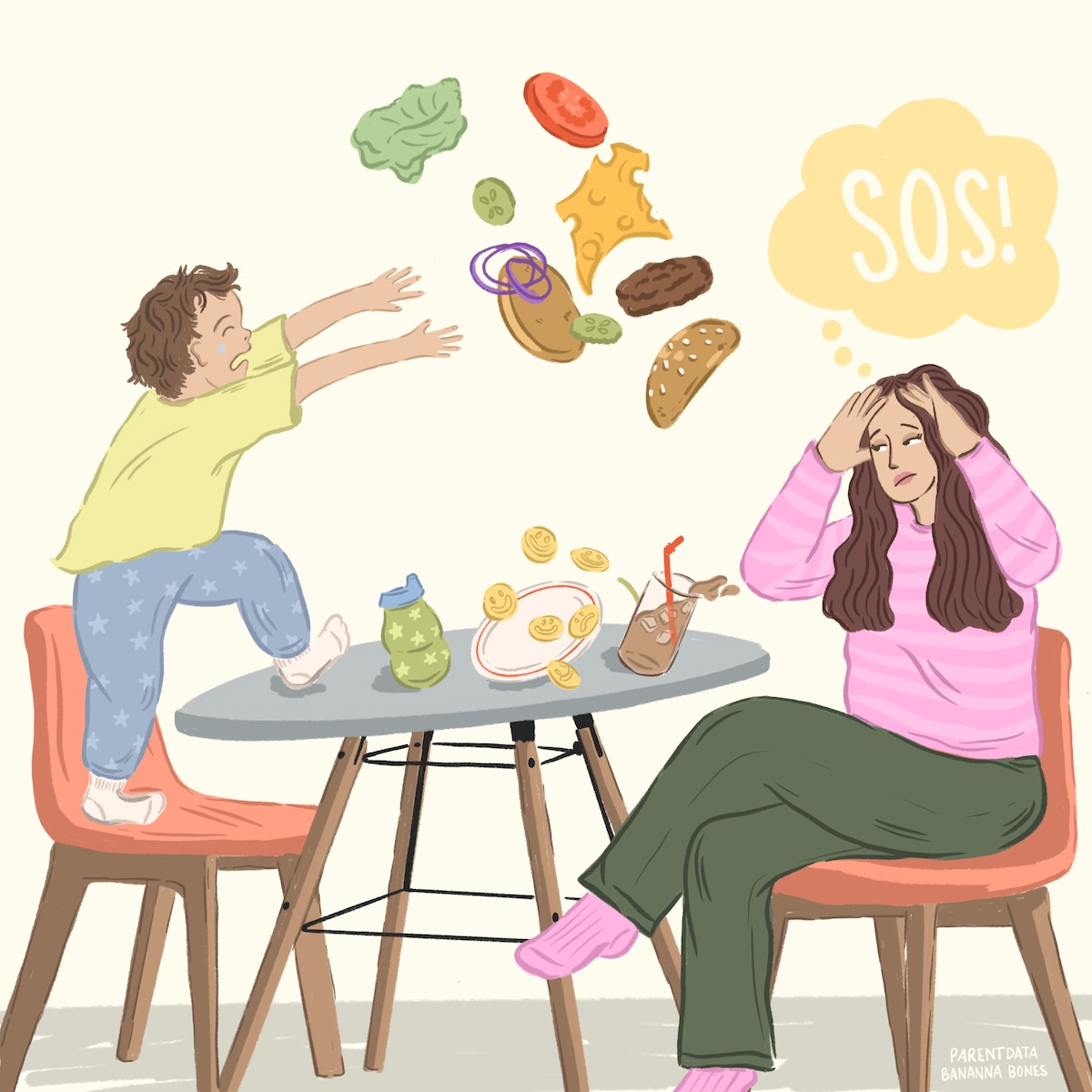
Pick your battles. You will not be able to fix everything at once so decide what you really care about and pick a consistent response. Throwing food was one of ours– every time he threw food, we pulled his high chair away from the table. We found the physical signaling does more with a younger 2 year old than words alone. One of our other “battles” is hitting mom/dad or grabbing hair. We put him down (gently) and turn away from him and say something simple like “that hurts mama.”
I have no idea if this is the “right” way, but I’ve found it helps to save up your disciplinary energy for the stuff that really matters to you and to use consistency and physical signals to communicate.
1 comments -
As a fellow parent of a 2yo, I have found that the Big Little Feelings approach resonates with my husband and me! They kind of bristle against calling it “gentle parenting” – if I were to sum it up, it’s more like, “your feelings are okay, but also there are boundaries, we live in a society.” They talk a lot about related consequences for discipline – you throw your food, snack is all done; you throw a toy, it gets put away; you splash water out if the bath, bath time is done. My dude is only 28mo but I definitely think he’s getting it, because he’ll narrate it back to me sometimes. That’s not to say they won’t tantrum! They will. But if you hold the boundary at least most of the time then they know you mean what you say and they will move on. If this also resonates with you, I recommend their course & podcast and following their Instagram!
3 comments-
2 years, 2 months ago[email protected]
Reminds me of Growing Up Bebe, boundaries and expectation setting.
1 comments-
Yes, it’s exactly like that. I also highly recommend reading the Bringing Up Bebe book and buying the Big Little Feelings course because they’re very complementary. We use this method with my almost 3 year old and it works really well. Of course there are still tantrums, but when we validate her feelings, it at least solves half the issue and she can then focus on learning the boundaries. We also try to always say what to do in the positive so she can follow instructions (hold my hand while we walk in the street vs don’t run in the street by yourself).
0 comments
-
-
Agreed! I have followed them for some time now and it does work. I like the approach of trying to tell them why too. So instead of be careful saying “that is wobbly let’s hold my hand so we don’t fall” or splashing in the tub saying “water stays in the bathtub”. Obviously if he is unsafe or does the splashing many times we are done but I think over explaining helps them know why too. We went through some rough periods where I was in tears after our battles so hang in there! It’s hard
0 comments
-
-
2 years, 2 months ago[email protected]
Mother of four here. I actually love this age in so many ways — it’s a period of intense growth and change and you’re getting to see flashes of the older child you’ll have one day! Strongly suggest you set yourself up to be able to provide small, constant corrections vs bigger ones. For example – if your kid throws food? Put one piece of food on their tray at a time. Then if they throw it, you can gently correct by saying “we don’t throw food,” and just waiting a few minutes. Get them to say “please” with sign language and they’ll be invested in getting each piece. This is much better than wrathfully picking up a whole bunch of food off the floor!! Other helpful technique is ignoring behavior you don’t like (if you have a dog, this will be familiar, same thing 😉 — if your kid tends to, say, start crying and throw themself at the floor, don’t react! Just walk away calmly and do something else. Doesn’t have to be kid friendly, just go back to emptying the dishwasher or whatever. You may have to wait a bit longer at first, but I’ve found this pretty much extinguishes behavior we don’t want. … for biting, put them down and walk away. Etc. toddlerhood is a challenge but it can be so fun as well. Good luck!!
1 comments-
I want to respectfully post this as best as I can. Ignoring is a parenting choice my parents made when parenting me. Not only did my “tantrums” go on far into childhood, but I felt so much shame around my emotions for so long—still do. I don’t expect to change minds, but perhaps I can be the voice that speaks up for those considering doing this. Please consider supporting your kids through their big emotions so they learn to regulate them instead of hiding them.
3 comments-
Strong agree. Big Little Feelings helped me handle tantrums much better. Every time a tantrum arises (and they will, no matter how much you try to prep them), I remind myself that at this age, it’s my kid’s job to feel his feelings, and it’s my job to hold boundaries. He’s going to feel how he’s going to feel about those boundaries, and my only job is to help him know that his feelings won’t overwhelm him or damage our relationship. I do not allow hitting or destructive behavior, but I no longer walk away or isolate him because I believe doing so teaches him that I can’t handle his feelings and that his feelings will damage our bond. That was not the way I was parented, and I can tell you I’ve spent a lot of money on therapy bills trying to get over it!
Another thing about two-year-olds — this too shall pass! I used to get so worked up when some new source of tantrums came on the scene (we must read this book at least this many times, or these books in this order, he can only wear this shirt, he wants his pee back after it’s flushed, etc. etc….) until I realized it’s all just a brief passing phase. And, the phases passed more quickly the more I reinforced boundaries and routines and the more I held him and maintained composure during tantrums. Now that he’s 3, his tantrums are much more manageable, and when they do occur, I actually feel more bonded with him because we are able to resolve it with love.
0 comments -
Yes… What we do is try to let our son know that we are here for him when he’s ready, and if we do need to walk away (hitting, for example), we try to communicate that it’s not to punish him, but it’s just that we dont want to be hit. So we’ll walk away but come back a minute later to see if he’s ready.
0 comments
-
-
I think “gentle parenting” is often implemented in too passive a manner, like with words alone. I’ve found that you need to actively support the behaviors you’re seeking – that means getting on their level, physically removing them from a space, physically redirecting them to an acceptable alternative, etc. I’ve seen this tactic be referred to as “scaffolding”. Gentle parenting without scaffolding is just words that toddlers often can’t do much with on their own without a little help.
Other than that, I think a lot of this age is just getting VERY comfortable with your child’s displeasure. It’s a division of labor: you set the boundary and rules, they decide how they want to feel about it. It depends on the child how to weather the tantrum as it’s happening – my preschooler does best when left completely alone, other kids might want a little presence or validation.
1 comments-
I agree about that last part about knowing how best to weather the tantrum based on your particular kid – so much of what I read says “put them down and walk away,” but that absolutely destroys my kid and makes it so much worse. I have found what works better is removing them from the situation but sticking with them for a little bit; not fully interacting, but just quietly staying in the background. Sometimes this helps them reset so much more than walking away and prevents them from completely melting down. I think it depends on your kid!
1 comments-
Yes, hear hear! I also hear a lot about not sending kids to timeout because they need your help to regulate, but I find if I’m still around my oldest escalates, and what he wants is attention (even yelling) from me. If he goes to his room for a few minutes, it interrupts that cycle and it takes away the attention he wants for the behavior (or at least teaches that if he wants attention, doing those behaviors aren’t a good way to get it). But I am sure there are many kids like yours too, who need you to still be there at least in part! This stuff is so hard.
0 comments
-
-
-
I’m really looking forward to seeing the answers because I agree, some of the gentle parenting techniques don’t seem to work at such a young age. One thing I’ve found to help is that my toddler will melt
down when we give him choices that he doesn’t really need to make. For example, when selecting a show, I’ve learned to just pick a show for him instead of giving him options and then he melts down if it’s not the right one (even if it’s the show, he said he wants… “illogical” is the best word to describe this age sometimes!) But if I simply pick a show and start playing it, he enjoys it. I sometimes think choice is overwhelming at this age. Best of luck!0 comments -
2 years, 2 months agoIt became a lot more manageable for me when I started adding in a few things the current popular social media parenting influencers are very opposed to, namely planned ignoring and time-outs. Emily has some articles about time out specifically that you might want to look at if you’ve been told that it’s harmful.
0 comments -
Thank you for posting this! I can relate to the gentle, gentle, lose it cycle! We found scripts from Dr Becky Kennedy (Good Inside) and from Big Little Feelings to be really helpful. Also, I can sometimes (10% of the time but working on it!) stop and take a breath and wait a minute to respond when something isn’t dangerous. This really helps me to shake off the last frustrating moment and not let them accumulate which usually leads to the “losing it” cycle. I also think about something Dr Becky says about being gentle (validating, not shaming, teaching coping tools in calm moments, modeling coping) AND sturdy (keeping a holding boundaries, discerning when to stop a behavior and when to offer support and help instead). I feel like sometimes I lean too much on gentleness and want to fix my toddler’s feelings when what I need to do is support him and let the emotion pass and then teach coping and emotion regulation during calm moments. Know you are not alone and so many toddler parents are in the same boat and fumbling through this phase together!
0 comments -
It really helps me to remind myself that ‘This is NOT personal; my kid is not an awful asshole. Her brain is developing and all kids go through this stage’. And I remind myself this over and over again. This doesn’t mean don’t do anything, it just helps me manage my own frustration and puts things in perspective.
I would echo the Big Little Feelings method—I personally connected with the ‘don’t isolate the kid, just indicate that you hear them and hold the boundary that YOU as the parent need to’ strategy. And find ways to give yourself a break so you don’t burnout—results can take a while to see but it DOES happen!!
Also, I know lots of parents struggle to even respond when tantrums hit and BLF have scripts to help.
Our kiddo is 3.5 and I’m only just now starting to enjoy that the fun part of toddlerhood is balancing out the tough stuff. Hang in!!
0 comments -
Oh my gosh my little dude just turned two last week and I really really feel you. I am struggling so much with the screaming, (I can usually handle the crying but the angry screaming… nope!
I really enjoyed the “how to talk to little kids so they listen and listen so they talk” book. There’s a version specifically for younger kids and while some of the tactics are for slightly older kids a lot of the principles are the same. Sounds similar to Big Little Feelings, definitely two themes are: 1. Keep it as consistent as you can and 2. Use “natural” consequences as much as possible.
We are trying to be super consistent with the hitting. Basically going “we don’t hit” or “oh that hurt me, i’m feeling a bit sad” and walking away for a minute. Or if we see it done going up to the other parent and going “oh i’m so sorry papa, that looked like it hurt, are you ok?”. But we are failing miserably at screens… are little guy has asthma and needs a fair bit of medicine and we’ve got into this habit of using a cartoon on our phones to keep him calm while he does his inhalers and other meds… its just he doesnt really get why he can’t have the phone all the time 😑…. So many tantrums.
Massive good luck to you from another “gentle, gentle, gentle….losing it” mom.2 comments-
2 years, 2 months agoWeird thought specifically about the asthma and phone part: Would watching on/casting to a TV, if you have one, help with the desire to always have your phone? Love, fellow nebulizer mom.
1 comments -
Teaching my toddler to assemble his own inhaler etc was a huge step forward in getting him to take it sans screen time. The other one that works comes courtesy an amazing paeds nurse on the ward who used to put the mask anywhere she could think of except the right place (elbows, toes, ears, etc) until he was giggling like a maniac and then ask him where to put it. In the moment it takes longer, but it absolutely helps in the long run. (Sending love from another asthma mum!)
1 comments
-
-
The framing of this question is a little alarming — as if 2 year olds need to face consequences *or else*. They are 2. You can model good behavior and try to hold limits. But they will throw tantrums… because they are 2. The “gentle gentle lose it” sounds more like a parent problem than a child problem. Kids this age will continue to rebel and push buttons and throw tantrums, so it’s up to us to stay regulated and help them keep on track (deep breathing, physically stepping away, asking your partner to step in, whatever it takes).
The Visible Child is an excellent resource and community for support during these tough years. Solidarity!
1 comments-
2 years, 2 months ago[email protected]
This is a village, you could say the say without adding how alarming the question is. Let’s be nice 🙂
0 comments
-
-
2 years, 2 months ago[email protected]
I highly, highly recommend reading (or listening to) “How to Talk so Little Kids Will Listen” by Joanna Faber and Julie King. I’ve worked in childcare for 10+ years and now have my own little almost 2 year old and this book really helped me with all kinds of different temperaments. It’s specifically for ages 2-7, has a ton of good concrete examples of how to stop the tantrums before they escalate, and is easy to read as a lot of it is stories from other parents – there’s comfort in knowing you aren’t alone and this phase is so normal! The concepts weren’t new to me, but I think having more go-to phrases or actions is so helpful, because you’re bound to find something that works for your situation. I also really valued the examples of equivalent adut situations they give. Really helped me reframe and empathize with where the kids are coming from. I’d also react badly if I was treated the way we treat kids sometimes. (Think – you’re really sad your banana is in 2 pieces instead of whole but it’s not that big of a deal = you’re really sad your mom died but it’s not that big of a deal.) Kids can really feel as strongly about something we think is trivial as we feel about major life events. Having this reframe really helps me in the moment to be more caring and have more patience. It, obviously, doesn’t always work – I really resonate with the gentle, gentle, gentle, gentle, lose it, yeah mommy was feeling frustrated refrain 🙂
Best of luck and remember it really is just a phase!
-mom of a big emotions boy
4 comments-
2 years, 2 months agoI also found the How to talk so little kids will listen book extremely helpful. My instinct is always to explain what I’m doing or why something has to be a certain way, and that just does not work when emotions are running high. Those feelings have to be felt and acknowledged before anything else can happen. What amazed me was how quickly my kid picked up on the vocabulary of acknowledging feelings and started talking about his feelings by himself, almost as soon as he could string two words together. I think this gave us a really strong base to build on with all sorts of difficulties (he’s now 8). Another successful strategy from the book that we still use is coming up with solutions to problems together. I agree with others in that discipline is not really appropriate at this age. If course if you need to remove an item or take the kid out of the situation because something bad is happening then you can do that but it doesn’t have to be framed as a punishment.
0 comments -
2 years, 2 months ago[email protected]
I didn’t even think of listening to them as an audiobook… How silly of me! Thanks for this comment! I just kept thinking by the time I have time to read them toddler will be in high school! My partner works away most of the week and I have a 2 year old and 8 month old, so not much time! But I can listen to something on my way to work.
0 comments -
It’s a great book, but I do want to point out for anyone considering getting it that it won’t help much for 18-24month olds. A lot of it – things like collaborating with the kid on problem-solving – feels more appropriate for 3yo+.
1 comments-
I read it when my kiddo was 20 months and found it super helpful then and still now a year later. Agree that the collaborative “how do we solve this?” parts are for 3yo+ but reading it early gave me good tools, and got me into the habit of using them (acknowledging feelings, not talking too much, etc) So as my daughter grows we can incorporate some of the other stuff.
0 comments
-
-
Just before 2 years to around 27 months were honestly the hardest time. I was off for the summer and had planned so many fun activities and many times they were torturous or we just ended up staying home. I stopped telling we were going anywhere just in case we ended up going nowhere.
He’s 34 months and a sweetheart most of time. Just before 2 is still a little early for consequences but we did implement natural consequences. If he throws a toy, he can’t have that toy. If he refuses to clean up, then we cannot start the next activity (go outside, have lunch, pick a new game/toy etc.). When natural consequences weren’t available, we did a one minute time out with a timer. Returned him to the spot each time he tried to get out of it, didn’t speak to him for the whole minute. He’s up to 2 minutes now. I don’t like to do it, but it does seem to work. Once the time out is over, we talk about why he had to take a break and what he should do next time. Sometimes I ask him to apologize. This discussion is brief! It’s a wrap up to the time out. It’s not an additional consequence.Even if a consequence doesn’t seem to work. Never double up on a consequence. Example: If he’s already lost the toy, he does not also get a timeout.
For food on the floor… he’s in a booster and we have some time out that way, just turned him and continued eating. But whenever possible will just take his food from in front of him and feed him ourselves until he’s ready to eat on his own.
0 comments -
I like the tactics implemented in the book Hunt, Gather, Parent. Specifically, don’t add attention / drama to the situation, remain calm (not angry – which can be the hardest part when they’re melting down), and let them have space while still letting them know you’re there for them. Essentially, let it pass. I prefer to do things though pre tantrum to hopefully avert one if I see one coming, and focus more energy on that piece, rather than waiting for a tantrum to hit and then figuring out a way how to calm the child down. Pre tantrum, I try to remain calm but firm when setting the boundaries (again, don’t give in to the drama and model calm), and try to remind myself that my logical reasoning may not resonate with their little illogical brains just yet – so I try out alternative play, distractions, etc when I see it coming to a push or pull crisis.
0 comments -
2 years, 2 months agoTwo thoughts:
1. We started 1-2-3 Magic around two with our kids, not with timeouts, but with consequences (I.e., count for throwing food and then the meal is over, count for throwing toys and then the toy goes away until tomorrow).
2. Two is young. I started to worry about discipline when my oldest was two, and it’s a whole different ballgame at 2 vs. 2.5 vs. 3 vs. 3.5, etc. So some waiting and seeing is also fine!1 comments-
I second the 123 Magic! Especially for those of us who can’t become perfect humans in time to avoid “losing it” sometimes 😉 . My kids like it — if they sense I am unhappy with their behaviour, they might say “Why didn’t you just count?”
1 comments-
Agreed. The key is consistency. You MUST be willing to follow through when you get to that 3. Good news is that the tantrums will shift dramatically when they start talking more. There will still be tantrums, but being able to understand the kid wants the egg and the toast separately or whatever made it much better in our house. So this too shall pass.
0 comments
-
-
-
lol “gentle parent, gentle parent, gentle parent, lose it!” That is exactly my approach too!
Then I have to explain afterwards that I’m sorry I lost my patience and got frustrated. (But sometimes ask them, “Do you know why I got frustrated?” and they usually know exactly why. My kids are a couple years old though.)
0 comments -
First of all: Its a phase, it will pass and nearly every child goes through it. Second: You can’t “discipline” a two year old. You don’t really punish people for having emotions either. The tantrum itself is already stressful enough for them. All you can do is make sure they are safe, can’t hurt themselves or destroy things, and help them getting through it. The only thing I would not do is give in. Our daughter sometimes screemed for 1h because she didnt get what she want. She still didnt get it but we were there with her. We talked about it afterwards and I do feel she learnt from each. Kids dont enjoy tantrums either 😂
0 comments -
Highly recommend Dr. Siggie. Big Little Feelings is popular but the approaches never worked for my highly sensitive kid. I find Dr. Siggie has scripts for different types of kids and her free parent guide has been a huge help to me. Basically the idea is to stay super calm and say less than you might think you need to. “You’re feeling so upset! What do you think you could do to help yourself?” She also has a course specifically for younger toddlers.
1 comments-
So nice to hear someone else for whom Big Little Feelings was unhelpful. It often leaves me feeling left out and alone!
We tried a lot of things, and actually what worked best is Laura Markham and Peaceful Parent, Happy Kids. The key is connection – the tantrums are a symptom of your kid feeling alone and disconnected. Once we started using Dr Markham’s play suggestions (TLDR version: make your kid laugh without tickling them for at least ten minutes every day), it was like I had a different kid. We still get tantrums these days (34 months) but I can map those almost 1:1 onto days where I’ve not made time for this kind of play.
The other one that helps me find my calm in the moment is to ask myself “what would Bandit (Heeler) do?” Bluey’s parents are far from perfect, but the reminder that Bandit, in particular, will always try to find the silly and supportive way through any situation (Chili’s default is affectionate but serious and I find it much closer to my intuitive parenting style and so less helpful when I’m going to lose it) is a good way to get out of my own head and find a new perspective when I’m cranky.
0 comments
-
-
A combination of 123 Magic and Simmer Time (Moms on Call) have worked very well for our 3.5 and 1.5 year old boys – with crushing consistency, meaning you always follow through and do exactly what you are going to say (this means never make a threat you won’t follow through on).
I hear you that imposing reason on toddlers does not make sense. There are two types of argumentative sources: arguments made from reason and arguments made from authority. Since reasoning is not fully there until the age of reason (7), authority is critical. Do they believe you? Are you a competent authority? To me, gentle parenting will not work here – because I need my kids to hold my hand and pocket in a parking lot so they don’t get hit by a car. I need them to not touch the oven when I’m pulling out a casserole so they don’t get burned. And so I need to use every opportunity to follow through on what I’m saying in small moments so that I have built myself up as a competent authority when it matters.
2 comments-
Going to disagree with you here. My toddler doesn’t touch the oven while I get a casserole out, not because I’m an authority or because I’ve driven into him a rule, but because I take preemptive action – I give him something vital to do (usually carry something in the other direction to the bin) or something “important” to hold, or I send him up into his learning tower to do some prep task or off to set the table.
He holds my hand in the parking lot because we play superglue (at 1.5) or I carry him, or (at nearly 3) because we have the conversation inside the mall doors, face to face on his level “what do you need to do if you’re going to walk to the car?” “Hold mama’s hand?” “That’s right! And?” “And do good listening!” “That’s right! Listening ears on and let’s go!”
0 comments -
100% on the “crushing consistency”.
Since we have been very consistent with enforcing consequences with our kid, we actually very rarely need to enforce consequences nowadays since they know we will follow through. Generally there is something else going on (tired, hungry, overstimulated, etc.) if we get the point to enforcing a consequence.
My 3.5yo has been doing swimming lessons, and although generally good at following the teacher, can sometimes get amped up/distracted by the other children. A simple reminder that we will leave the pool and swimming lessons for the day if they don’t follow their teacher’s instructions and they are immediately on-task again because they know we would genuinely pick them up and leave the pool.
0 comments
-
-
This era can feel like a roller coaster! For me, 2-4 yrs felt unbearable with one child but – dare I say! – delightful with another. A strategy for tantrums and limit pushing is great (planned ignoring, hand over hand assistance, moving their body or the offending object, other consequences). BUT, you also need a meta strategy because the days and weeks are LONG! For me, I realized that parenting influencers and spaces like these are the icing, not the cake. IRL extra hands and hearts and listening ears go a long way to helping you maintain a sense of self and support in the toddler era- some therapy, regularly scheduled time away doing something you love, easy ways for you and your partner to connect, etc. My kids- and my parenting and my relationship- have turned a big corners around 3.5, then 4, and 5 has been best of all! Good luck!
0 comments -
We struggled through this as well – hang in there! My husband and I have tried a few different methods. As our son aged, or day to day, different things seemed to work. For us, what has been most helpful is the the ParentData community, Good Inside (book), Hunt, Gather, Parent (book), and having nightly spouse check in’s. In our spouse check-in’s we talk about what worked that day & what didn’t, try to find some humor, maybe write in the journal we keep for our son so when he gets to this stage with his own kids he knows how we worked through it. Sometimes we also take a relay approach – if a tantrum starts with one parent, or one of us is sick/stressed already, we tag the other and go take a timeout away while the calmer parent remains in charge.
0 comments -
I think every child is different and my favorite advice is “parent the child in front of you” – like maybe the gentle parenting scripts don’t connect with you/your kid and that’s ok. Maybe they need some tweaking, or some physical additions (like removing from the table for food throwing, or putting a toy up high that’s causing drama, not like getting physical with your kid). Also the book “hunt, gather, parent” was really game changing for me. It looks at different parenting styles and techniques from all over the world. I don’t use everything presented, but it changed my mindset on many toddler parenting challenges in such a helpful way – particularly “battling” toddler wills.
0 comments -
Hang in there – you’re not alone. It will get better! For us, a few things that have been helpful include: ParentData community, Good Inside (book), Hunt Gather Parent (book), and nightly spouse check ins. In the spouse check in’s we check in on how each of us is doing, what did/didn’t work, and try to find some humor. Another thing we do is keep a journal for our son – we started it at birth and write memorable moments (when he started walking, as well as other life moments like throwing an epic tantrum at baggage claim, or biting a friend at school because they wouldn’t let his best friend be a super hero).
Hope this helps!
0 comments -
2 years, 2 months agoI’ll echo a lot of what people have said: be firm with your boundaries. And also, remember that you’re working towards long-term skills — dealing with frustration and disappointment, regulating emotions — that even adults have a hard time with. I’ve found that drawing a line (“I can’t let you throw food. I’m going to put your snack away”) and then taking actions to help your toddler when they are unable to regulate themselves is the most helpful tool that I’ve used with my kids (3.5 and 1.5). I use a neutral tone and don’t make it punitive. I see it as me helping them maintain a boundary, often one they need to maintain in order to make sure everyone is safe. I find Dr Becky helpful with these kinds of scripts. Also, redirect their energy: “we don’t throw food. If you want to throw, we can throw a ball.” Throwing food is so annoying and frustrating and burdensome…but it is also so normal. It’s a phase, and it will pass, but it is a long phase for sure.
0 comments -
2 years, 2 months agoI highly recommend the book “How Toddlers Thrive”. It made sense of the toddler nonsense for me and gave many practical ways to think about these years.
0 comments -
I would reframe how you think about your child’s tantrums. Based on my experience with my three kids, I don’t think a two-year-old needs much discipline in the traditional sense of the word. They need teaching about boundaries, socially acceptable behavior, etc. No matter what your approach, your child is unlikely to throw food forever, but they will continue to have big feelings and meltdowns (even adults have those!), so I think the goal is to teach them how to do those things appropriately and without hurting others.
A few other thoughts:
1) As far as I can tell, gentle parenting doesn’t really represent a research-based framework. It’s kind of an Instagram-y approach that means different things to different people. You can get some ideas from Instagram, but…
2) I highly recommend reading a book or two to help you develop a fully fleshed out framework/parenting philosophy to help guide your approach to these situations and other challenges that will arise as your kid gets older. (I don’t think you can get that from Instagram.) Several commenters have suggested books. I will add two more: No Bad Kids and The Whole Brain Child.
3) There is no one right way to do this, despite what Instagram may tell you. I think it’s important to do what feels right to you, what minimizes your frustration (but doesn’t eliminate it because that’s impossible in parenting), and feels like it works.Good luck!
0 comments -
Telling them what to do, instead of what not to do really helped us. It’s almost like they can’t process what the inverse of an action is.
Instead of “we don’t throw food” use “food stays on the plate” and we would remind him of it when we sat down for dinner. “Where does food go? On the plate”Instead of “don’t throw toys” use “we throw balls/soft toys, etc”
It’s not an overnight fix, but it does sink in and gives them an action they can do right then instead of just telling them no.
*there are times you do have to just say no, but we try to look for the yes, so you can’t slam the toy on the nice wood floor, but you can slam it on the mat right here.
1 comments -
I am in this with you right now! I have a 3 and almost 2 y/o so we’re going through this stage back to back, which is challenging and rewarding (as all parenting has been/will be I suppose). I am reading “no drama discipline” and it’s been great. I can see the impact so I think it pays off, but it’s taken a good year of practice with our oldest (and these kids change so quickly it’s a constant re-learning/ Jedi mind game!).
I will also say (it took me a long time to figure this out) but looking at myself is also helping. Maybe you already have done this for yourself but if not (or for anyone else), listening to the audiobook of “How to love your kids without losing yourself” and it’s helped me not be so hard on myself when I’m not a “perfect” parent or person (I.e. in the “lose it!” moments). I hope this helps you or someone else. Learning how to be a parent while actually doing it at the same time is hard, we all lose it sometimes, but you are doing a great job!
0 comments -
A very timely topic in our house (parent of a 2.5 yr old with another on the way). Always in need of new ideas/suggestions.
We use a combination of the 1, 2, 3 Magic counting method (there is a book), the Flip it method (see below), a kitchen timer, and a ton of creative thinking. Basically, there isn’t a magic bullet and we have to assess the situation and pick which one is most appropriate in the moment.
Flip it first names their feelings (I see you are really sad about not being able to have fruit snacks for dinner. I know you love fruit snacks because they are delicious. I love fruit snacks too.) Then sets the boundary (but the rule in this house is we need to eat food for dinner that makes our bodies grow stronger, not just the foods that make us happy). Then flip it (How about we eat our delicious dinner that Dada made for us and we can also have some watermelon. I know watermelon is your favorite fruit and it makes us happy AND helps our bodies grow strong). We do it in that order and I usually say it sitting down face to face with her at her level.
1,2,3 Magic is basically giving them counting warnings when they are doing negative behaviors that you want them to stop doing. (That’s one , that’s two, ok now you have to do a ‘thinking about it’ – aka time out).
We have also found that preferencing transitions before they happen really helps. If she’s playing and it’s time to go take a bath we say – “sweetie, how many more minutes do you want to play before taking a bath? She shouts 5 mins! We then set a timer (eg a physical kitchen timer that ticks and rings loudly) and tell her she has five more minutes! I also ask her “will you get upset when the timer goes off?” and make sure to get an acknowledgement before I start the timer.
Lastly, if all else fales, I lose a little dignity and start coloring my feet with a green marker and say “hey, I’m a green frog and I love water! Come play with me in the bath water little frog!” I give her a marker to color her feet and I start to make frog noises while hopping up the stairs. Basically turning it into a playful experience.
Everything listed above is exhausting and there are certainly times when nothing works. You just have to get through it and remember that this phase is hard, its temporary, and you’re doing your best.
1 comments -
– No Bad Kids: Toddler Discipline without Shame by Janet Lansbury
– Good Inside by Dr BeckyAll you need sis. Good luck 🥳
1 comments -
Try practicing authoritative parenting with a stoic approach. Keep your presentation completely calm and respond to bad behavior with real, immediate consequences every time. It might go something like this: kiddo throws food on the floor, parent’s face immediately goes neutral, kiddo gets picked up and placed in timeout, parent says “you are in timeout because you threw food.” and nothing else. Repeat as many times as necessary but never, ever skip the consequence phase. A lot of parents I’ve seen try this method but give warnings or chances. Problem is really little kids don’t understand stacked information like that; they understand “if-then” but not “if this and that or that, then”. Also, it should go without saying, but authoritarian parenting is also not effective – the reason kiddo is in timeout should never be “because I said so and what I say goes”, they aren’t mind readers and will just be afraid of parents who do that often.
0 comments -
One thing that’s helped me not lose it: when I’m feeling pushed past my limits, I will name my feeling out loud for my daughter. Something like “mama is feeling mad because it’s time to go to sleep but you keep playing.” Or “mama is feeling mad so I need a little space.” I feel much better about showing my kid negative emotion if I name it clearly rather than “leak” it. It also helps keep me regulated. Good luck! This age is hard.
0 comments -
Thanks for hosting the discussion about responding to toddler tantrum behavior. I haven’t read them all (members of the community were contributing frequently as I started to type this note), but I recognized some of the responses on the public forum. The participants in the forum suggested some sensible ideas that corresponded with some of what researchers have found about managing tantrums.
I hope that, perhaps once the intensity of commenting has abated a bit, some one of you editors will take the time to summarize the comments and emphasize the most sensible, well-founded of them. There is (as sentient beings know) a lot of bogus or near-bogus content floating about on the Internet; providing parents with recommendations that are not spurious would be a great service.
In my discipline, people must address tantrum behavior of both the familiar variety and much more substantial forms. Some of the methods that we use (e.g., functional behavioral assessment, functional assessment) are necessary for those instances where a child’s tantrums go well beyond the usual or “normal.” Many of the recommendations we make, however, are quite applicable to the tantrums that parents routinely experience—and were hinted at or even explicitly stated in some of the foregoing comments.
Happy parenting!
0 comments -
Unpopular (in today’s gentle parenting world) opinion: time outs work wonders. We started doing time outs around 2ish, where I just take my son from whatever bad behavior he’s doing and move him a couple of feet and sit him down and stand near him. They last all of one minute. Gives him and I a break from the behavior. He can cry on the timeout or be mad or whatever but he stays there for the minute until I say okay time to get up and then we just move on. No lecturing through feelings or reflecting on what happened.
A lot of things we do time outs for we never actually get to the time out because I will do the “gentle parenting” technique of naming the feeling, setting the boundary and then saying if you hit mommy again it’s a time out.
Ex: son hits me. I stop him and say it looks like you’re mad that we’re putting these toys back. It’s okay to be mad but it is not okay to hit me. If you hit me again we’re going to have to take a time out”0 comments -
We did a modified 123 Magic. One of the main takeaways my husband and I got from that book was for the parents to stay calm and rational. We would try to connect and educate first with what the child can do, like “hands stay to yourself”. If the behavior persisted we’d switch to counting. If they got a three we’d take them out of the triggering environment for an amount of time commensurate to their age in minutes. Once that time was up, we’d go on without bringing whatever offending behavior again.
The book is great at explaining that it’s not punitive but I have seen a lot of parents misinterpret the technique. It’s worked well enough for both my kids in that it has changed my behavior and my husband’s behavior to not yell and to deal with situations calmly and rationally.0 comments -
With a 3 yo and 1 yo the biggest thing that’s helped me is anticipating + physically helping them hold the boundary. They don’t really understand and process words on their own, and they’re incredibly impulsive, so if I know that he/she usually throws food when upset at the table, I’ll see them getting upset and simply move the plate away until they’re calm again. If getting even more riled up, I might take them out of the chair and hold them. Food or plate throwing won’t last forever, even though it seems like it will.
0 comments -
I second a lot of the comments below and have used similar strategies (connected consequences, picking battles, limiting damage, removing myself from the situation) mostly successfully with my now-three year old (whoa feels so old!). What I think I could potentially add to the discussion? is my “general theory of consequences.” It goes something like this:
tl;dr: 1) pick only enforceable/winnable battles, 2) pick consequences you’d actually like to implement, 3) give yourself a time-delayed out if it has to be done, 4) make your kid feel sorry for you! 4b) consider stepping in to abate the tantrum…
1) Don’t pick a battle you can’t win. Winning means that your child’s non-compliance has an enforceable consequence within your domain of control. As frustrating as some behavior might be, there are certain things you *cannot* force your child do, for example eat (barring the foie gras technique, which I think we can agree should be out!), stop crying, or sleep. So: You have to nap (Not ideal), but You have to stay in your crib with the lights off for 45 minutes (Yes – at least until your toddler can climb out and turn on the lights herself…!). This can mean dealing with some pretty unpleasant behavior in the short term that you have no ability to enforce against, but I find the gain in credibility worth the pain. (My husband does Not think about this in advance and has a much harder time with our toddler…)
2) Pick consequences that you would enjoy or prefer to enforce rather than consequences that take work for you; the ideal consequence is a default or non-action on your part. My toddler doesn’t eat enough (whole other story), so unfortunately, I can’t do the ‘withdraw food as consequence’ shtick. Then I won’t want to enforce the consequence. Telling her she has to clean it up herself before we do something fun worked better. However, if I don’t actually feel like going to the park but my toddler does, I’m happy to say We’re not going to the park until you (put your pants on/pick up your toys/stop whining). If I *do* want to go to music class, I tell her I’m going and she runs to join me or I tell her she’s getting strapped in the stroller rather than riding on my shoulders. Rather than getting my still-splashing-after-I-gave-her-three-warnings kid out of the bath, I just open the drain. Soon enough, she’s getting chilly and wants out herself. Less work for me!
3) Give yourself a time-delayed out if something has to be done. The best consequences are immediate, but that’s not always practical. If my daughter won’t clean up her toys but grandpa’s coming over and going to banana-peel on a magnatile, I tell her I’ll clean them up, but then she can’t play with them for two days or something like that. (Otherwise, I’d leave them out until she wants me to play something else with her, at which point I won’t until she cleans up.)
4) Show your feelings and cultivate empathy! For hitting and the like, the real reason we don’t do them (obvs) is because we care about other people. While this is most effective on better developed frontal cortices, it works with my toddler. From an early age, I showed her I was happy when she did what I asked and sad when she ignored or hurt me. Now most of the time all I have to do is say “That makes Mama sad!”, and she’ll say (literal quote from today) “I don’t want you to be sad! I’m sorry, Mama!” (I got a hug, too <3 ). And then I gave her a cuddle and she did what I asked.
4b. Perhaps more controversial? Consider stepping in to abate the tantrum. Nobody’s having fun if a child is wailing. Even if *I* can’t understand why the fact that she can’t take her scooter is a drama of existential stakes, she’s really upset (if not as performatively as perhaps her tantrum suggests). I don’t want her to be upset, and I want her to know that I *care* that she’s upset (see empathy above). When my toddler is screaming on the floor (very rare now! it does get easier!), I go over to her, put her on my lap, and tell her I love her. In the next breath, I tell her I’m not going to change my mind, and why (waayy too many stairs en route; no good default consequence because *I* end up carrying the scooter when I can’t force her to carry or ride it). Cuddling her helps her calm down faster and get to a point where we can talk and “reason” together; maybe we’ll even come up with a compromise. (Scooter time in the hallway for five minutes? or at the park after we get back?) Of course, it’s important that her tantrum NOT result in me changing my mind (battle, once engaged, must be won, even if after the fact it was a stupid one…) so that it doesn’t teach her that whining works. But I’m totally ok with teaching her that expressing her feelings Does work, even when they’re too overwhelming for her to manage with her words, and I’m confident that as she matures, her self-expression will, too.
1 comments -
I’m curious if any other toddler parents try to wall off/remove screaming and tantruming. We do a lot of the scripts people talked about here like name their feeling, explain why simply, tell child the behavior we want and enforce a natural consequence if they don’t do it when we count down from 3. This works decently well with our almost-3-y/o. But of course sometimes she just wants to scream and melt down bc we did something awful like flush the toilet w/o letting her do it first, and it disrupts our family and our baby. So we tell her “it’s ok to scream, but I don’t want to hear it” and tell her to go to her room or outside. We also say “When you calm down, or if you need a hug or kiss to calm down, please come out.” I really want to teach our toddler that she is not the only person whose feelings matter. But tbh, whenever we do this in front of other millennial parents they kind of give us side-eye lol. I guess I’m looking for some validation or other perspectives on not letting your toddler be the boss of the family 🙂
1 comments-
2 years, 2 months ago[email protected]
My parents used to say “it’s okay to scream, but I don’t want to hear it,” and…well, my therapist can tell you that it’s problematic. 🙂 Basically, it teaches your kid that they should only share positive feelings with the people who love them, and that they should hide and be alone with their anger and sadness.
I do remove my screaming kid from other people when she’s been disruptive – but then I stay with her. “You can scream, but you can’t scream at the dinner table. We’ll stay over here until you calm down.”
0 comments
-
-
I have a 6 year old and got the Generation Mindful “time in” toolkit. It’s meant to help toddlers and young kids calm down and be able to express how they are feeling. It takes for 2-3 year olds to really get it but the goal is to stay consistent: https://genmindful.com/
1 comments -
I am a mother of four, and my youngest is now 3 and is 5 years younger than my next oldest kid. It has been so fascinating how much easier almost everything has been the fourth time around, not because my 4th kid is any less stubborn or difficult or tantrum-prone than all of my other kids were, but because I just worry and focus and tune in less to all of the problems that I know will basically resolve themselves if I manage not to lose my cool or pay them too much attention.
I know it’s not easy, but try not to overthink it or to worry too much when your 2-year-old is having a tantrum. That’s just a thing they do when they can’t deal! It’s hard to be 2! 🙂
I personally think that sticking to a plan / having a consistent response to a tantrum can feel very difficult because situations and moods and other factors vary so much.
Try to stay cool. Try to stay positive. Maybe distract yourself by getting busy with something else to see if that shifts the energy. A little benign neglect can be a lot better than a response that devotes a lot of energy / attention to a difficult behavior. Try to find the humor in it and to stay good humored. In my experience there is basically no point in “disciplining” a 2-year-old. Just model kind, calm, rational behavior as much as you can manage to, and let the stress of and thoughts about the tantrum go the moment it’s over.
Unless you have bigger issues at play (which certainly happens but is probably not the case), trust that your kid will outgrow this and try to be easy on yourself.
0 comments -
Solidarity with anyone between 18-24 (30?) months right now! My 21mo kiddo is sweet and silly 90% of the time, but those irrational meltdowns are so hard. She got SO MAD when I turned on the toaster oven (the nerve!) and would not let her play with batteries or eat balloons. But the idea that I’d be “disciplining” her seems crazy. She only says about 10 words (we do a lot of signs) and does not understand much about safety. I do a lot of validating, remaining present, and then redirecting. If it helps anyone, the way I think about it is that getting her to stop crying or tantruming immediately is not the goal. Kids tantrum because they are having a hard time. As a therapist, please think of your kid as struggling, not “being bad.” Keeping her safe and me staying calm is the goal.
We also do a lot of the “say the thing you want them to do” like “walk please” instead of “don’t run” or “food stays on the tray” instead of “don’t throw food” but it honestly doesn’t do much. I feel like maybe it won’t until at least 24 months?
0 comments -
Remember that we’re playing the long game. You’re not going to get instant (or even consistent) compliance from a 2 year old. But maintaining firm, loving boundaries and allowing them to have their feelings while learning the consequences of inappropriate actions is exactly what needs to happen.
0 comments -
There’s just a few principles we keep in mind w/ our 2.25-yr old son
1. Reward behavior we want to encourage
2. Allow him to feel however he feels, including angry, tell him we understand
3. Provide consequences (if he throws food on floor it stays there and/or mealtime is over, if he hits we will walk away, etc)Sometimes we’ll sit on the floor while he rolls around screaming, reminding him we understand why it’s frustrating, but he cant have/do x, and we’ll be here if he needs us. Usually he’s good after a couple minutes at most.
0 comments -
I feel you! This stage has been SO trying for us. Our son is 27 months now, and there are days when he is the cutest most adorable cuddle-bug, and days where it’s like a scene out of the exorcist. Hitting, spitting in our faces, thrashing, screaming like some creature from Mordor. It has been VERY hard to figure out what triggers the bad days – whether he’s not feeling great because he’s congested and maybe didn’t sleep that well, or it’s just developmental, or he’s getting his 2nd set of molars in (they have been so slow) – or it’s just part of being a toddler.
Generally speaking, I’ve found that since his language skills have developed more, and he can speak in full sentences now, that has helped just slightly with tantrums. The year from 1-2 was really terrible tbh (he went through a month of boycotting naps just before he turned 2, and that sucked). The tantrums were more frequent than they have been since he turned 2, although they weren’t always as intense. He recently screamed for so long (because I wouldn’t turn on the tv) he threw up all over the living room, which was a first.
I did research a bunch of different books and podcasts to try to find strategies that would work – but I’ve found some things work on some days and not others. The reason behind the tantrum and behavior is variable. For example, is he throwing his plate on the floor because he’s not hungry and doesn’t want to sit down and just wants to play? Or is it because I served chicken and pasta and he wants a muffin and that’s not on the menu?
He had an evaluation for speech development and behavior last month (and scored within the “average” ranges for everything) and the evaluators commented on how self-directed and willful he was, and they tried to give me advice and tips for reducing hitting and tantrums for someone with his temperament. I found that the tips for toothbrushing have worked on some days (get him to brush my teeth or my husband’s) while we brush his teeth – it distracts him and he laughs while we make silly faces and open our mouths wide. Previously, the songs we’d sing, the brushing of his stuffed animals teeth, etc. didn’t really work because he always wanted to brush his own teeth, but would only suck or chew on the toothbrush.
The other things they discussed – like giving him food options so he can pick what he wants for example – just don’t work with him. If he has 3 different foods on his plate and he decides he wants something else, that’s it, there’s no changing his mind. He just won’t eat. And he can go for weeks like that. They also talked about having him involved in the food prep and cooking (more than just chopping stuff with his toddler knife, which he already does) – so we prepared mini pizzas together. He picked the toppings and assembled them. We put them in the oven together. He was all excited to eat them, and then picked everything off, took a nibble of the crust and spit it all out. I ended up eating all of them. At the end of the day, so much depends on your individual child’s personality!
The evaluators did stress that a consistent response is necessary – so if I tell him no food on the couch, but hey you can sit on the floor and eat, and he insists on sitting on the couch and I give in one single time because I can’t stand the screaming anymore – he’s going to remember that time! It is exhausting because there are some days where you just want the screaming to end, and you can’t take it anymore. And the crutch was often the tv. If I had work to do, or even needed to cook or do laundry or whatever, and it was bloody murder screaming and crying for hours, as soon as the tv was on he’d stop. I’d get my sanity back. So that did turn into a huge issue for us. We broke the cycle by stopping the tv cold turkey for weeks. It was rough. There was A LOT of screaming. I ignored him. He still asks for the tv occasionally but not nearly as often as he used to. It does help enormously that the weather has warmed up and we can go outside more now – over the winter that was really tricky, especially when you have a kid that is terrified of the snow!!
One additional thing that usually works with him (again not every day, but it’s worth trying it – and this only started working once he was able to express himself) is asking him some questions that give him a couple of options, and distract him from the problem. So for example when I went to pick him up at daycare the other day, he had some toys he was holding that he didn’t want to let go of. And the daycare teacher was like hey let’s give these to your friends. And he started screaming NO NO NO. We both tried a couple more things to get him to put them down but he wouldn’t. Instead of just wrestling them out of his hands (which I’ve definitely done before, but that would have led to hitting and spitting and rolling around on the ground), I said hey do you want to hop to the car or do you want me to carry you? And he said walk! I said oh you want to walk to the car? And he said yeah walk to car. So he let the toys go and we were able to leave.
Good luck!!
0 comments
 KMZ223
 CaitlinA
 kahcarre

 Lana
Lana
 jenna.j
 The Father

 Rachel33
 Seabee123
 KateZ
KateZ
 fayezor
 ehaff
ehaff
 kudzia.megan
 MomNamedEmily


 Kimberly P
 MTurner
 meabh
meabh
 Jules the First
 mroatman


 amanda27
 MomSoHardUniversity
 MamaMeeshka21
 ksolo
ksolo
 silentlobster
 Elly, now in VA
 ThreeMoonsAreUp
 Nina
Nina
 llbrown
 Katiedal
 N
N
 AC123
AC123
 JJ
JJ
 sciencemom
 Jennifer H
 elizabethdm
 Alena
Alena
 aprilmayjune21
 Ali L
Ali L
 Postproductions
 Anastasia
 liabobia
 sbs118
 JohnL
JohnL
 MamaK
MamaK
 MayMontt
 OA
OA
 Lily K
 Christy

 Faiza
Faiza
 kfm
kfm
 mestern
 jamieG
 oneanddoneinPDX
 Jess b
 sambdee
 Ariane
- You must be logged in to create new topics.


