




 Get access to over 1,300 articles and reader Q&As



This is a story in three graphs.
The first graph below shows the rate of labor force participation — that’s the share of people in the group who are working or looking for work — among women with children under 5, over time since 2000. For comparison, the graph also shows women without children.
The second graph shows the share of women who report teleworking — that’s some kind of remote work — over time since the series started in 2022.
The third graph shows the excess births, relative to the expected trend (meaning more babies were born than predicted), in 2021 relative to 2020 for women with and without a four-year degree.
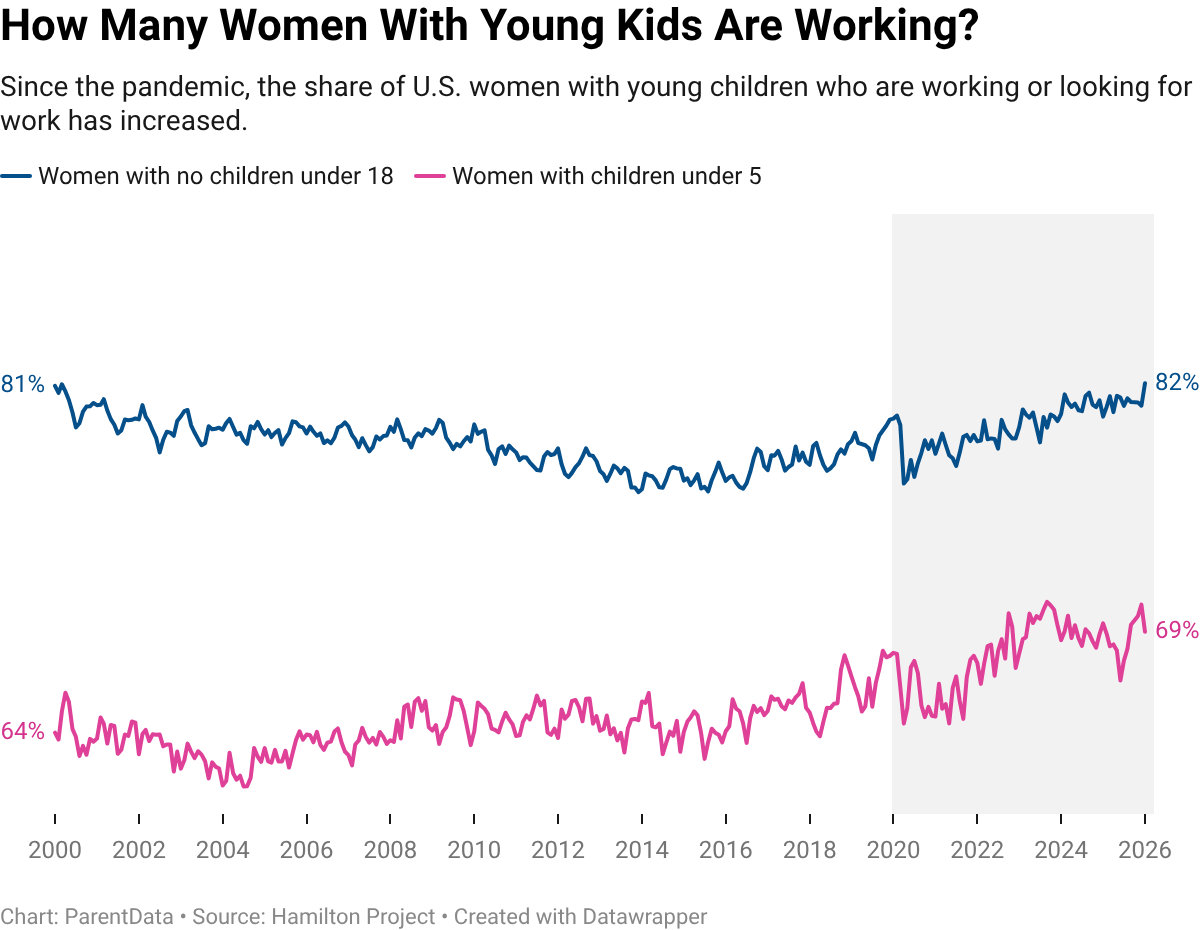
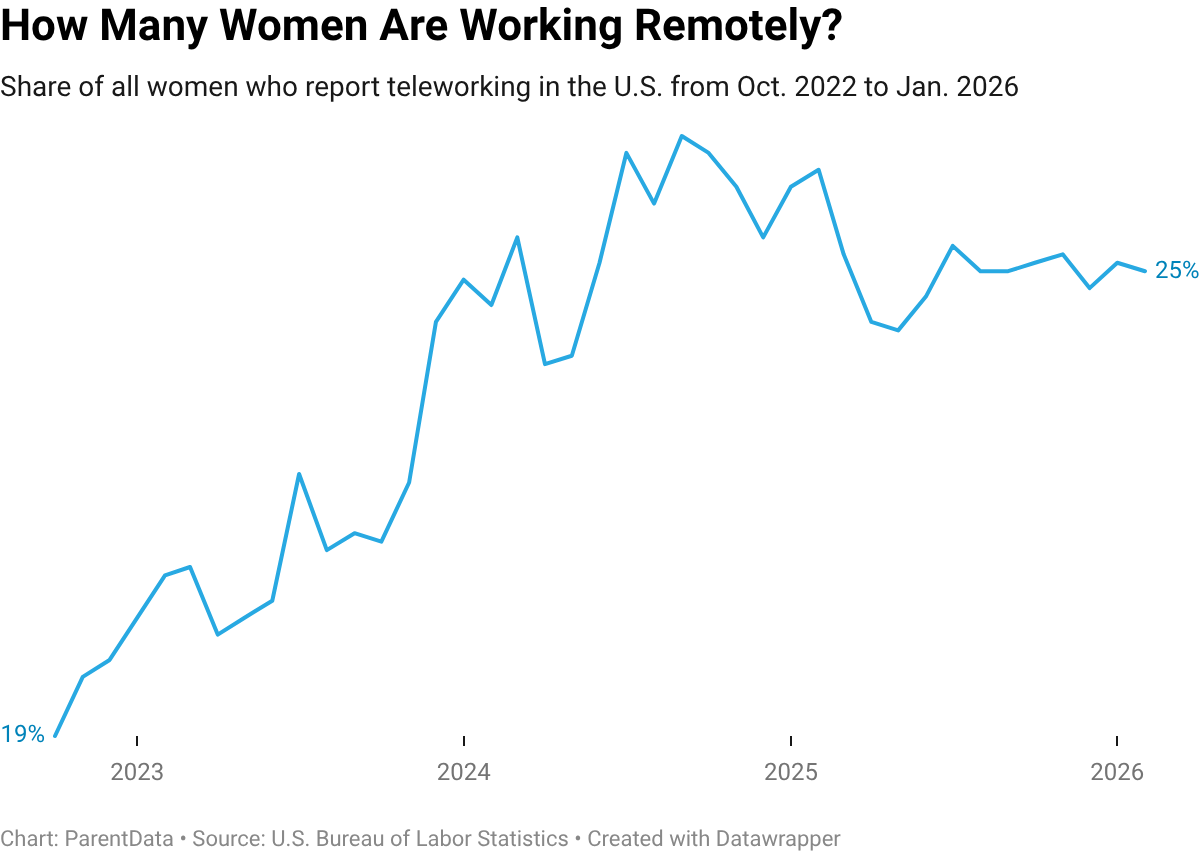
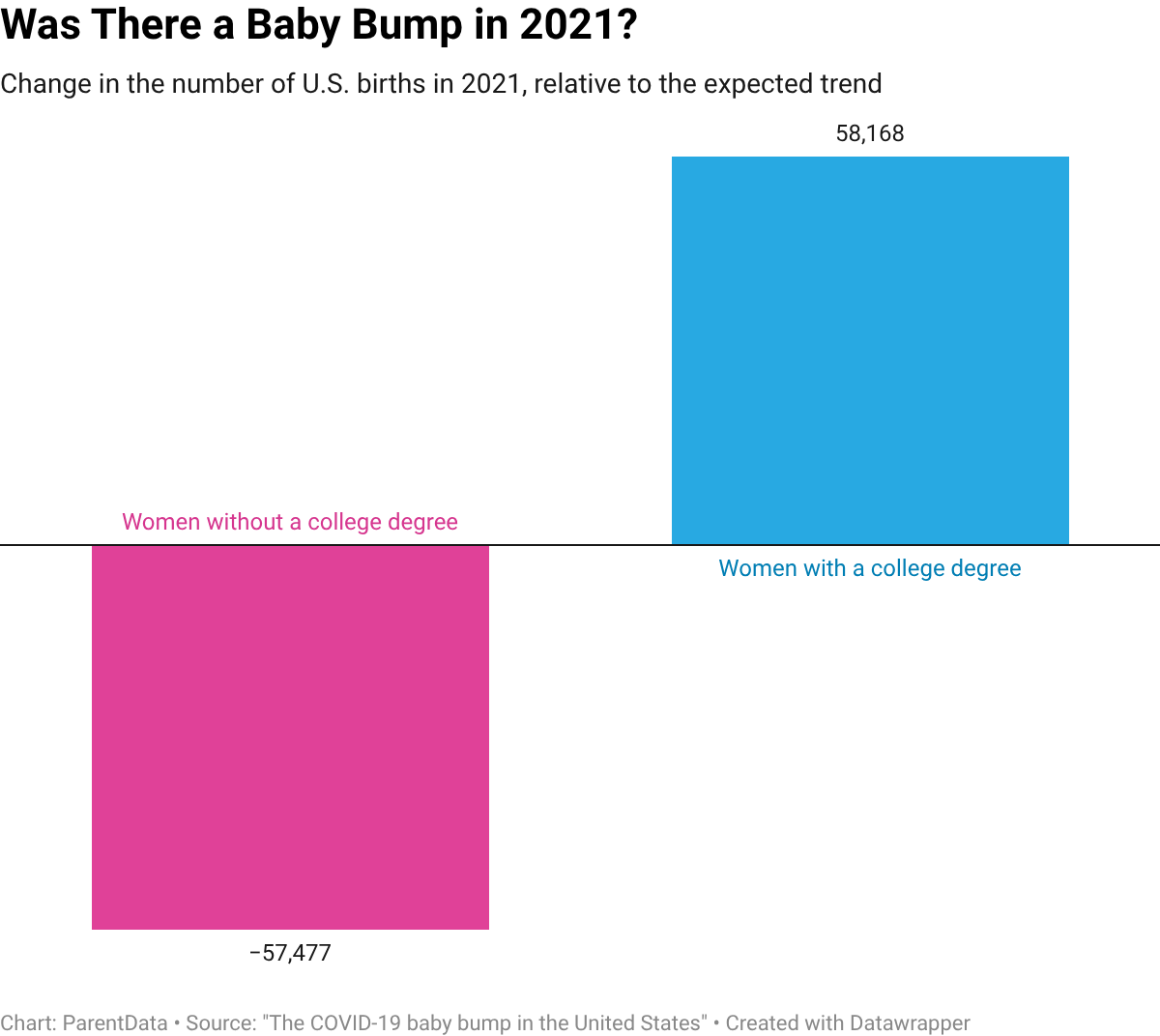
These three graphs give us three facts. First, labor force participation for women with young children has gone up over time, both overall and relative to women without children. Second, remote work increased (even post-pandemic) and has remained high. Third, births to women with a college degree (who are more likely to have jobs where remote work is possible) increased significantly in 2021, during what was likely the peak of the remote work era.
Looking at these data together, they suggest an interesting story. The COVID-19 pandemic forced remote work, and that possibility of remote work may have increased the ability for women with young children to remain in the labor market. By extension, the third fact suggests that this change might increase fertility.
To the extent this story is causal, I think it is an important one (more on this below). But the fact that these trends move together over time doesn’t show causality. However, a new paper — from some economists at Stanford and elsewhere — argues that these facts may all be related and that, in particular, access to remote work may increase fertility rates. Here, I want to unpack this paper and then talk a little bit about what it might mean for policymakers and for you.

Does remote work increase fertility?
Motivated by some of the patterns above, researchers in this new paper set out to answer the question does access to remote work increase fertility?
The authors take two approaches to the data — neither of which is perfect, but together they start to paint a picture.
First, the authors look at survey data from the U.S. and abroad. I’m going to focus on the U.S. data here, but their international data looks very similar. In the survey, individuals are asked about their work-from-home status and both their actual current number of children and how many more children they plan to have.
The figure below shows a measure of total planned fertility — actual, plus future planned — by work-from-home status. For both men and women, total planned fertility is higher if they work from home, and even higher if both people do.
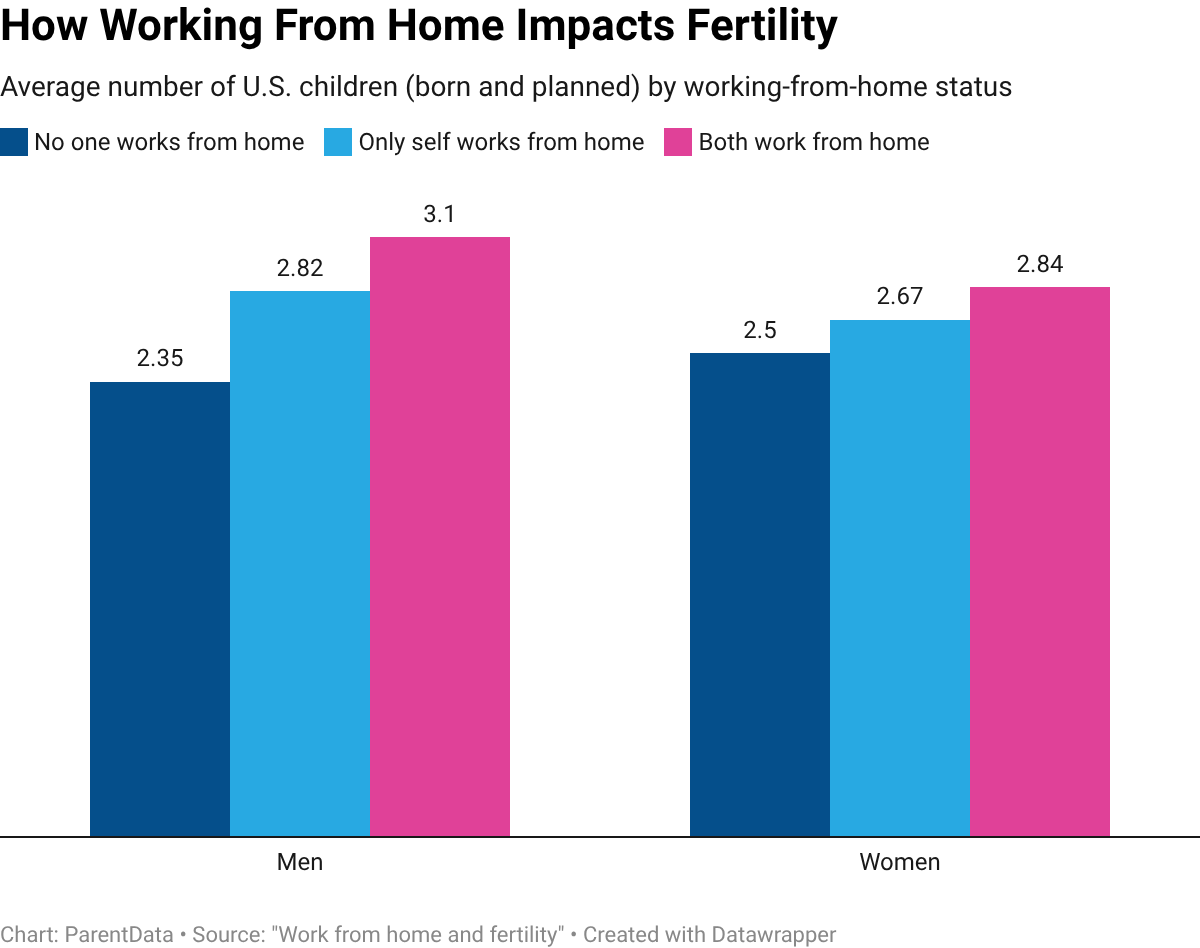
There is an obvious (at least for someone who studies causal inference as their job) concern with this data: people who choose to work from home may be different in other ways from those who do not, and it’s hard to know whether the opportunity to work from home is what is driving higher fertility. The authors adjust for many factors, but those adjustments are always going to be incomplete.
The authors supplement this work with a second analysis, using only data from the U.S. In this second analysis, they look at how fertility rates (here, realized births — not planned) vary with the extent to which your occupation allows for work from home. In other words, rather than looking at whether people themselves work from home, they look at whether people work in an occupation that is more likely to allow work from home. This removes some of the concern that the people who choose to work from home do so because they want to have more children.
In this analysis, the authors find the same set of results. For both men and women, raising the work-from-home share in their occupation raises fertility, and it’s further raised if their partner also works in a high work-from-home occupation.
The authors make the case that these effects are potentially important. In particular, in the U.S., in 2024 there were 3.6 million births. Their calculation suggests about 291,000 of those — about 8.1% — were accounted for by work from home. Put differently, in the absence of any work-from-home opportunities, they estimate an 8.1% decrease in births.
The authors of this paper are clear that the causality in this work is not iron-clad. They do not have a real “randomization” of work from home to evaluate. Their case rests on pulling all the patterns in the data together to make their argument. On top of the other patterns we see in the world, I find it a compelling one.
What does this mean?
If you believe the conclusions of this paper, it has some clear policy implications. There is a lot of talk and concern about the collapse of fertility rates. At the same time, from an economic standpoint, there is value to more people working — that’s tax revenue. If you want to have more babies and more people in the labor force, this data suggests that policies that increase work-from-home opportunities may help. These could include incentives for employer flexibility, better broadband access, or other, more creative ideas.
I think there may also be implications for employers. This data should make it clear that employees with young children value work from home. This isn’t possible at all jobs, but I think it is worth employers considering whether this is a perk that might allow them to retain people in this phase of life (or attract better people).
Are there implications for individuals? In a more indirect way, perhaps yes. These results suggest that many people likely find it easier to combine work and family with remote work arrangements. As you think about the structure for your family and work, especially if you are thinking about returning to work after a break, this is something to consider as one job characteristic.
I also want to say: working from home is not for everyone! This is a space, as so many in parenting, where what works for one family may not work for another. Put this on your list of considerations, but if you’re someone who likes to be out of your house, you are definitely not alone.
The bottom line
- A new paper suggests that access to remote work could be associated with meaningfully higher fertility rates.
- Remote work policies could simultaneously boost both fertility and workforce participation, though it’s not a one-size-fits-all solution.
- As you think about the structure for your family and work, especially if you are thinking about returning to work after a break, remote work is something to consider as one job characteristic.










Log in