




 Get access to over 1,300 articles and reader Q&As



There are some foods and beverages that inspire almost religious devotion. Items that people who love them describe with a far-off look; items that people would list on their desert-island food pyramid.
One of these items is Diet Coke.
People who love Diet Coke often really love it. They look forward to it. They have opinions about which fast food chain has the best fountain version (apparently, McDonald’s). Gen Z has renamed Diet Coke a “fridge cigarette”, equating the first hit from a cold can to the first nicotine bump.
Unfortunately, just like a lot of the other things we love (caffeine, alcohol, Swedish fish), the food police have come for Diet Coke. We are warned that Diet Coke causes cancer and that it’s generally toxic. If you’re pregnant, there are even more warnings: Diet Coke is apparently being linked to autism and higher BMI in children.
But is any of this well supported in the data? Or is this just a lot of hot garbage like most of our evidence on diet?
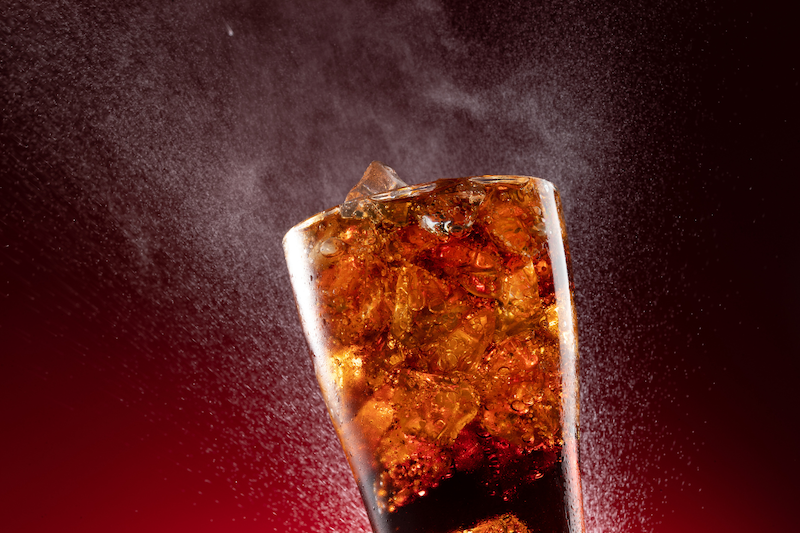
Is Diet Coke bad for you in general?
Let me be clear. Any food can be overdone. If you are drinking 20 Diet Cokes a day, that’s probably too many. Can we be 100% sure? No, we do not have reliable data on people who drink huge volumes of this. But it’s hard to shake a general sense that, in life, moderation is key.
Even for moderate consumers, though, there are claims that Diet Coke (and the sweetener used in it, aspartame) leads to health problems.
Claim: Diet Coke causes cancer
The scariest claim is that Diet Coke leads to cancer. This is primarily based on data from rats. Some studies have shown that when mice and rats are fed very high doses of artificial sweeteners, they are more likely to develop cancer. Aspartame is present in many diet sodas and in other products, but Diet Coke is a major source.
Having said that, even in rats and mice, the evidence is mixed. A meta-analysis focused on the impact of aspartame in particular on rodents found no convincing evidence that it caused cancer. And, much more importantly, data on humans consuming normal amounts of diet sodas (and other sources of aspartame) does not support a link with cancer.
Claim: Diet Coke leads to weight gain
A second concern is that — somewhat paradoxically — diet soda might lead to weight gain or other metabolic issues. There are suggestions that this might occur because people react to the sweetness, even without the calories. As it turns out, the explanation is probably far simpler; this is correlation, and not causation. The group that drinks diet soda differs in other ways from the group that does not. In addition, this problem is compounded by the fact that people often switch to diet soda because they are worried about weight or metabolic disease. This creates a problem called “reverse causality”: the weight causes the diet soda, not the other way around.
In better data, we do not see these links. And, in fact, randomized data shows that replacing sugar-sweetened sodas with diet soda can assist in weight loss.
Claim: Diet Coke dehydrates you
It does not dehydrate you! The caffeine content means that it is slightly less hydrating than an equivalent amount of water. But only slightly less. You would not die of dehydration consuming only Diet Coke, even though — as noted at the top — this is probably a bad idea.
Claim: Diet Coke affects [fill in the blank]
There isn’t space here to address every Diet Coke panic headline. Some of these seem to reflect what is hot in the wellness space. Most recently, I’ve seen discussion of possible impacts on the microbiome. The microbiome is of increasing interest, and people have raised concerns that diet soda consumption might negatively impact it. Detailed randomized data does not, however, support this.
Beyond this, you can find studies linking Diet Coke to cognitive decline, liver issues, etc. All of this work has a very basic correlation-is-not-causality problem, similar to the issues with cancer discussed above. When you see these articles, unless they explicitly discuss randomization, I would assume the results are driven by bias, not by a causal link.
Should you avoid Diet Coke in pregnancy?
If we agree that Diet Coke is fine in general, what about during pregnancy?
One reason people are told to avoid Diet Coke during pregnancy is the caffeine. Twelve ounces of Diet Coke has 46 mg of caffeine, about half of what you’d get in an 8-ounce cup of coffee. Although pregnant women are often told to avoid caffeine during pregnancy, a careful review of the best data makes clear that some amount of caffeine is fine. Given the lower caffeine content in Diet Coke, you’d have to drink a lot of it (up to, say, eight Diet Cokes a day) to get to a level of caffeine that even begins to present concerns.
A second reason is hydration, but, as noted above, this is only slightly less hydrating than water.
There are then several panic headline concerns which are worth discussing (and, in my view, ultimately dismissing).
Claim: Drinking Diet Coke during pregnancy leads to autism
The first is the concern that aspartame consumption during pregnancy might lead to autism in offspring, especially boys. This concern is based on a 2023 study. The study is what is called a “case-control” design. Researchers recruited a set of children with autism, and then looked for a set of control children who did not have autism. They then asked their mothers to think back to their pregnancy (which was an average of 10 years before) and report their diet soda and other aspartame consumption.
In comparing the children with autism to those without, the authors found that in one category (boys, non-regressive autism), the risk was higher in the children of people who consumed more aspartame.
This study has a lot of problems that make it unreliable. The case-control method is subject to large concerns because the groups are recruited differently, and they are likely to be different in many ways. Getting accurate information about diets is challenging, even if you are asking about current dietary consumption; very few people are going to remember in detail their consumption of one particular food a decade ago. This introduces a lot of random noise.
Finally, the authors in this paper do a lot of analyses, most of which show nothing. They pick out the one analysis that is just marginally and statistically significant and highlight that one. That’s not an appropriate way to draw conclusions; it’s what we call “p-hacking” (you can read more here).
The bottom line is that this study isn’t strong enough to learn anything meaningful from.
Claim: Drinking Diet Coke during pregnancy contributes to obesity in children
A second concern commonly raised is that consumption of artificially sweetened beverages during pregnancy contributes to obesity in children. A primary citation for this is this article from JAMA Pediatrics in 2016. The authors here follow a cohort of mother-infant pairs through their pregnancy and beyond. They collect information on food and beverage consumption during pregnancy and then measure (among other things) infant BMI.
They find that the infants of mothers who consume at least one artificially sweetened beverage a day during pregnancy are larger at one year than those who do not. However, these mothers also differ on many other features (their own BMI, breastfeeding behavior, smoking in pregnancy, diabetes in pregnancy, education, etc.). When the authors adjust for these variables, the effects they observe get much smaller and close to insignificant. It seems very likely that if they were able to adjust for more differences across women, these results would go away.
There is no evidence-based reason to avoid Diet Coke (or other diet soda) in pregnancy. Please continue to enjoy your “fridge cigarettes.”
The bottom line
- In moderate amounts, Diet Coke is generally safe — claims about cancer, weight gain, dehydration, or other health harms aren’t supported by strong data and mostly reflect correlation rather than causation.
- There’s no solid evidence that Diet Coke is harmful in pregnancy. Claims about autism and childhood obesity are not based on reliable data.








Log in
Thanks! I average around 20 a day and in all modesty my biomarkers are better than that Bryan Johnson nut. I believe that we have a heuristic of processed=bad but the truth is that calories=bad. Processed is usually correlated with calories but there are places, most notably diet sodas and diet breads, where that correlation totally breaks down. The Healthiest Lab Results Ever Recorded? Inside Bryan Johnson’s Longevity Bloodwork | I Won’t Die
Finally some good news!
The concern I’ve heard with diet drinks is that they make your brain expect to get calories, and when you don’t, you overcompensate by consuming more calories. If this is not true, and the weight gain is not truly reflected in the data, then wouldn’t diet soda, if it makes you feel more full, be taking the place of more healthful calories, like ones with fiber and vitamins?
One (small) dimension missed here is the effect of diet drinks on oral health: diet drinks are on average approximately aa acidic as their sugary alternatives. It takes roughly 20 minutes (for a healthy adult) after an acidic drink is consumed for the pH in the mouth to return to its normal levels. Regularly consuming any type of strong acid, which includes Diet Coke, impairs the remineralization process that protects your teeth from decay (i.e., your risk for consumption increases sipping it over a long period of time). Higher rates of oral tooth decay are likely causal on higher rates of oral inflammation and to a lowe degree systemic inflammation, as well as lower quality diets (for obvious reasons, people with poor teeth have lower quality/higher processed diets).
So while it’s silly to pick on Diet Coke as bad for you in particular, sodas in general, even diet ones, are clearly bad for your oral health and thus should be treated as negative for your overall health.