




 Get access to over 1,300 articles and reader Q&As


My partner and I are getting ready to welcome our baby, and it’s been challenging to find advice about preparing for postpartum as queer parents. So much of what I read is geared towards heterosexual parents. What can we do ahead of time to make sure we have the right support in place? What should we be ready for?
— Seeking Non-Heteronormative Advice
As queer parents and parents-to-be, our experiences are not centered by the medical community or culture. This means it’s important to put extra planning and intention into preparing for our postpartum and early parenthood journeys.
Research shows that LGBTQ+ birthing people are at higher risk for experiencing birth trauma as well as a greater sense of isolation than our heterosexual counterparts — partly due to the structural inequities in our healthcare system when providing care to LGBTQ+ parents and parents-to-be. This study showed that LGBTQ+ people are significantly more likely to delay primary and specialty care in the postpartum period when compared to heterosexual people. Although it was limited to a small sample size, the study points to a concerning reality that many LGBTQ+ people face increased barriers in the postpartum period because of higher rates of birth complications and an overall lack of provider training for LGBTQ+ birthing people.
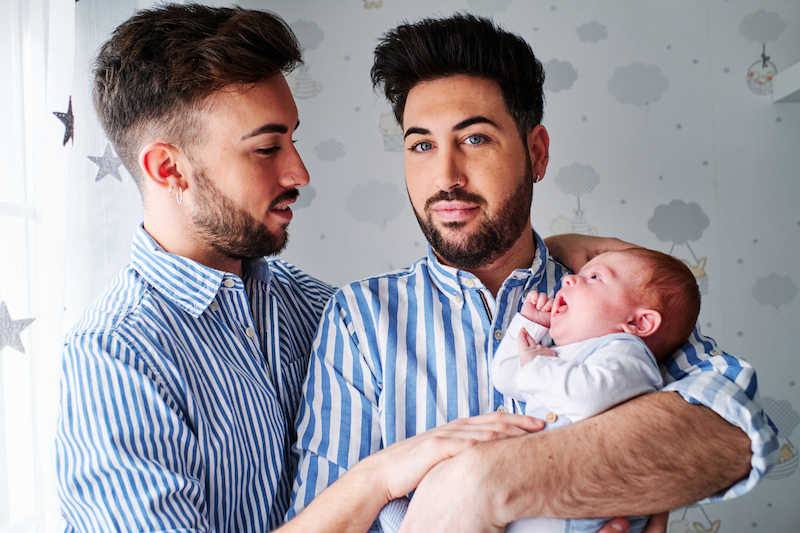
Here are some ways we can make up for these differences:
- Find an affirming provider
Research shows that when LGBTQ+ people have a provider who understands them, their relationships, and their identities, healthcare outcomes improve. Taking the time to build your postpartum support team with providers who have done their work on caring for the LGBTQ+ community will go a long way in supporting you during your postpartum period.
When looking for an affirming provider, it’s okay to ask them directly what kind of training and experience they have in caring for LGBTQ+ people. It’s important that their front desk personnel and supportive staff have received this training as well. Here is a resource that can help you find an affirming provider as a queer person seeking medical care.
- Set up your support systems
Becoming a parent is a lot, and it can feel especially overwhelming when you don’t see examples of your queer family around you. Having adequate social support does wonders for improving mental health postpartum and decreasing your risk of postpartum depression.
I strongly recommend putting the energy into building your “village,” both in person and online, to support you through the often challenging transition into parenthood, before you are in your postpartum period. Having people around who can bring you food, walk your dog, or come hold your baby while you shower makes early parenthood possible.
Check out your local LGBTQ+ center for local queer parent meetups, and consider joining Facebook groups or the virtual queer family building PregnantTogether.
- Non-gestational parents need support, too
Being the non-gestational parent in a queer relationship can result in feelings of overwhelm, isolation, and lack of support, since our culture and medical system too often fail to acknowledge the importance of non-gestational queer parents. It’s not uncommon for the non-gestational parent in queer relationships to feel left out of medical care and not acknowledged as an integral part of the family system, especially if they don’t share a genetic link with their child-to-be.
I strongly recommend that non-gestational parents build their own support networks to help them through this big change. You are no less a parent if you didn’t carry your child in your body or if you don’t share a genetic connection, and you deserve to be supported in parenthood just as much as anyone else. PregnantTogether offers support groups specific to non-gestational queer parents, and certain books can be very validating as well.
- Get your paperwork in order before the baby comes
As queer parents, we often need to go through extra steps to protect our families and codify our parental rights. It’s important to understand what paperwork is required in the state in which you live, and either start preparing that paperwork yourself or hire a queer-affirming lawyer to do that for you.
Even if you live in a state where both parents’ names can be on the birth certificate, it’s essential to go through the confirmatory or second-parent adoption process. Depending on where you live and your marital status, this process may be relatively simple or very complex, even sometimes requiring visits from social workers and court proceedings.
Take the time to research your legal options in your state, and consider finding an expert to support you, because when you are sleep-deprived while parenting a newborn, you’ll have less capacity to complete these tasks.
If you’re feeling overwhelmed at the prospect of preparing for your postpartum period as a queer person, know that you’re not alone. Postpartum support (and support for parents in general) is notoriously lacking in the United States — it’s systemic, not personal. Taking the time to set yourself up with support networks and affirming providers will go a long way. We have a series of resources to support your parenthood journey, many of which are particular to LGBTQ+ people, here.
Community Guidelines








Log in