




 Get access to over 1,300 articles and reader Q&As
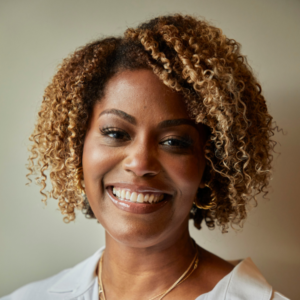

“What do you mean, ‘it’s out of stock?’” I asked the pharmacist at the compounding pharmacy where I’d started going to secure my hormone replacement therapy (HRT). Because compounding pharmacies make the medicine themselves, in-house, I had hoped to avoid this very conundrum. Couldn’t he just whip up more testosterone the way I whip up chocolate chip cookies?
I manage my health care carefully and with intention (hence the specialized pharmacy) because my body is a little more complicated than most, especially right now. In April of 2024, I got sick with COVID, and three months later, I was officially diagnosed with long COVID. For me, it manifests as immune system dysfunction that creates nervous system dysfunction and causes a lot of physical pain and a myriad of health challenges. This time last year, I could barely work, walk around my house, or lift my child. Many days, I wasn’t even able to shower until I got a few hours of rest first. Some days, even with rest, I could only bathe without passing out by sitting on the floor of the shower. My lungs became so tight that oxygen wasn’t circulating properly in my body, and I was diagnosed for the first time at age 41 with asthma, which was accompanied by crushing headaches that felt like someone had stuck my head in a vice.

Long COVID is not the only health challenge I manage; it’s just one addition to a long list that has filled my life with pain, fear, and uncertainty. In my twenties, I was diagnosed with primary ovarian insufficiency (POI). My ovaries had essentially shut down and resembled those of a woman three times my age. My body no longer produced the right amounts of estrogen, progesterone, or testosterone. I have been on some form of HRT ever since. The hormones my body requires to function are an integral part of my long COVID management. It’s all the same body — when things are out of alignment in one area, it impacts all the rest.
By the time I made it to the pharmacy, I’d been without my essential testosterone for a week. When I pressed them for more information about when it would be ready (to no avail), I felt an overwhelming sense of defeat and failure. And then my anger resurfaced because if I can’t win at the game called “get healthy in America,” who can?
I have significant health system privilege. My husband is a scientist and public health professor. My best friend is a doctor. My cousin is a critical care nurse who has given me IVs in my living room when I’ve needed them, thanks to the dysautonomia associated with my condition. I know how to conduct research and decipher complex medical studies and journal articles. In my search for the right HRT formulation for my ovarian insufficiency, I have become friends with the country’s leading researcher on POI. On top of all of this, I was also a childhood caregiver. My mother got sick when I was thirteen and never recovered. A mysterious illness led to a diagnosis of multiple sclerosis. Five years later, it was breast cancer, and three years later, it was death.
I am further blessed with economic privilege. I work for myself, and I only work for values-aligned clients. People who believe in my humanity, not just my productivity. They are the kind of people who pushed me to take time off when we suddenly adopted a baby; they order my books in bulk to support my writing career, and they consistently treat me with kindness and respect. I know for many being a solopreneur with a chronic illness is a terrifying prospect, but for me, it meant more control, autonomy, and support. So when I got sick, I was mostly supported. I lost a client but not my livelihood, and I’ve been able to pay out of pocket for anything that I need.
But I can’t say the same for most of the over 20 million Americans who have long COVID. Anyone who has ever been truly sick in this country will tell you, even with all that privilege, that feeling like a failure is almost inevitable because our health care system is not set up to help us heal, particularly from complex conditions.
Tips for navigating the health care system
I have the utmost respect and gratitude for health care professionals, but they aren’t really the ones in charge, insurance companies are. And at the end of the day, a system motivated by profit has to be navigated like a business, not a public service. So most of us are left to wade through symptoms, appointments, lab work, provider identification, bill payment, and insurance claims on our own and, if we’re lucky, with an understanding community. So, these are my top recommendations for how to navigate health care effectively on the pathway to healing.
Treat it like a job
If health care is a business, then you need to treat your role as a patient like a job. I know this is not fair, but fairness goes out the window when the choice is between despair and healing. Be strategic and thoughtful: track your symptoms, take notes at your appointments, be organized in your follow-ups, ask thoughtful questions, and stay proactive. Doctors and nurses are there to help you to the best of their abilities, but they cannot be effective in their jobs if you aren’t effective in yours.
Fire anyone who doesn’t listen to you
I do extensive research before choosing a provider, even those I’ve found through friends and relatives. The goal is to build a trusting relationship with the people who are trying to help me get better. But no matter how much research I’ve done about a provider, I do not hesitate to call it quits if things don’t feel right. We all deserve to be treated well, and we have to be discerning about who we trust with our care. If I don’t feel seen (literally, if a doctor doesn’t look me in the eye), empathize with me, or tells me information I know to be medically inaccurate, it’s time to cut ties.
Keep going until you find people who really care about you. If you live in a more remote area and you’re struggling to find a good provider, search for online options as well. (For instance, I have never met my long COVID specialist in person — our appointments are all online.) I promise they are out there, but you will need patience and persistence to find them.
Ask for help when you need it
If you are sick, you need help — period. So don’t suffer in silence. It’s in your best interest to tell your people — family, friends, neighbors, church members — that you are sick and need help. Be specific about what you need and accept the meals, the free childcare, the rides to appointments, whatever it is, without guilt or shame. At my worst, I couldn’t even make my own doctor’s appointments because talking made me wheeze. My childhood best friend started managing my doctor’s appointments for me because I just did not have the capacity. Look around and figure out what someone else can do for you, and then ask them to do it. Some people may disappoint you, but far more will surprise you.
Remember to be kind (to others and yourself)
A few weeks ago, I had a complex dental infection that wasn’t clearing up. The receptionist left her house to put medicine inside of a lockbox at the office, so I didn’t have to suffer. Her act of kindness quite literally saved me. When you are chronically ill and dealing with a health emergency, you never know who is going to save you. It may not be the doctor, but may instead be someone on staff, and the number of times I’ve listened to people speak rudely or talk down to admins and receptionists is mind-boggling. The same way you deserve respect, so do receptionists, nurses, or medical assistants at doctors’ offices. Even if you’re living in pain daily, there’s still room to be kind. You have no idea how many helpers you’re going to need on the pathway to healing.
Being sick is miserable, and healing is a lot of work. It is expensive, lonely, and exhausting, so please be kind to yourself, too. Healing from any kind of illness is work that requires a high degree of self-compassion. There is no point in hating your body because you aren’t well or blaming yourself for your illness, whatever it may be. Can you instead choose to view yourself the way you would a dear friend or a small child? Try your hardest to commit to treating yourself with the kindness, gentleness, and compassion you deserve.
Be persistent and patient
Healing is not linear. It is almost always slower than we anticipate, which can be frustrating. Sometimes you just need to wait it out. Above all else, I need you to choose hope, not the stuff of rainbows and sunshine, but the gritty kind of hope. Hope that creates space for healing to occur. The brand that clearly states, “No matter how long it takes, I will get better. I will not simply accept daily physical or emotional pain as a normal part of life.” And if you’re unfortunately at the end, and your illness is expected to end in death, I still want you to choose hope. Hope enables us to live as comfortably as possible for as long as we have. It pushes us toward an existence with minimal pain and suffering.
No matter how sick you are, and no matter where you are in your journey, please don’t accept a life full of pain and agony. I want to encourage you to live the best and most comfortable life you can, no matter how much time you have left, because that’s what you deserve. It’s what we all deserve.
PS: My pharmacist did whip up that testosterone; it just took a little longer than a batch of cookies.
Community Guidelines







Log in
This article was so incredibly helpful! As someone not struggling with any health issues, many parents these days are dealing with both raising children and aging parents (myself included.) I’ve watched my dad struggle with multiple myeloma for years. While I know this article will be extremely helpful for him, it was also extremely helpful for me on the other side. Thank you!
Thank you for this. I have been living with a chronic issue for the last two years without a firm diagnosis. It flares and subsides and as it does so, my weight fluctuates a lot making me uncomfortable and incredibly insecure at times. Your reminder to be kind to myself was needed today. Thank you for your candor and encouragement.
Marisa, beautiful piece of writing. Thank you. Are you the same Marisa who did USHER with me at Brigham many many years ago?
Anna H.
A nervous system regulation program called Primal Trust has been transformative for me. I have chronic health issues as well – an immune syndrome called Mast Cell Activation Syndrome. I think the root of my immune dysfunction is caused by nervous system dysregulation. I’ve spent so much time and money trying to heal. Primal Trust is the only “treatment” that consistently brought improvement for me. It requires dedication but has been more than worth it for me.
Perhaps it was meant to be that I felt compelled to leave my first comment ever on ParentData today. The issue that I mentioned above is most-likely MCAS, but testing for it has been tricky – it’s just the most likely thing that fits my symptoms. Thank you for mentioning Primal Trust. I will look into it!
I also got diagnosed with POI. My doc put me on birth control. What have you found to work best for treating yours?
Marisa,
This is a beautiful piece. As a healthcare provider specializing in long-COVID and dysautonomia, I couldn’t wish for a better message for patients to read (and their village). Living with dysautonomia myself, mystery illness turned career changer, I can resonate with your challenges in the healthcare system. The number 1 piece of practical advice is treating recovery like a job. These illnesses are complex and you get out what you put in. There are many reasons a person cant, but it 100% impacts the recovery process.
If youre struggling, soak in all of her advice. It really will help make the journey a little bit smoother.
Best,
Lauren