




 Get access to over 1,300 articles and reader Q&As



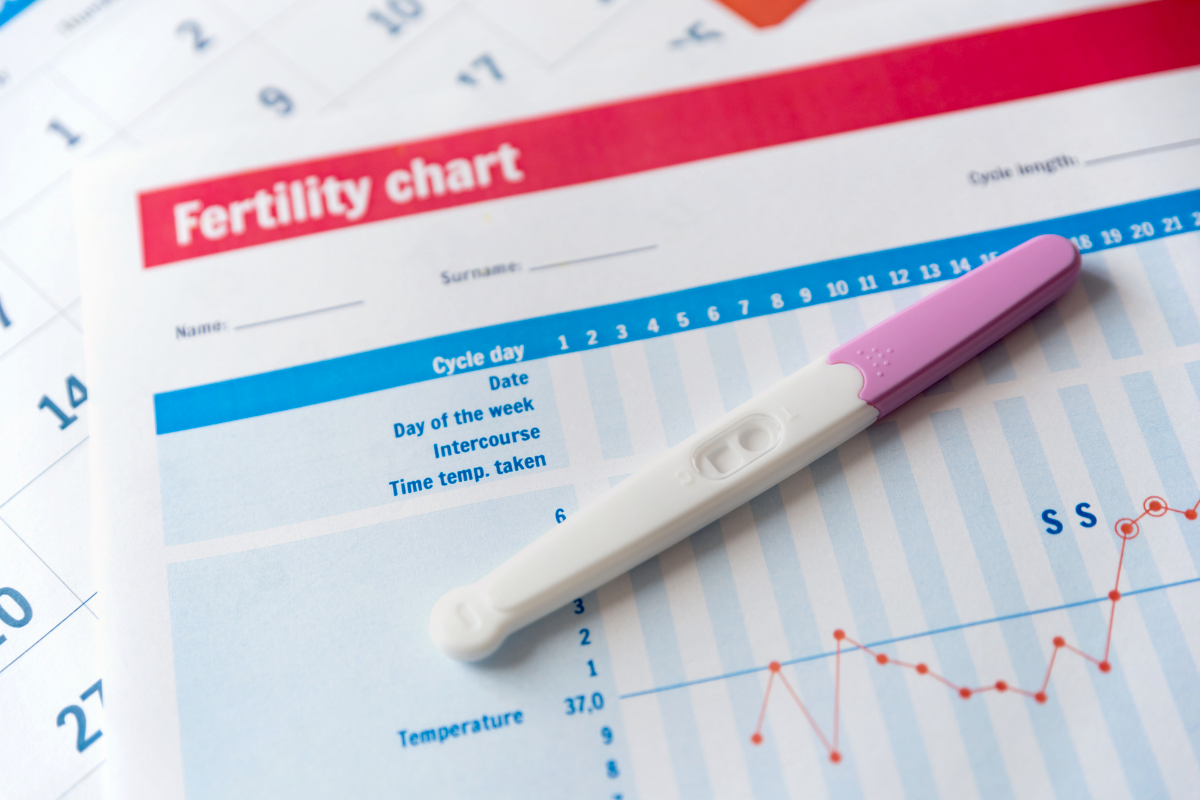
I’m 32. My partner and I have been TTC since I stopped using hormonal birth control about five months ago. I understand the recommendation is to wait 12 months to obtain information about fertility. Does the one-year rule include the first three months after stopping birth control, when your body’s hormones are adjusting? Also, what exactly are the “mechanisms” behind the one-year rule for infertility? I worry this guideline doesn’t reflect the fact that we now have much better tools for pinpointing ovulation (e.g., affordable luteinizing hormone level tests, basal body temperature tracking). Should couples be concerned earlier, given that timing is more precise with these methods?
Finally, what can be done prior to the one-year mark? It’s not totally costless to plan sex around the timing of my ovulation, and it will feel very deflating to spend a lot of time and energy trying the old-fashioned way, only to find out a year later something we could have known sooner about our fertility status.
—Anonymous
These waiting time recommendations are not based on any specific data; they are framed more like “If you’ve been trying for 12 months … ” As you say, though, this is not specific. It doesn’t take into account how hard you are trying, whether there was some obvious reason that it wasn’t likely to work (like your cycle hadn’t appeared post-birth control, for example).
Even putting all this aside, there is some confusion as to why the length of waiting time is longer if you are younger. The logic is that you have more time if things do not work out, but it’s counterintuitive because you expect this to take longer as you age.

Needless to say, it may make more sense to try to think about the numbers in detail. If you’re having sex during ovulation, your chance of conception per cycle should be around 25 to 30%. With a 25% chance per month, after six months, pregnancy rates should be around 83%. This suggests that if you are not pregnant, it could still just be the luck of the draw, but it is probably a good idea to consider whether there is something else going on. In this sense, if you are trying hard to get pregnant and you know you are ovulating, waiting for a full year likely doesn’t make sense.
What can you do before a year? Or before six months — or even before you start? There are a few things that are worth checking. First: cycle tracking. I would recommend people do this before they even start trying to conceive, since unpredictable cycles or cycles where you do not seem to ovulate may indicate something to address. Second: sperm testing. It’s not complicated to test sperm for normal mobility and motility, and this can be done early on.
Other than that, it really is just trial and (hopefully) success.
Community Guidelines







Log in