




 Get access to over 1,300 articles and reader Q&As



Let me share a scene you may relate to. Daylight savings time had made my 6-month-old’s schedule a mess, and I was struggling to get her to bed. Every time I tried to sneak out of the room, she woke up screaming anew. Meanwhile, my 8-year-old was calling to me, and I was worried he’d wake her up. Six attempts later, I finally left the room and went to sit on the floor with the 8-year-old to work on a LEGO car. I was exhausted and hungry because the baby had started making her distress known before I finished dinner (and my spouse was working late). And through all of this, I had running to-do lists playing on a loop in my head: groceries we needed for tomorrow’s dinner, play dates I had to schedule, remembering to pay for a field trip, and emails I needed to reply to. It all felt almost impossibly hard.
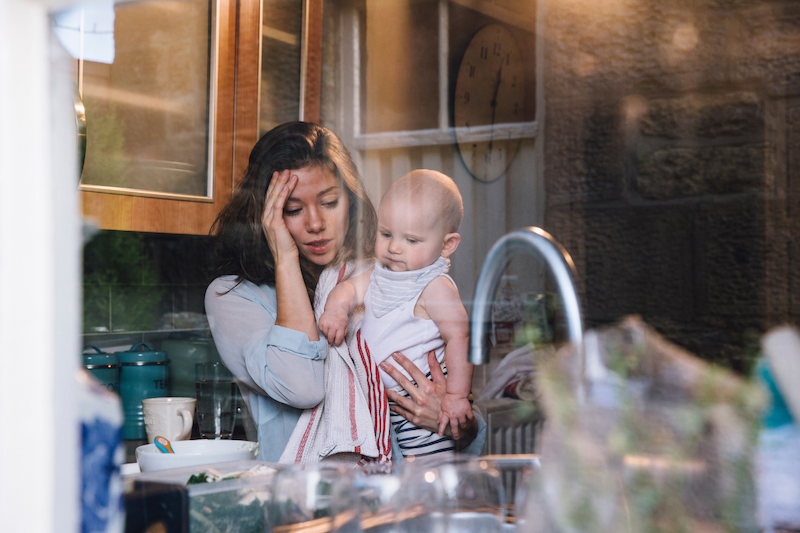
Thanks to the research I’ve done over the last five years, as I was writing my book, I knew that wasn’t just a feeling in my head. It was a reflection of structural forces in the data.
Of course, parents have always loved their children. But the time-intensive and often guilt-ridden present-day model of raising children — where you invest hours a day in talking to your baby, breastfeeding, babywearing, then putting them in “baby and me” classes, tot activities, and three sports by the time they’re seven, spending hours chauffeuring them to different activities by the time they enter middle school — did not exist 35 years ago.
In previous generations, it used to be perfectly acceptable to hand the baby a bottle and leave them in the crib, except for the occasional stroller walk, and then park a toddler in front of the TV. My “bedtime routine” growing up in the 1980s was “It’s time for bed. Goodnight.” Many Gen X and millennial adults fondly recall their childhoods freely roaming the neighborhood until sunset, eating whatever was in the cabinet, and watching TV in the basement. Which meant their parents were elsewhere, having time for other things.
So how did we get here? And how can understanding this history help us make saner parenting decisions today?
When did parenting start feeling like a full-time job?
Parents today are spending much more time with their children than our parents spent with us. Time spent with children sharply increased starting in 1995, and the time moms spend with kids has doubled since the 1980s, adding an extra seven hours a week. Fathers’ time has increased drastically, too, but the hourly change is not as large, leaving the gender gap, if anything, wider.
This huge rise in parenting time was first documented by economists Valerie and Gary Ramey in a paper called “The Rug Rat Race.” They speculated that it was a result of the change in the returns to human capital in the American economy — in other words, that we were all competing for scarce spots at higher education institutions, and so trying to stuff as much “human capital” into our kids as possible (more on that below). As some evidence of this, they pointed to the time spent chauffeuring our kids from activity to activity. They also pointed out the increase in time with high school-aged kids and that the change was particularly steep for college-educated parents. (Which, as much as we’re feeling time-starved, also points to the fact that being able to invest in our kids is a privilege. Parents who can’t afford to reduce their work hours may feel a double squeeze of time and money and be less able to make the investments they want; so-called “child penalties” on women’s earnings are absent in many developing countries.)
One way to show just how much has changed is to compare stay-at-home moms of the past with working parents today. A working mom spends more time with her kids today than a non-working mom in 1975. A working dad spends almost as much time as those non-working moms of yesteryear. (I think this can lead to some misunderstandings in the household. Dads tend to tell me they’re doing a lot, and compared to their dads, they are! But compared to their wives, they still lag behind.) Clearly, something fundamental has changed about how we raise our children.
How child development research impacted a cultural parenting shift
Part of the driver is the changing science of child development. The parenting advice that dominated the ’50s through the ’70s in America was of the Dr. Spock variety. Practical tips for keeping a baby alive, and what to do if they had a tummy ache or a runny nose, but plenty of reassurance that there was nothing to worry about — having a baby didn’t need to be a fuss!
But in the 1960s and ‘70s, scientists started to understand how babies learned and the ways in which touch, responsiveness, and verbal interaction were important for their development.
In fact, the increase in parenting time coincides remarkably well with a moment widely perceived as a sea change in parenting: the publication of Dr. Sears’s The Baby Book in 1993, which replaced Dr. Spock’s no-fuss advice with responsive, attentive, and, of course, attached parenting. Attachment theory — science that had started as niche academic work — was becoming a mainstream understanding of how kids develop. The upshot: Attentive caregiving mattered. Too much TV was bad. The words you say to your child affect their speech development. Touch is crucial to babies thriving. Playpens, once a ubiquitous place for a child to safely play while you did other things, vanished.
Economists described this moment as a changed model of human capital — their word for human intelligence and potential — development. Before, we had focused on educational investments like high school and college. But now, increasing data suggest that early childhood, infancy, and even the period in utero, are crucial for later life outcomes. High-quality early childhood education was shown to be not just a period of child-minding, but key for later life outcomes.
These changes have impacted women’s ability to be competitive in the labor market. Women entering the labor force in the 2000s ended up in their thirties working less than they expected to when they had been teens and young adults, and they found being a parent more taxing than the generation before them. They had come of age in a world of powdered formula and TV dinners, and now were competing in one with extended breastfeeding and screentime limits.
While many mothers, myself among them, enjoy breastfeeding, I know I’m not the only one who loathes pumping (and I’ve done it in planes, trains, and automobiles). In the 1970s, only 30% of mothers ever breastfed, and in fact, the introduction of formula has been shown by economists Stefania Albenesi and Claudia Olivetti to play a key role in women entering the labor force. But although initial breastfeeding rates rose starting in the ‘70s, until the mid 1990s, less than 20% of women were breastfeeding at 6 months — pumping after returning to work just wasn’t a thing! Today, 80% of mothers breastfeed initially, and a full 60% are breastfeeding at 6 months, perhaps in part because we believe it might increase our babies’ future IQ.
Adding to the complexity is the fact that investments in children’s human capital are much harder to outsource than simply “watching” a child. This means that as quality standards for childcare got higher, the financial cost of parenting also rose. It’s much less expensive to have one staff person for twenty children and a TV than a 1:6 ratio, or 1:4 ratio, for infants. The rate of childcare inflation has outpaced other essentials like housing, transportation, and groceries since 1990.
This huge shift in how we spend our time is so important to name because parents, especially moms, can find ourselves feeling guilty for not being able to keep up, when the reality is we’re doing more than in the past, and, for those of us who are working, we’re doing it with less time. So if you have children and a career and life feels impossibly hard, please understand that no, you are not crazy, and no, it is not your fault. It’s wonderful that, thanks to science, we have better information than we did 50 years ago about what keeps kids healthy and promotes optimal brain development and social and emotional well-being. But along with this knowledge has come a fundamental shift in our understanding of just how much it takes to make a human being. In short: The math has changed.
So what do we do about it?
My message to parents is that within that changed math, we still get to make choices of which investments to make and which to say no to. This is true even though, when it comes to our kids, we want to give them everything. And society expects us to give them everything. But, let’s take that idea to its extreme: avoiding contact with the outside world would probably protect our children from viruses and accidents, but isn’t a practical or reasonable approach to parenting. And, even if the only cost was to our own time and sanity, we have to remember another tradeoff: Our own well-being also matters tremendously for our children’s. Maternal mental health is thought to be a huge factor in children’s well-being. Beyond that, another important factor that allows children to thrive is the income we’re able to earn, which buys essential goods like housing and clothing, or more ambitiously, pays for college tuition. And our own self-actualization (whether related to a career or not) lets us be better parents as well as good role models.
The economics concept of opportunity cost is helpful here. Something we do for our kids doesn’t just have a benefit, it also has a cost — of our own time and of what else we could do with that time. Policymakers make these tradeoffs all the time. Of course, reducing air pollution to zero is better for everyone’s health, but the cost of doing that might be “too high.” Yet somehow, when it comes to parenting, that sense of proportion gets lost, and we feel responsible for doing everything possible to benefit our kids. So remember, you get to be in the driver’s seat to choose where you feel like your time has the highest return, what is possible and realistic, and what tradeoffs you’re willing to make for your family.
Here are a few strategies:
Be a “yes and no” parent
Something being evidence-based means there’s evidence showing a benefit from that thing in isolation. But, we don’t necessarily need to provide every possible input, especially if doing something would have what you consider an unacceptably high cost, or if we’re providing lots of other inputs that create a higher baseline (increases in studies are on average across the whole population).
So you can say yes to breastfeeding if it’s working, for example, but say no to pumping after returning to work (or pumping exclusively when breastfeeding isn’t working). You can say yes to reading books, but not worry about narrating every aspect of your infant’s life. You can say yes to outdoor sports, but no to travel teams until a certain age, or no to more than one sport per season.
Find structural shifts when possible
When I drill down into those time increases, I find one of the biggest categories to increase is playing with our kids. This makes me wonder if some of the changes are driven by changes in the structure of how we live — with less access to outdoor play, nearby friends, and safe streets (pedestrian deaths are at a 40-year high). As we have smaller families, there might be less sibling play, too. So, if we want to replace our own time, one way is to find structures where our kids get plenty of play input from someone else.
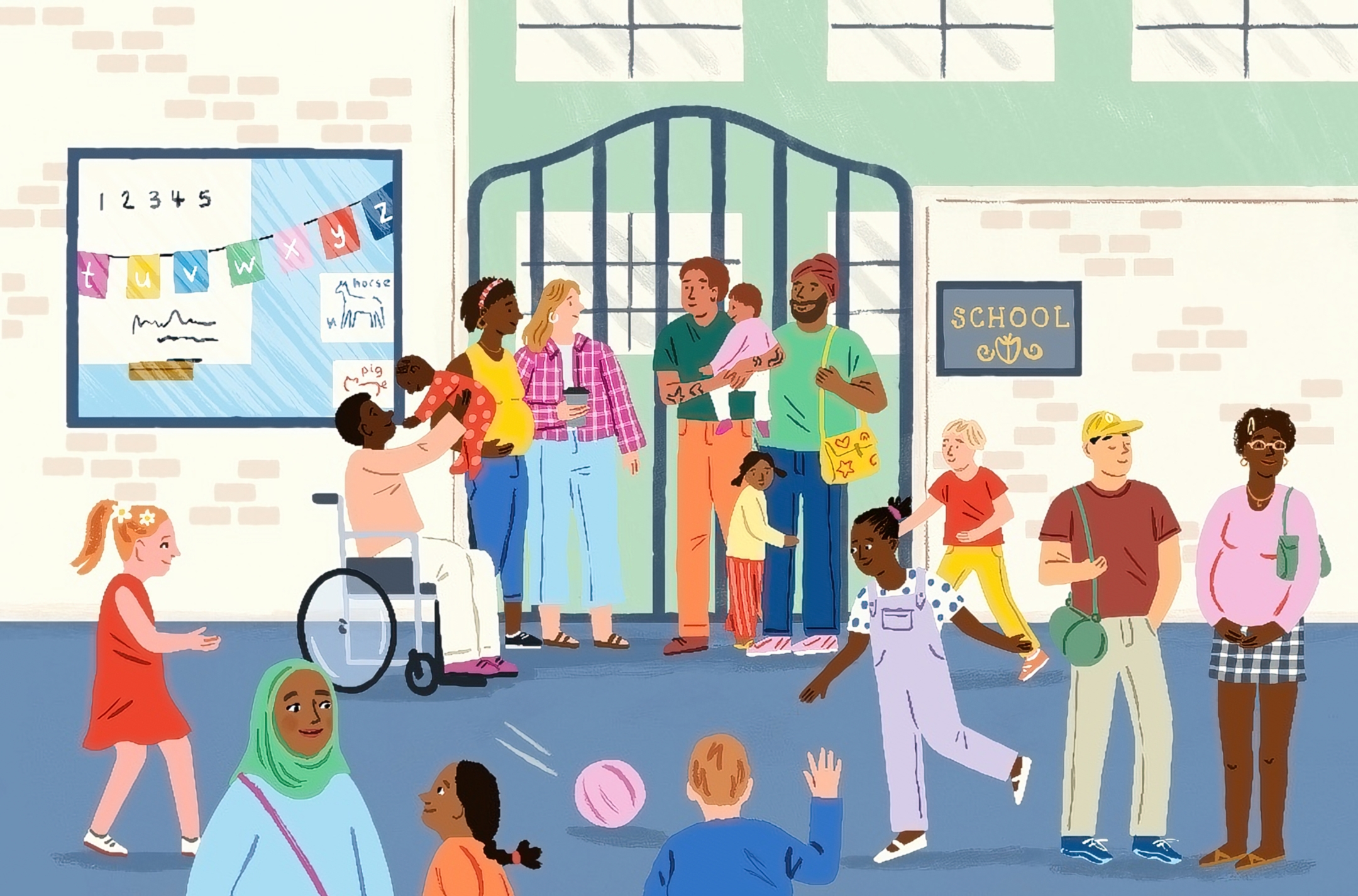
Focusing on finding a community with safe play places, sharing supervision responsibility with friends (I always say, playdates are childcare!), and just nurturing social relationships can all help relieve our calendar crunch. For younger kids, we can make a one-time investment in babyproofing a space to foster safe, independent play and then be able to take care of our own needs instead of spending so much time on the floor. Another big area of increase is travel time — here, too, a structural shift in location, carpool arrangement, or number of activities might bring some relief.
Follow your joy
For the parents who tell me they love driving their kids places and catching up (especially true of pre-teens who may be otherwise quiet), great! Stick with it. If cooking a homemade breakfast every morning is how you show love and something you enjoy? Fantastic! Find the inputs that have a double effect of creating joy and fulfilment for you, rather than draining your energy. Once you understand that you don’t have to do everything, what you actually enjoy doing with your kids is an excellent guide for what to keep.
Focus on what matters most
We might have images in our heads of “good parenting” that are incompatible with the current time squeeze we’re facing. Our mom might have knitted us holiday sweaters or made homemade cookies because she wasn’t playing with us or driving to travel soccer practice. Because we’re doing a lot more active care, we might need to be doing less of other things. This might mean that family dinners include pre-made shortcuts, but it certainly means saying no to elaborate lunches with sandwiches cut into shapes or anything else we see on Instagram (unless it brings you joy!). Your kids will remember way more if you were calm and connected with them than if everything looked perfect.
Closing thoughts
Every parent will chart their own course based on the needs of their families, but I hope that having some context for how we arrived at this moment leaves you feeling a little more empowered to make decisions that are right for you. Caring about your child’s development is not trivial, nor is it a self-created anxiety, the way generations of yore might suggest. It is evidence-driven. And, armed with the data, you get to decide where you’re getting the highest return on your time, and where to say no, dial back, and let go.
Community Guidelines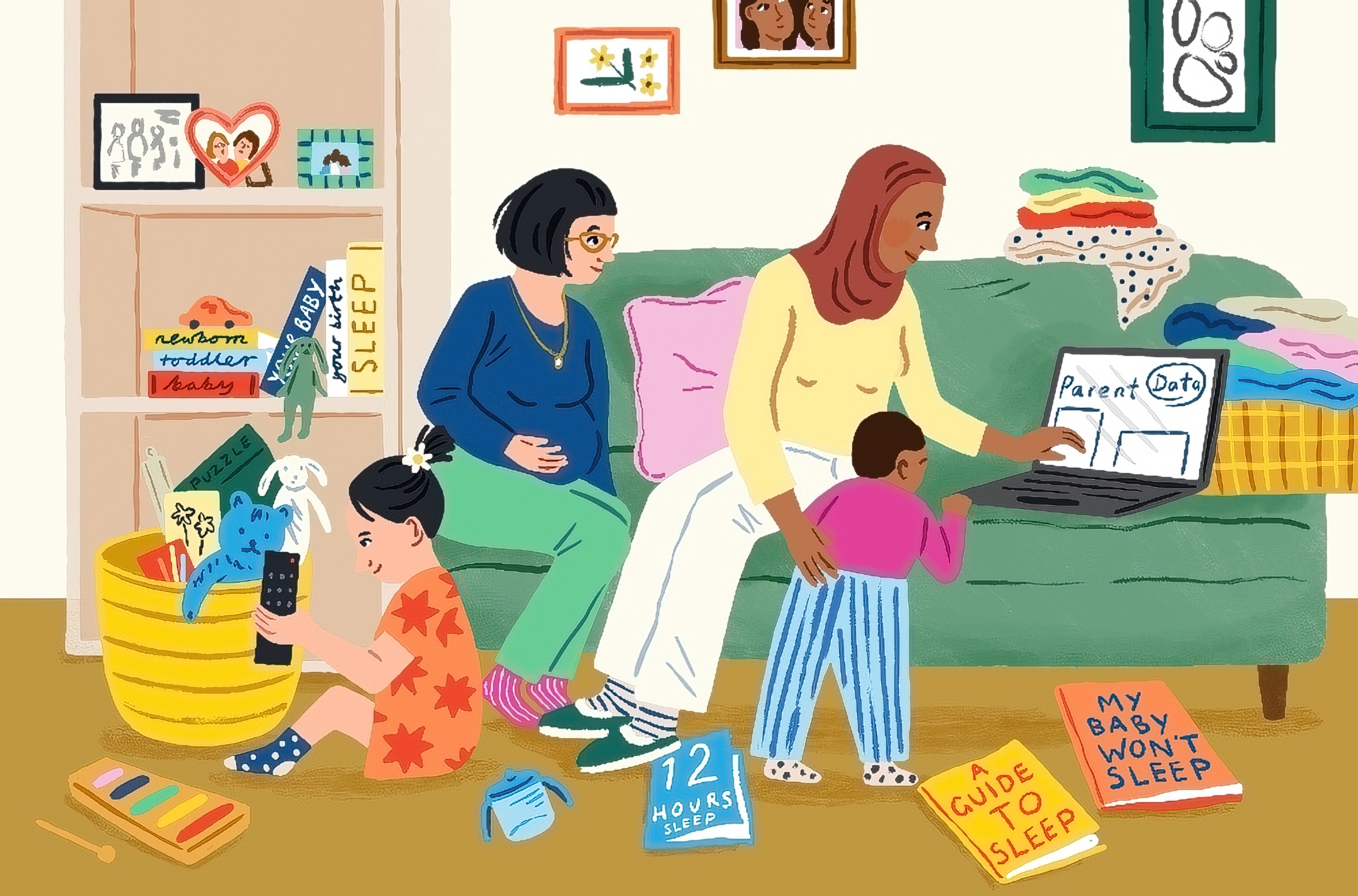






Log in
Corinne, thank so much for this article. Reading it made me seriously rethink some of the ways I’m allocating my time as a relatively new parent (I have a 2 1/2 year old and a 1 year old) who works full time remotely from home. I realized how much time I was spending during my work hours doing things like laundry, dishes, etc to free up time to spend exclusively with my kids when they were home from daycare. I also was regularly cutting off my work day as soon as the kids got home, even though I had spent all morning getting them to daycare while my husband left early for work, and even though it was cutting off what is normally a very productive part of the day for me. That felt like the right thing to do in light of the notion that spending quality time with your kids trumps everything else, but I was increasingly frustrated with my productivity at work.
After reading your article, I thought through my normal week, and estimated that I spent 40+ hours a week actively caring for my kids (I’m really hoping this number will go down as they get older). I’ve made some changes to how I spend my time, including asking my husband once or twice a week to take sole responsibility for the kids after he brings them home from daycare so I can keep working. I still make sure to get in quality time with my kids, but need to make time for work and for myself more of a priority for my self-worth, and my sanity.
A few thoughts and questions:
1) I would love to see an analysis that includes time spent on secondary parenting. Some of these analyses of time spent with kids feel a bit misleading because they leave out all the household work time parents (but especially mothers) save now, relative to mothers 70+ years ago, due to innovations like refrigeration, dishwashers, and clothes washers and dryers. Perhaps one of the reasons we spend more time playing with our kids now is because we aren’t, say, running our wet clothes through a hand-powered machine to squeeze the water out.
2) I am an elder millennial who did not spend my afternoons roaming around the neighborhood unsupervised. I’d love to see some data around this; I don’t know if my experience was typical or not.
3) In some ways, life for parents (and everyone) is significantly easier today than it has ever been. I would argue that parenting today does not feel harder than, say, 200 years ago, when parents had to worry about their kids dying of typhoid and cholera and had to send their kids to jobs in dangerous factories. Maybe we breastfeed more now than in the 70s, but what about compared to, say, the 1920s or 1820s? Parenting has always had its challenges, and the best thing we can do is develop tools and strategies to make the best of our circumstances (as you very helpfully suggest here) — and advocate for policies and practices that will make it easier for our children, as those who came before us have done.
My children are so young that I read this was confusion – 15 hours a week? – versus the 50+ hours a week I spend with the kids (every hour they are awake and not with the nanny). A reminder that time goes quickly, and soon enough my kids will have lives, hobbies, and interests that don’t involve me being by their side all the time.
Yes! This counts only active parenting time, so the time you’re food prepping or cleaning with kids present it’s not there–and if we focus on parents of the youngest kids, it almost doubles!
Sorry that’s from me! Had to fix my username 🙂
This chart feels misleading. What is the y axis label? Is it hours per day or hours per week? It seems absurd for someone to spend over 20 hours a day with their kid. Does it include co-sleeping? Did the data from 1985 include or exclude co-sleeping? What did the categorize as “time spent with kids”? Does having the baby in the pack and play while you cook dinner and do the dishes count or not? Also, I don’t think playpens have vanished. Other moms and I have laughed over a new term for them, though: “baby jail” since they often scream to get out of it. The persistent ones will scream the whole time.
It’s hours per week!
And the ATUS counts only active time, not “secondary childcare” (which you can add in separately) while doing other activities.
One thing I wish the article would have included, and forgive me if I missed it, but has the attachment parenting style created better adults? What do we have to show for this increased investment in kids?
I think it’s reallllly hard to measure because as Emily would say, we don’t have any randomized controlled trials. So, we can just follow the evidence on individual inputs AND follow our own instincts and values. My thoughts: If we’re giving our kids a strong foundation, some of those marginal inputs may matter less. And, if the marginal inputs interfere with our wellbeing, the benefit may not be worth the cost!
Thank you for this post – I needed this on a frazzled Monday morning. The “yes and no” tactic is so useful to reframe a new approach to doing specific things but with your own set of conditions that work for you.
I have one 20 month old currently but working on having a second child. I imagine once a sibling is added to the mix, our roles as parents and spending time with a specific child get minimized as kids grow up. I’m curious to know how much impact having no siblings or fewer siblings contribute to parents spending a lot more time with their kids these days compared to the past. It’s probably hard to tease out those effects, particularly because as a society we are just having fewer children over time, but I’m guessing there may be a clever way to model this in research.
I also wonder if how our neighborhoods and communities have changed has created a lot more pressure for parents to spend more time with their children. It’s true that as a millenial, I had a lot of time spent on my own playing and a lot less time with my two working parents, but I had a lot of freedom to find other play companions where I lived and had many more options to socialize with others that didn’t require me to be strapped in a car seat and chauffered somewhere, y’know? I think that ultimately parents these days spend more time with their children because by default there are just fewer options, such as grandparents far away or unavailable, perhaps more families living in situations where surrounding community is not known/friendly/appropriate to socialize with. That’s basically us right now. My in-laws live in a different country, and my parents don’t help out. Our neighbors are lovely, but their children are all grown. The closest playgrounds are still multiple blocks away by foot. It’s just hard to imagine my child being able to get outside and socialize without my explicit help for still many more years to come, unfortunately.
Totally agree. There’s things we gain from being more involved in our kids’ moment-to-moment lives, but there’s things they lose, too. The independent, adventurous childhoods many of us enjoyed. So how do we give them more of that, in a way that’s safe, and provides opportunities for the connection and interaction that’s most valuable? Totally agree that neighborhood plays a huge role, and structural forces, like the increased pedestrian deaths that make me very hesitant to let me kid bike around unsupervised!
I think part of the change is women moving more into the workforce and becoming the sole or primary breadwinner so much more often. That and moving away from families. Neither of which is necessarily a bad thing! But it does create new family pressures.
My parents in the 80s and 90s hired a series of caregivers to take care of my young sibling, and to chauffeur me to all my lessons and activities. I don’t think any of us regret any of my many activities, or the choice to have 2 working parents.
I’m not convinced of the argument, which I’ve seen in various places, that parents sign kids up for activities because they want to get them into elite colleges. Maybe some do. But do we have evidence this is a pervasive reason? I take my kids to activities because they beg for them, and because if they’re at loose ends at home they are constant concussion risks as they repeatedly tackle each other out of boredom.
I laughed a bit at the comment on playpens. We had one for both our kids until a few years ago. After they grew out of babyhood they used it as sort of a fort space. My 10yo was *just* telling me he was annoyed I ever gave it away! They wouldn’t stay in it longer than 10-15 minutes as babies, but it was lovely at the time as a safe padded place.
Definitely bring back the play pens and throw out the guilt! And yes, that’s also how I got suckered into travel soccer. The elite colleges theory is from economists Valerie and Gary Ramey, and they formulated it partly because they didn’t see the same trend in Canada, where college wasn’t so competitive. I’d love to see what the Canadian data looks like now, but I haven’t gotten there yet! Nonetheless, I still think that kids’ activities have to work for parents–if they don’t, something has to give.
Thanks Corrine. I find your approach useful and largely agree with these strategies. But I also think we should spend more time tackling the first order issue of: is spending this much time with my kids really effective? It may be the case that it is better for our kids to spend more time with them than we did in the 1970s, but also good for our kids to spend less time with them than we do today. It is certainly possible that “self-created anxiety” plays a role here, or perhaps more accurately “society-created anxiety”.
Take breastfeeding for example. I read in Emily Oster’s book that there are very small measurable benefits to breastfeeding. That all the measurable benefits concern getting sick less often and that these benefits don’t persist after two months. Instead of following the evidence and telling parents that breastfeeding doesn’t matter much and that there is little benefit past two months, everyone is still talking about the supposed benefits of breastfeeding and 60% of mothers are breastfeeding until the baby is six months old. I believe that if we take a more critical approach to the evidence, then we will find that the evidence doesn’t really bear out our intensive parenting approach in many contexts. Instead of telling parents that their well being matters too (which it surely does), I think it is probably time to tell parents that it is better for their kids if we parent less intensively. Or at least it is time to consider this hypothesis. The marginal returns to any activity will turn negative at some point.
In Corinne’s most recent Instagram or Substack post, she emphasizes that spending more parental time on infant development is relatively well supported by evidence, but replacing peer/sibling playtime with parental playtime? Not so much.
I totally agree these are decisions every parent should be critically evaluating! Breastfeeding is one of those things I think parents should really do based on whether they like it and it’s making their life easier, not out of guilt or social pressure or chasing some mythical IQ increase. I was trying in this article to give parents the freedom to critically evaluate this extra time for themselves, and in order to do that, you have to be aware that what we’re doing today is so radically different from when we were growing up!