






Conflict between siblings can be especially unnerving since it happens so fast. One minute, they’re playing Candy Land. The next, someone’s been hit with the board. Physical boundaries are routinely ignored. Play wrestling turns into real wrestling, turns into mixed martial arts, in the amount of time it takes you to put out the trash. Moments of conflict follow moments of camaraderie so quickly you get whiplash.
How can we better manage this? Or should we?
It feels important for a number of reasons. One is that kids fighting is unpleasant and disruptive. But the second is that, for a lot of us, we want our kids to be friends now so they’ll be friends as adults. For many people with siblings, those adult relationships are very meaningful; they’re different from almost any other relationships you have, and we may want to nurture good versions of these for our own kids. It can feel like there is a direct link between peaceful Candy Land play and adult cohesion.
This link between childhood and adulthood is at best a bit more complicated. Sibling conflict among children is the norm. (Jessica Grose had a great piece on its overall psychology a few years ago.) There are reasons why rivalry makes sense on an evolutionary level. That doesn’t mean we cannot work to mitigate it, but it highlights that it’s a typical part of childhood and doesn’t necessarily have a direct line to adult friendships. In my own case, my mother saved our New Year’s resolutions from childhood, and for about a decade, mine was to be nicer to my brother John (sample: “I resolve to be nicer to John even though he is really annoying.”). Yet as adults, we are very close (even though sometimes he is really annoying. JK!).
This isn’t to say that the relationships you cultivate among your children can’t translate into their adult relationships, just that they do not necessarily do that. In the end, it is likely to be more productive to focus on addressing the issues you see now, since that’s what you can control.
In thinking about this topic, I, of course, started with the data. It may not surprise you to find that there isn’t a lot of detailed quantitative research on it. No secret formula that randomized trials have shown will work with all siblings. There’s research, but it’s more theoretical and anecdotal: stories about what has worked for some people rather than hard data measurements.
For people who like numbers, there is a temptation to just dismiss this work. But that throws away valuable information! We can use these data, but we need to use them a little differently. Specifically, when confronted with this problem, I found myself using the research/data/books in the same way I’d use advice from family and friends. I incorporated it and reflected on it. I thought about what might work for my family. And then I self-experimented.
In that vein, here’s a short dive into some of the research-based advice you’ll get on siblings, and a note on how to self-experiment.
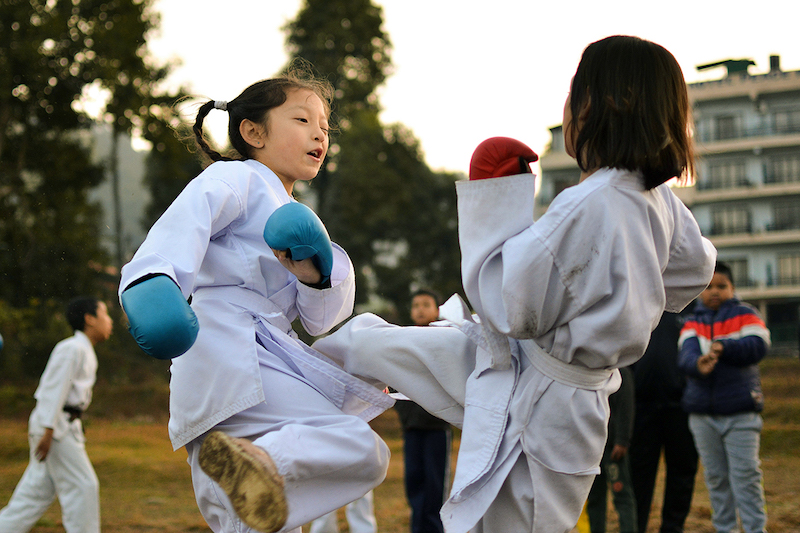
What does the research say about sibling rivalry?
The research-type literature on siblings isn’t quite like the literature on, say, breastfeeding or charter schools. There are only a few cases in which we see data on what works, with detailed statistical follow-up. Instead, there are many papers that contain informed discussion, based on work with families or on observing family dynamics. They talk about what works in these settings and try to draw some broader conclusions about good practices.
A common refrain is to avoid favoritism or comparisons between children (easier said than done, sometimes). This advice would come down to not saying, for example, “See how well Tommy uses a fork? Why can’t you use a fork like Tommy?” Instead, you could say, “Please use a fork.”
Differential treatment by parents is also associated with more sibling aggression. This may come in the form of favoritism or a sense that one child is being held to a different standard. One tricky thing is that children are very attuned to fairness, and they may perceive differential treatment when it’s not intended. I reflected on this lesson the other day when my children insisted on watching while I used the kitchen scale to weigh out exactly the same amount of Chex Mix (29 grams) into each of their snack bags. Neither of them ate it, FYI.
In the extreme, sibling conflict can lead to sibling bullying. A review of data reveals bullying to be more common in households with boys and those with more children or children very close in age. Parental involvement and parental “warmth” were also associated with less bullying, although it’s a bit hard to establish causality in that type of setting.
On the slightly more data-oriented side, we have older literature on parental non-interference in fighting. For example, there’s this small study of a few families in which parents were trained to ignore fighting, and later their self-reports indicated less fighting. This might suggest less conflict if parents stay less involved. It is a source of some controversy, with other authors noting that this could cause children to feel their parents are abandoning them to an abusive older sibling.
In reflecting on it, the work on bullying and non-interference feels to me like a case where there is a happy medium. Sometimes, you need to leave them alone to work it out. But also, you don’t want your kid to feel like you aren’t going to stand up for them if they need you.
Overall, there was less of this academic literature than I had expected. I did manage to find a paper on armed rivalry in pigs (they use their “eight saber-like teeth” to fight for access to milk) and another paper on sibling rivalry in family business succession. They seemed about equally unrelated to my personal life.
I read one book that I found valuable — Siblings Without Rivalry. This isn’t a “how-to” book, which may frustrate some readers. But it made me reflect on how I want my children to feel about each other when they are adults and gave me some ideas about how to address conflict.
There are a few big-picture ideas I pulled out of the book. One is a reiteration of “don’t compare your kids.” Another, which I hadn’t seen elsewhere, is the idea of “equal is less.” Saying “I love you all the same amount” makes kids feel less special than “I love you because you’re my special Sofie/Anna/Phillip.”
A second idea is the value of acknowledging the conflict. Begin any intervention by stating the obvious, everyone seems upset, which can serve as a way to set the expectation that you see what is going on, and we need to move forward.
I know many readers would like more of a “how-to” approach to sibling issues, but I do not think research offers such a thing. Kids, families, and relationships are just too varied for this. The best we can do is take some broad lessons and then try them out and see what works within our families.
Try self-experimentation with your family
Self-experimentation is precisely what it sounds like: experimenting on yourself. I see it discussed most frequently when people think about their own health/diet/fitness. You’re wondering if dairy makes you bloated? Eliminate it for a week and track your bloating, then add it back in. Does coffee after 3 p.m. affect your sleep? Try it for a couple of weeks and track your sleep on your fancy watch. And so on.
It’s not exactly randomized, and it is definitely not double-blind. But the value is that whatever results you get, they’re specific to you. And in a world in which, say, dairy has different bloating effects on different people, it’s probably a lot more valuable to know what happens in this experiment than to see a larger sample of people who are not you. This type of self-experimentation works well when it’s possible to get relatively fast feedback. It wouldn’t be good if you were interested in inventions that make you live longer, obviously.
Sibling conflict gives you frequent feedback. If and when you decide to try making a change, plan a personal experiment. Maybe collect a couple of days of casual data — how many times you had to intervene, how many warnings you gave, how many times one child smacked the other, or yelled, “MOOOMMM!!!”
Then implement your plan and track for another couple of days. Make a little chart if you are so inclined. This isn’t for publication, so it doesn’t have to have a very robust standard deviation. But it’s a way to get a concrete sense of whether your changes are working.
On my end, after reading and thinking, the lesson I took away was the idea of acknowledgment. I now try to say, “I hear you are feeling angry about the balloon” rather than, “Well, okay, let’s fight about this later and now just come and have dinner.” It is so awkward, and I feel like an idiot. The other day on the way to school, I said, “I hear you are angry that [other sibling] might get a lollipop.” Who says that?
But the thing is, I paid attention to what happened when I tried this, and for one kid in particular, it really seems to work to defuse the situation. Now I’m stuck with it. Should you try this? Maybe! Or there could be another insight that sounds better.
Nothing is going to eliminate sibling conflict, so that cannot be the goal. It’s okay that your kids fight. And there’s no data-based magic bullet to fix it. But a little research-based advice and some self-experimentation can help.
The bottom line
- Sibling conflict is normal. As a parent, you can help mitigate it by avoiding favoritism or comparisons between children. Acknowledging frustration or conflict is also helpful (“I hear that you’re feeling angry about X”).
- Different kids will respond to different strategies, and it may take trial and error to see what works for you and your family. Try some out at home and keep track of what was successful and what was less so.




Log in
Just wondering if anyone had other book recommendations on the topic? I read Siblings without rivalry and it didn’t click with me. I think the format of the information and the fact that it felt quite dated. I would love any more recent recommendations.
This will sound weird, but something that has (more subconsciously) worked for our family is applying solid things we learned in couples therapy to sibling conflict. When things escalate enough that we want to intervene or the kids ask us to, we talk to them about better ways to communicate about whatever they’re upset about, and ask the other sibling how they’d feel about being spoken to like that versus what happened that they didn’t like. It works for us, but no clue if it’s by accident or not. It does feel nice to hear them communicate more productively with each other if nothing else! Son is 8, daughter is 5.
Raising Loving Siblings by Johnathan Caspi. I heard him speak on a podcast, the Mindful Mama.