






The number of women giving birth at home is growing.
Between 2019 and 2025, the share of women giving birth at home in the U.S. nearly doubled from 0.78% to 1.4% — there were over 50,000 home births in 2025. There are many possible factors, from the pandemic to a broader loss of trust in the medical system and a lack of rural hospitals and birth centers. Regardless of the reason, the increase suggests many more people are considering it.
What are the possible benefits and risks? And if you are considering this, how can you make it as safe as possible?
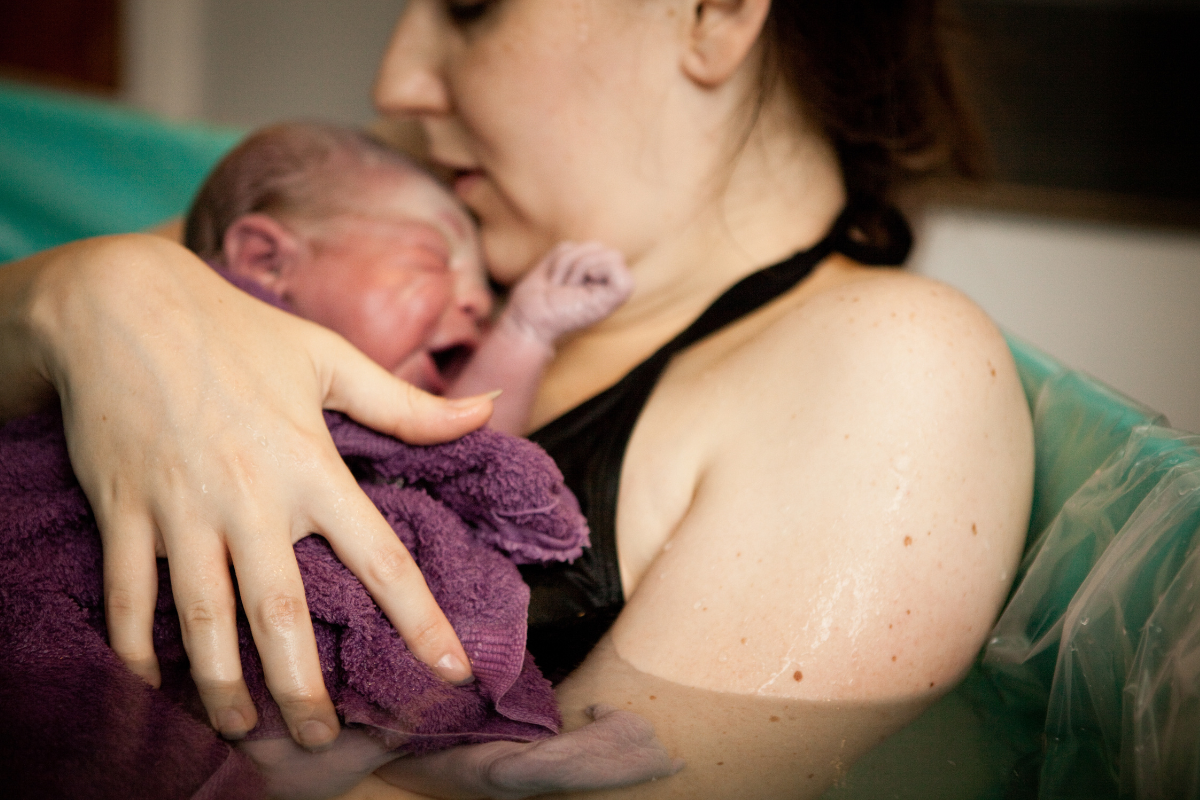
Why it’s hard to research home births
Before getting into what we see in the data, it is helpful to understand how these studies work and why it can be difficult to do them well.
One way you might imagine looking at the benefits and risks of home birth would be to simply compare births that happen at home to those that happen at the hospital. But this approach has two significant problems.
First, people who choose a home birth tend to be lower risk than those who choose a hospital birth — both in terms of their baseline health and the details of their pregnancy. Researchers can partially control for this, but it may be hard to fully address.
Second, and more importantly, home births that actually stay at home tend to be the ones that go smoothly. If you only count those, you’ll miss the planned home births that resulted in a hospital transfer, which skews the comparison.
This means that the best studies of home birth — and the ones I’ll focus on — compare planned home births to planned hospital births, regardless of where the birth ultimately occurred. This still has the first issue, and we’ll talk about how researchers address that, but it avoids the more significant second issue.
What are the benefits of home birth?
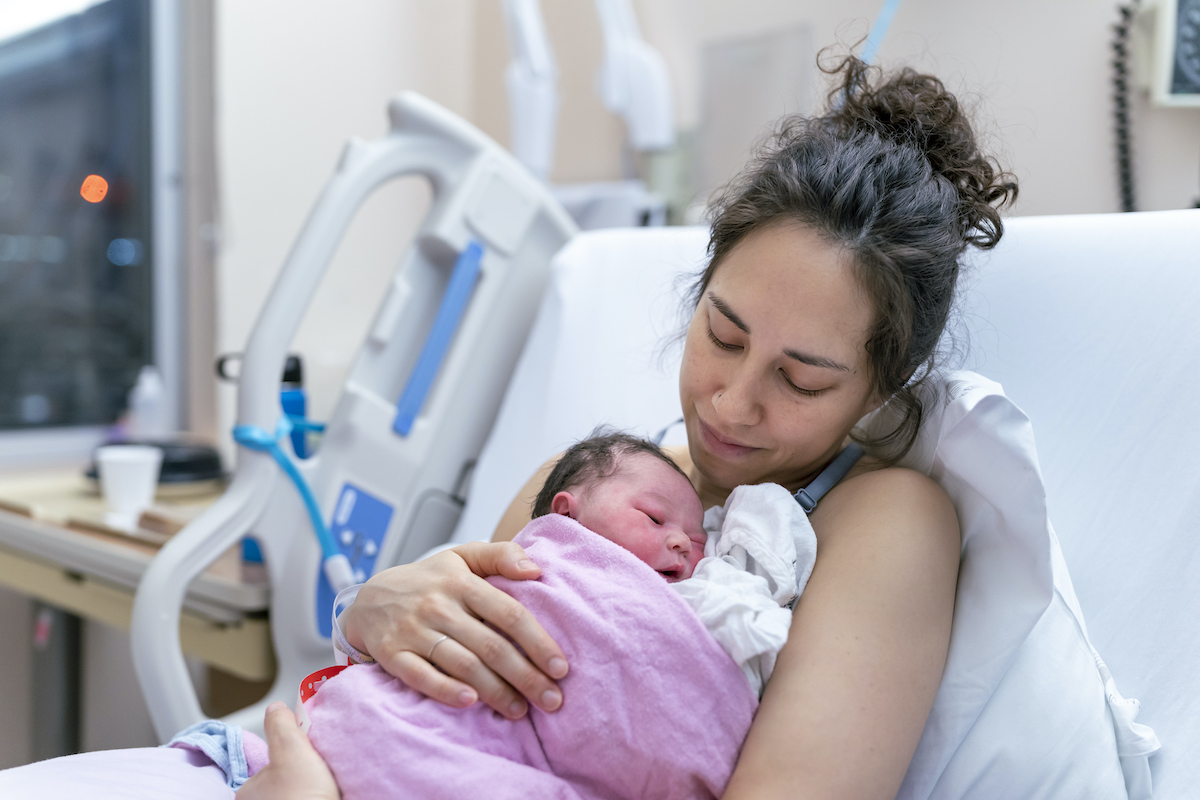
Most people choose a home birth, first and foremost, because of a desire for a less medicalized experience. They may feel home is a more comfortable place to be, maybe they hope to involve their other children, or there are other personal considerations. In some cases, a bad experience with hospital care or a hospital birth has generated a low level of trust. In other cases, there isn’t anything traumatic behind it; it is just the experience people want.
Comparing planned home births to planned hospital births, the data shows home births are associated with fewer interventions. These include a 75% reduction in epidural use, a 90% reduction in episiotomies, a 75% reduction in instrument use during delivery, and a 60% reduction in C-sections. (Remember: since some people who plan a home birth do end up giving birth at the hospital, there are some C-sections in both groups, but fewer in this group than those who start at the hospital.)
ACOG has acknowledged these benefits and noted that there may be opportunities to improve these outcomes in hospital births for low-risk women, although it isn’t always clear what direct action would help achieve that.
What are the risks of home birth?
One consideration in choosing a home birth is transfer risk: in a notable fraction of cases, a planned home birth ends in an unplanned hospital birth. Studies in the U.S. put the transfer rate somewhere between 11% and 17%. This varies a lot depending on whether it’s your first birth — rates are generally in the 5% range for women who have had children before and 30% or higher for first births.
A last-minute hospital transfer that ends in a healthy mother and baby is a good outcome, but this data is important to surface because, for some people, this uncertainty may itself be a challenge. They may prefer the certainty of a hospital birth to the risk of a last-minute transfer.
The primary concern, however, is an increased risk of complications for the pregnant person or baby. This is an area of enormous contention and where the data is, frankly, imperfect. Even when we focus on planned home births versus planned hospital births, it is hard to avoid the fact that people who plan home births are generally lower risk than those who plan hospital births. We do not have any “gold-standard” randomized trials, and a lot of the existing research combines data from Europe or Canada with data from the U.S., which may be misleading for people in the U.S., where the medical landscape differs.
Over the years, many papers have tried to summarize what we know about home birth risks — a very well-known paper from 2010 argued that home birth doubled the risk of infant death, but the methods came under some scrutiny. Other papers have argued there is no risk at all.
There is no ironclad answer here. My read of the best data, however, is that there is some elevated risk and that it depends on who is attending the birth.
Perhaps the highest-quality recent study on this question comes from a paper with data from Oregon, published in The New England Journal of Medicine in 2015. This paper uses the fact that birth certificate data in Oregon collected information on planned birth location, as well as the actual birth location (this data is not generally collected in other states). This allowed them to do the appropriate comparison based on planned location, and because they had all the births, the sample size was large.
These authors found that infant death rates were elevated, both during birth and in the short period after, for planned home births — the absolute numbers were small, but they were a bit more than doubled for home births. This result held after adjusting for other variables and was much larger for mothers over 35 and for first births. They also found an elevated rate of infant seizures.
However, even studies that found elevated risks report that these risks for low-risk pregnancies are comparable to hospital births when the birth is attended by a certified nurse-midwife (CNM). This likely reflects better training in when to escalate to a hospital transfer and just a higher skill level in general.
In the end, ACOG and summary papers reflect a similar understanding of the data: there is some elevated risk in home births, although it is small for low-risk pregnancies, and the training of the birth attendant matters.
Should I do this?
I don’t know! The question of where to give birth is a very personal one. Your preferences matter, but so does your risk profile. There are some pregnancy complications that would likely prevent you from having a home birth, such as a breech baby or preeclampsia. Some of these complications arise later in pregnancy, so even if you are planning a home birth, you may need to switch based on discussions with your care provider.
I can tell you two things.
First, if you do choose a home birth, pick your provider carefully. You want to find someone with extensive training — ideally a certified nurse-midwife — who you trust to help you through labor, but also to be willing to transfer you to a hospital if needed.
And, second, if you do want a hospital birth, but you are worried about medical interventions, please talk to your provider about this. As someone who had two hospital births, I can tell you that it is possible to have a low-intervention birth in a hospital. Having an honest conversation about what you want for your birth is going to serve you well, regardless of location.
The bottom line
- Home birth is associated with significantly fewer interventions during labor, including epidurals and episiotomies. For many people, that’s the point.
- The trade-off is some elevated risk of complications, particularly for first births and people over 35. The absolute numbers are small for low-risk pregnancies, but they’re real.
- If you choose a home birth, your provider matters enormously. A certified nurse-midwife is associated with much better outcomes than other attendants. And if you want a low-intervention birth but prefer a hospital, that conversation with your provider is worth having.




Log in
We chose multiple home births with highly experienced midwives, including CNAs. Also embraced choices toward maternal health before and during pregnancy. Homebirth definitely not wisest choice for most; do your homework.
Europe has data on home births and free-standing birthing centers as well; don’t know the quality. I recall maternal and infant outcomes superior there regardless of place of birth, perhaps due to community health investments and maternal buyin.