




 Get access to over 1,300 articles and reader Q&As



There is a lot of evidence that exercise is beneficial for health. Having a regular exercise program — including both cardiovascular and strength training — is strongly associated with longevity. We see evidence on exercise benefits in randomized controlled trials, as well. Unless there is a strong reason not to (like physical injury), most doctors recommend regular exercise for everyone.
What about when you are trying to conceive? Does exercise become more important, or does it become dangerous? Should you avoid certain types of exercise or heart rates?
Below, we’ll dive first into what the data says overall about exercise and fertility, and then into some specific questions.
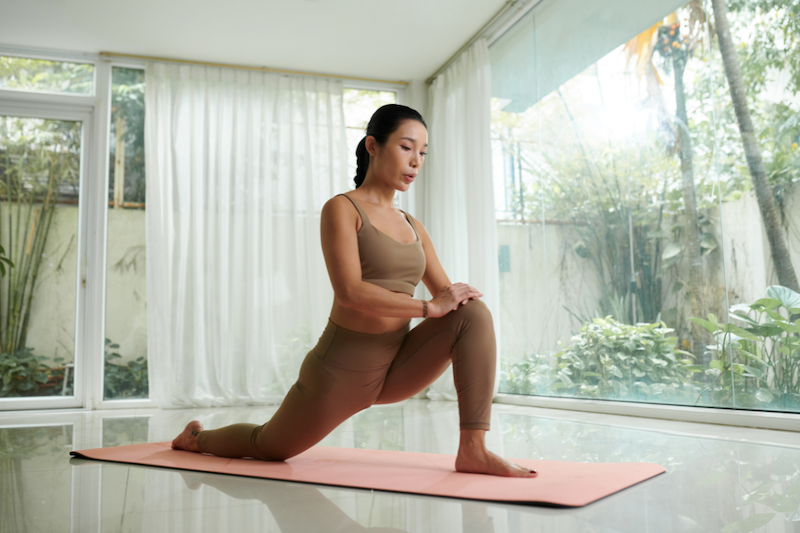
Does exercise impact fertility?
The relationship between exercise and fertility varies somewhat depending on your circumstances, so we’ll take this question in parts.
Women with obesity, especially those with PCOS
There is good evidence that introducing exercise increases fertility for women who have obesity, especially those with PCOS. This evidence comes from randomized trials, and outcomes include both ovulation and live birth. This likely relates to the evidence on use of GLP-1s and fertility; weight loss in this population can normalize ovulation and, thus, increase the chance of conception. Exercise in these trials varied but, generally, included an aerobic and strength component.
Women using Assisted Reproductive Technologies (ART)
Review data indicate exercise has no impact in either direction on the success of ART; most studies focus on IVF. It is generally fine to continue to exercise while undergoing these procedures — the one exception is possible risks during egg retrieval. More on that below.
Women without these conditions
In general, moderate exercise seems to have no impact on fertility among a population that does not have obesity. However, in cases where people are exercising more intensely, the research does suggest that this can interfere with ovulation and that (for example) serious runners are more likely to have cycles in which they do not ovulate, which will make it more difficult to conceive. This seems to be a result of not eating enough to fuel the exercise. In studies that manipulate diet to ensure that women are eating enough calories for the exercise, we do not see these effects.
The upshot: Exercise is mostly either positive or neutral for fertility, as long as you eat enough. It’s not that you cannot engage in serious exercise while trying to conceive, but it’s important to eat enough calories to fuel that work.
Frequently asked questions
Are there any exercises that are off limits?
Generally, no. The one place where the science suggests more caution is with exercise in very hot spaces (like Bikram yoga). Excessive heat is associated with neural tube defects, and the neural tube develops early (between about 4 and 6 weeks of pregnancy). This suggests limiting exposure to these settings at the end of the “two-week wait” period. But other than that, there isn’t any reason — at any point in the cycle — to limit exercise.
Do I have to limit my heart rate or how much I lift?
No. A lot of women hear that during pregnancy, you have to keep your heart rate below 140 or avoid lifting heavy things. This leads to the question of whether the same restrictions should apply to the pre-pregnancy period.
It turns out that those restrictions during pregnancy do not make sense; there is no reason to either limit heart rate or avoid strength training. By extension, there is no reason to avoid them while trying to conceive either.
I was told to avoid exercise during egg retrieval — why?
During the first stage of IVF, medications prompt your ovaries to create many eggs. This can increase the risk of ovarian torsion, where the ovary twists and cuts off the blood supply, which is extremely painful and requires immediate treatment. It is also very, very rare, even with IVF. The worry is that some kinds of exercise, especially with twisting, could increase this risk.
This risk has good logic behind it, but it is very small. At least one randomized study considered exercise during IVF and found improvements in stress and no cases of torsion in either group — likely due to the sample size. The bottom line is that there is a reason for this recommendation, but the risks remain small.
The bottom line
- Exercise is mostly either positive or neutral for fertility, as long as you eat enough calories to fuel that work.
- Most exercise is safe when trying to conceive, with the only real cautions being to avoid extreme heat (like Bikram yoga) in the late cycle and to be gentle around egg retrieval if doing IVF.








Log in