




 Get access to over 1,300 articles and reader Q&As

Can you explain the potential risks of intra-cytoplasmic sperm injection (ICSI)? From what I’ve read online, it seems like it can increase your chances of getting pregnant, but it could also cause chromosomal abnormalities for your baby. How true is this, and how can I weigh the benefits against these risks?
—Helena
This question underlies one of the major decision points during IVF: how to fertilize the eggs.
Once you have gone through the egg retrieval, the eggs need to be fertilized, which is to say they need to be combined with sperm to make embryos. Intra-cytoplasmic sperm injection (ICSI) is one way of doing that.
Traditionally, eggs are fertilized during IVF through “conventional insemination,” which aims to mimic the natural process of fertilization within the body. This is done by placing all of the eggs into separate petri dishes along with (carefully prepared) sperm. The sperm then “compete” to be the one that fertilizes the egg first.
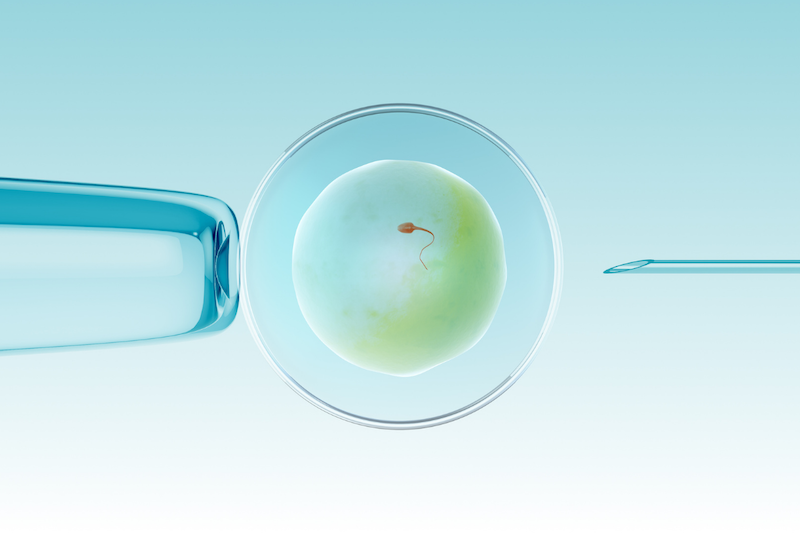
This works well for many people, but there are some circumstances where you might want to help out with this process, such as when there are abnormalities on the semen analysis that may indicate that the sperm are less likely to be able to do this on their own. With ICSI, the best-looking sperm are individually injected into the eggs using a micro needle. This is where the risks come in.
Before going more into this, I will first say that the data around this topic are not great. Most studies on ICSI are not randomized, which is the gold standard. Similarly, many studies do not use IVF with conventional insemination as a comparison group and instead compare to children conceived without IVF. Neither of these is ideal because, as you can imagine, there are many differences between people who use IVF with and without ICSI. These differences may increase risks at baseline. It’s also the case that there are a number of different reasons for the use of ICSI, including clinic preference, that make it difficult to know if any risks are due to the underlying reasons for ICSI or the procedure itself. On top of this, most studies around this topic are older (published before the mid-2000s) and may not accurately reflect how IVF is practiced today.
With that being said, the data is pretty consistent that ICSI slightly increases the risk of genetic disorders. Multiple case reports and a small cohort study have found that ICSI increases the risks of imprinting disorders, such as Angelman syndrome, where the version of the gene inherited from either parent is incorrectly turned on or off. These studies report an increased risk ranging from a 50% to an 8-fold increase. However, these are rare conditions; Angelman’s syndrome, for example, occurs in about 1 in 12,000 to 15,000 births. So, even with the increase, the overall chances are small. It’s also important to keep in mind that many people with significant male infertility are thought to have a genetic (but not yet identifiable) component. Because of this, there is a risk of passing this on to a child.
As far as other risks, multiple studies have also shown that ICSI increases the risks of abnormalities at birth. In particular, multiple studies have shown an increased risk of hypospadias, which requires surgery to fix. Again, there isn’t a consensus on whether this increased risk is due to the ICSI or the underlying reason for ICSI. And still, the increased risk reported in these studies is small, about a 20% increased risk. Keep in mind that hypospadias is also relatively rare in the U.S, occurring in about 1 in 250 males.
When weighing risks, it can be helpful to clarify with your physician why ICSI is being recommended. Though there are risks, ICSI has been tremendously helpful in allowing people to achieve their family goals, and it’s important to keep that in mind.
Community Guidelines








Log in