




 Get access to over 1,300 articles and reader Q&As



I try not to give too much direct advice about pregnancy and parenting. As part of my general mantra that there are many good ways to parent, it seems counterproductive to boss people around. However, one piece of advice I will commonly give is to get a doula.
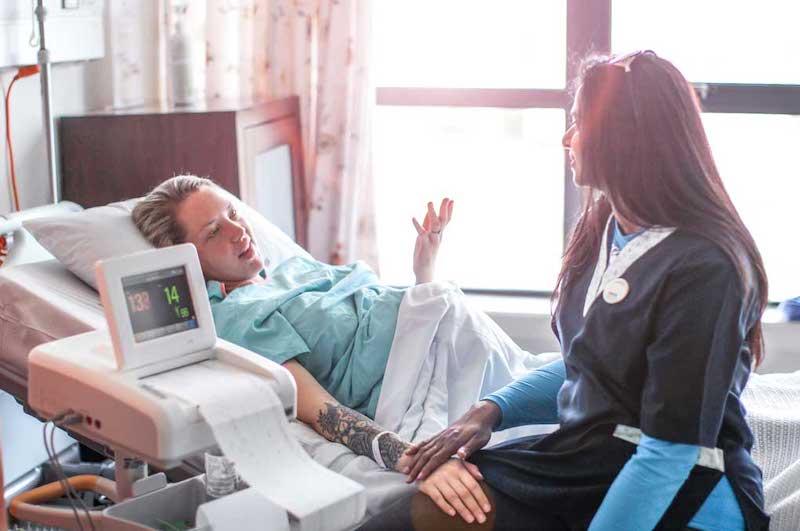
Very broadly, a doula is someone who provides support and care during birth and the postpartum period. Doulas do not have training as medical professionals but, instead, are (usually) women who have some training and experience with birth and can help with comfort during labor and emotional and personal support afterward.
The idea of a doula traces back more or less forever in human existence. It is a rare society in which women give birth alone, and, commonly, other women are the support structure during labor and delivery. This became less true as births moved out of homes and into hospitals; the medicalization of the birth process would appear to mean less need for these kinds of support.
However, in the 1970s, the idea of doulas as a presence, even during hospital births, became more popular (perhaps as part of a move toward “natural” birth during this period). Practitioners at this time began to see what they perceived as evidence that having a doula improved birth outcomes.
In my view, the value of doulas in birth is among the best-established pieces of evidence in maternity care. Below, I’ll get into that evidence and then discuss how to expand access to more people
What is the evidence on doulas?
There are large-scale randomized studies of the efficacy of doulas. Randomized data is necessary here because (for some of the access reasons I’ll talk about later), on average, doula access is greater for families with more resources. A direct comparison of those who use a doula to those who do not would therefore run into problems.
Better is to randomize access to a doula. An example is this study, which recruited about 450 women and randomly assigned half of them a doula, who arrived shortly after them at the hospital. The study found that the group assigned a doula had significantly less use of cesarean sections and less use of epidurals. Another, slightly smaller, study showed lower epidural rates and, notably, a significant improvement in satisfaction during labor.
A summary by the Cochrane review aggregates across many studies and argues that there is consistent evidence for lower use of cesarean sections and, in some settings, less use of epidurals. Some evidence suggests doula care before birth can reduce prematurity. As always, there aren’t as many large studies as we would like, but the data all point in a similar direction.
It is worth noting the outcomes here. Research tends to focus on cesarean section rates and the use of epidurals, as both are medical interventions that are thought to be less likely with more labor support. This isn’t to say that cesarean sections and epidurals are bad or unnecessary; they can be quite positive experiences. As you know, much of my writing on pregnancy is about the importance of making decisions that work for you, based on data and other personal factors. While what happens during labor is largely out of one’s control, the evidence shows that we see fewer of these interventions when doulas are present.
I wanted to call out what was, for me, among the most surprising studies in this literature. In this paper, the authors run a randomized trial in which the treatment group is asked to identify a female friend who is then given a few hours of doula training. Unlike the hospital-based studies, in which the doulas are professionally trained, these are simply women who are friends of the birthing person, who are given some small amount of training. This intervention resulted in women waiting a longer time before getting an epidural and, strikingly, higher Apgar scores at 1 and 5 minutes. The researchers also found a lower cesarean section rate, although it was not significant.
Afterwards, the authors did a longer-term follow-up by telephone and reported that the women who had their friend trained as a doula reported more positive perceptions about their infant, more support from others, and a greater sense of self-worth. They were more likely to breastfeed and to be happy with their hospital care.
This is just one study, but one I believe deserves attention and follow-up. If you can, in fact, improve birth outcomes by encouraging people to find a friend to get some minimal education in this area, that seems … pretty notable? And perhaps we could do even better if we invested more in professional doula training.
Final point: Doulas often provide postpartum support (including home visits after birth) as well. Data suggests that this support can improve outcomes, including breastfeeding success and infant care. This means there is an argument for having a doula, even if you knew that you were going to have a cesarean section, although the strongest evidence is in the value of labor support.
A reasonable question before getting to policy is why this would work. Doulas are trained in labor positioning and in massage, and, if they’ve seen other births, they provide a sense of calm. They can also advocate for what you are hoping for in your birth.
Whatever the reason, that’s the data. If you have the resources for a doula, it is among my strongest recommendations for birth. But not everyone does, which leads me to the next question.
How can we expand access to doulas?
Doulas are mostly not covered by insurance. As a result, they are more common among families with more resources. This is especially shameful since much of the evidence we have suggests they would be incredibly valuable for people who have fewer resources. We’ve talked here before about the crisis in Black maternal health. There is a strong case to be made that improving doula access could be one way to make a little progress on this crisis. Much of the evidence shows doula care can be especially helpful for Black women.
One very clear way to get more doula support would be to encourage it to be covered by insurance. A closely related way to use this to reduce birth inequality would be to have it be covered by Medicaid. There are cost-based arguments for doing so. For example, this paper argues that because of the possible reductions in preterm birth, it would be cost-effective for Medicaid to reimburse doulas at about $1,000 per birth.
To calculate this, the authors note that babies born preterm are more expensive than those born full-term (they need more support, spend more time in the hospital, use more services). For the insurer, in this case Medicaid, they would save money if fewer babies were born preterm. If doulas reduce the preterm birth rate, then doulas save the insurer money. Combining these calculations, the authors suggest that you’d break even if you gave everyone a doula at $1,000 each. One could imagine similar calculations about cesarean section rates and epidurals, and other studies have shown similar things.
Of course, this ignores the other benefits (like less fear, greater maternal satisfaction) that aren’t quantified. But what it says to me is that even based on just pure cost concerns, it is possible it would make sense for Medicaid to finance a doula for everyone. It might literally be free money.
In the meantime, providing doulas to a broader swath of pregnant people has fallen to community organizations, such as Kindred Space in Los Angeles and the Urban Perinatal Education Center in Rhode Island (where I live!). So, the easiest short-term thing to do is to support organizations like those in your own communities.
The bottom line
- Randomized studies consistently show that doula support during labor is associated with improved birth and postpartum outcomes.
- Because doulas are rarely covered by insurance, access is skewed toward higher-income families.
- Covering doulas through insurance (especially Medicaid) would not only make access more equitable, but it would also reduce costly outcomes like preterm birth and cesareans. Until that happens, access largely depends on community organizations filling the gap.







Log in
Can you provide any insight as to why labor with a doula may still result in medical intervention, specifically C section? This was my experience 3 years ago and it still bothers me. I know she’s not a magician but I just felt so defeated after 30 hours of a labor to then need a C. She helped me process that and she was helpful in postpartum care, but honestly, in the room I can’t remember her doing all that much. At one point she even told my husband to go out for a walk when I was starting to push. He went for 30 seconds and came running back. Maybe you can include information on how to choose a doula and what to look for?
There appears to be a broken link — in the first paragraph under “How do we get more doulas?” Is it possible to update this? I’d really like to read it!
I’m sorry about this! We just fixed the link 😉